
Mostar’s Stari Most is one of those landmarks that looks familiar before you’ve even visited. The elegant stone arch spans the turquoise Neretva River, linking the two sides of the city’s historic centre and drawing visitors into its maze of cobbled streets, bazaars and old stone buildings.
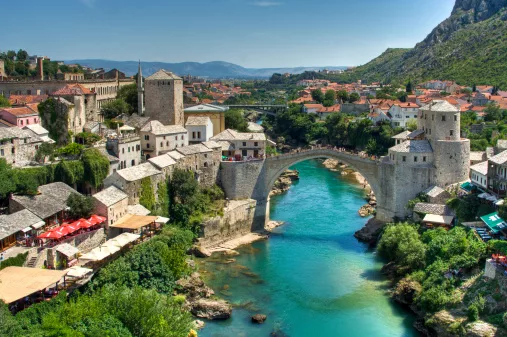
View of city of Mostar with old bridge over river Neretva/By: Lassi Kurkijarvi/Getty Images
Spend 48 hours in Mostar, and there is time to look beyond the postcard: follow the Neretva through the city, discover Ottoman architecture and religious landmarks, eat your way through Bosnian and Herzegovinian specialities, explore contemporary cultural spaces and venture into the surrounding mountains and river valleys.
The Old Bridge Area was inscribed as a UNESCO World Heritage Site in 2005.
Day one: Discover the layers of old Mostar
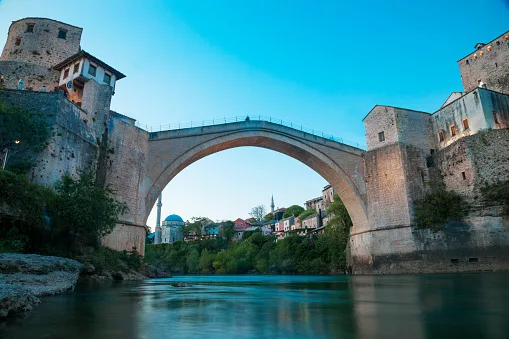
Stari most, old bridge and Neretva river/By: Westend61/Getty Images
Start with Stari Most
Begin your morning at Stari Most, but don’t simply arrive, take a photograph and move on.
The bridge was completed in 1566 under Ottoman Sultan Suleiman the Magnificent, with its design attributed to Mimar Hayruddin, a pupil of the celebrated Ottoman architect Sinan. The original bridge was destroyed during the Bosnian War in 1993 before being reconstructed using, where possible, materials and techniques associated with the original structure. The rebuilt bridge and surrounding Old City were formally opened in 2004 and the area became a UNESCO World Heritage Site the following year.
Walk across the arch and then explore both sides of the Neretva. The steep cobbled lanes around the bridge lead into the old bazaar, where small shops sell copperware, jewellery, textiles, ceramics and souvenirs.
The nearby Kujundžiluk, traditionally associated with coppersmiths, is one of the most atmospheric parts of the Old Town.
Look beyond the bridge
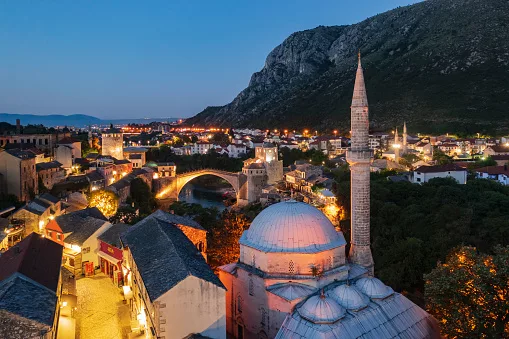
Koski Mehmed Pasha Mosque/By:Mint Images/Getty Images
Mostar’s historic centre is much more than a collection of picturesque streets.
Look for traditional Ottoman houses, courtyards and religious buildings as you wander. UNESCO describes the Old Bridge area as an unusual meeting of pre-Ottoman, Ottoman, Mediterranean, and Western European architectural influences. Mosques, churches and other religious buildings reflect the city’s long history as a place where different communities lived alongside one another.
One stop worth making is the Koski Mehmed Pasha Mosque, built in the early 17th century. Its position above the Neretva also makes it a useful place to appreciate how the city’s buildings, river and surrounding hills fit together.
Rather than rushing between landmarks, take time to notice the details: carved stone, wooden shutters, old bridges over smaller waterways and the way houses climb the hillsides.
Follow the Neretva
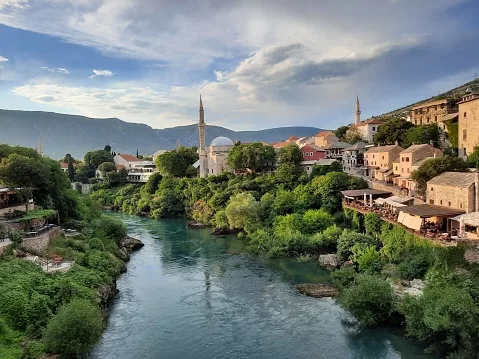
The Neretva River/By: Gabi / 500px/Getty Images
The Neretva is as important to Mostar’s character as its architecture.
The river cuts through the city beneath the Old Bridge, with rocky banks and clear water forming a natural corridor through the historic centre. The smaller Radobolja River also contributes to the city’s distinctive landscape. UNESCO identifies both waterways as important elements of Mostar’s historic urban form.
Walk away from the busiest section around Stari Most and follow the river at a slower pace. From here, the city begins to feel less like a sightseeing stop and more like a place where people live, work, eat and socialise.
Stop for a Bosnian lunch
Make lunch part of the experience.
Look for traditional Bosnian dishes such as ćevapi served with flatbread and onion, burek and other filled pastries, dolma and grilled meats. Bosnian coffee is another essential part of the experience, traditionally served in a small copper coffee set.
Mostar’s tourism board also highlights restaurants serving local Bosnian, Mediterranean, Middle Eastern and modern cuisine, reflecting the increasingly varied food scene.
Don’t rush the coffee. In Mostar, sitting down with a small cup and watching the street is part of the experience.
Spend the afternoon exploring Mostar’s other stories
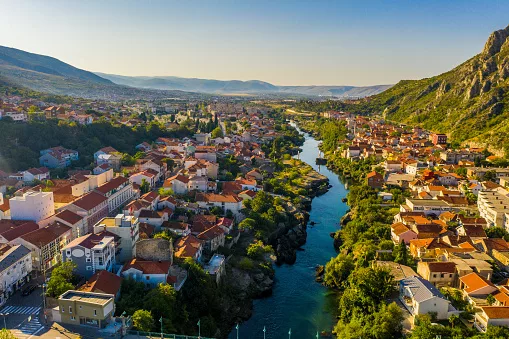
Drone point of view shot of an old town and a river, Mostar, Bosnia and Herzegovina/By: SimonSkafar/Getty Images
Visit a historic house
To understand how people once lived in Mostar, seek out one of the city’s traditional Ottoman-era houses.
These homes were designed around courtyards and river-facing views, with thick masonry walls helping to moderate the heat of Herzegovina’s summers. UNESCO’s documentation of the historic city describes traditional houses with timber-framed elements, projecting rooms and open living spaces overlooking the Neretva.
A visit adds context to the stone streets outside and shows that Mostar’s architectural heritage is not limited to grand monuments.
Make space for recent history
Mostar’s beauty should not obscure its more recent history.
The Old Bridge was destroyed on 9 November 1993 during the conflict in Bosnia and Herzegovina. Its reconstruction later became an international heritage project, with UNESCO describing the rebuilt bridge and Old City as symbols of reconciliation, international cooperation and coexistence.
Museums and exhibitions dealing with the conflict offer a more difficult but important perspective on the city. Allow time for this part of Mostar rather than treating its wartime history as a footnote.
It gives the restored streets and bridge a deeper meaning.
Find Mostar’s contemporary side
View this post on Instagram
Mostar is not frozen in its Ottoman past.
The city has a lively programme of exhibitions, theatre, music, festivals and food events. Recent events have included the Moba Street Food Festival, Mostar Summer, and literary and music programmes. The city’s official tourism calendar also highlights contemporary arts and cultural events.
Check the local events calendar before your visit and see what is happening during your 48 hours. A concert, exhibition or food festival can offer a very different view of the city after a day spent exploring historic streets.
Watch the light change over the Neretva
As afternoon turns into evening, return towards the river.
The limestone buildings take on warmer tones as the sun drops, while the Neretva becomes increasingly reflective below the bridge.
This is a good time to find a riverside café or viewpoint and simply watch Mostar at a slower pace.
Day two: Follow the river beyond Mostar
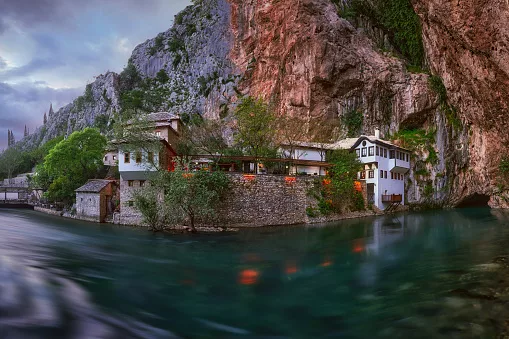
Historic Blagaj Tekke (a monastery) at the cavern mouth of the Buna river/By: Konstantin Voronov/Getty Images
Head to Blagaj
On your second morning, leave the city behind for Blagaj, a small settlement roughly 12km from Mostar.
Its main attraction is the dramatic source of the Buna River, where cold, clear water emerges from beneath a towering limestone cliff.
Built beside the spring is the Blagaj Tekke, a historic dervish lodge and an important example of Islamic architecture in Bosnia and Herzegovina. The building incorporates distinctive Ottoman architectural elements with later influences.
The combination is striking: a pale stone building tucked beneath a cliff, lush vegetation around the water, and the Buna emerging from the rock.
Take your time beside the Buna
Blagaj is not somewhere to race through but needs time for you to savour it and its surroundings.
Walk beside the river, take in the cliffs, and find a shaded spot for a drink or lunch. Restaurants around the source are particularly associated with trout and other regional dishes, making the river an ideal place to continue exploring Herzegovinian food.
The journey from Mostar is short enough that Blagaj works comfortably as part of a 48-hour itinerary rather than requiring a separate overnight stay.
Return to Mostar via the hills
Back in Mostar, use the afternoon to see the city from above.
The surrounding landscape is dominated by rugged limestone hills and mountains, giving Mostar a dramatic setting that is easy to miss when concentrating on the Old Town.
A viewpoint or short outdoor excursion can put the city’s geography into perspective: the Neretva cutting through the valley, the compact historic centre around the bridge and the hills rising around it.
The wider Mostar area also offers activities such as hiking, mountain biking and ziplining for travellers who want a more active experience.
Have one last meal in the Old Town
End your 48 hours with another slow meal rather than trying to squeeze in another attraction.
Try more Herzegovinian specialities, order a Bosnian coffee and return to the river for one final look at Stari Most.
The bridge will probably still be the image you remember most clearly. But after two days, it should no longer feel like the whole story.
Mostar is a city of rivers, mountains, food, layered architecture and living culture, with its famous bridge acting as the thread that ties many of those stories together.
Practical tips for 48 hours in Mostar
Allow time to walk
The historic centre is best experienced on foot. Comfortable shoes are useful because many of the old streets are uneven and cobbled.
Carry some cash
The local currency is the Bosnian convertible mark (BAM). Cards are widely accepted in many establishments, but carrying some cash is useful for smaller purchases and cafés.
Check the cultural calendar
Mostar’s events programme changes throughout the year, with music, theatre, food festivals, exhibitions and literary events among the offerings. Check the official tourism and cultural listings before travelling.
Don’t rush Blagaj
The short journey makes Blagaj an easy addition to a Mostar trip. Give yourself enough time to enjoy the Buna River and the setting around the Tekke rather than treating it as a quick photograph stop.
Look beyond the obvious
Stari Most is famous for good reason, but Mostar becomes more interesting when you follow its side streets, rivers and surrounding landscapes. Leave some unplanned time in the itinerary to sit at a café, browse the bazaar or simply follow the Neretva.
Follow us on social media for more travel news, inspiration, and guides. You can also tag us to be featured.
Instagram | Facebook | Twitter | Spotify
ALSO READ:
Dream of the Desert: Saudi Arabia’s ultra-luxury train through the desert