








A city’s culture isn’t found only in its museums. Sometimes, it’s best discovered in the markets where people shop, cook, trade and pass traditions from one generation to the next.
From Africa to Asia and Latin America, these six markets offer a glimpse into the food, crafts and everyday customs that shape a place.
1. Zanzibar, Tanzania: Discover the flavours of Swahili culture

Darajani Market/Erasmus Kamugisha/Wikimedia Commons
Darajani Market
Zanzibar’s cultural identity has been shaped by centuries of exchange across the Indian Ocean. African, Arab, Persian and South Asian influences have all contributed to the islands’ history, and the legacy of those connections can be explored through one of Stone Town’s busiest everyday spaces: Darajani Market.
Established in 1904, the market is a working centre of local commerce where shoppers come for fresh produce, fish, grains, spices and household essentials. Its stalls offer a practical introduction to the ingredients that underpin Zanzibari and wider Swahili cooking.
Here, the story of food is inseparable from the story of trade. Cloves became closely associated with Zanzibar’s history, while other spices and imported ingredients travelled through networks linking the East African coast with distant ports. Coconut, seafood, rice and aromatic seasonings also feature prominently in the region’s culinary traditions.
Walking through Darajani is an opportunity to see how these ingredients move from market stalls into kitchens. Fresh fish reflects the importance of the surrounding ocean, while spices and dried goods hint at the connections that have shaped island cooking over generations.
The market is also a reminder that Zanzibar’s heritage is not limited to Stone Town’s carved wooden doors, historic buildings and former trading houses. It survives in ordinary routines: what people buy, what they cook and how they share food.
What to look for: Explore the spice stalls, observe the daily seafood trade and ask about the ingredients used in local dishes. Visit respectfully, remembering that Darajani is first and foremost a place where residents shop and work.
2. Accra, Ghana: Read the city through its traders

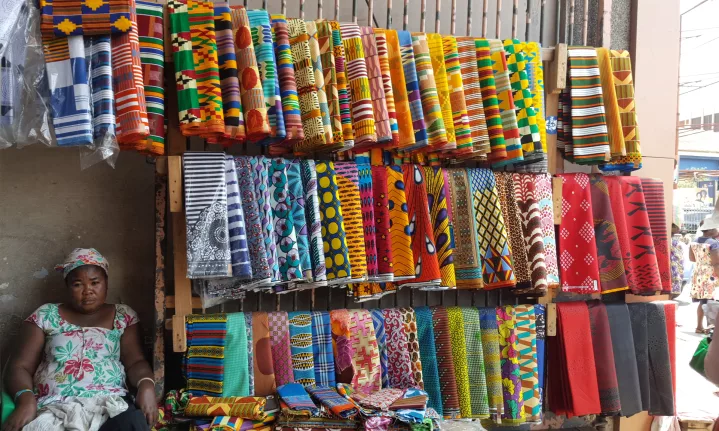
A trader at Makola Market/Vrinda Khushu/Wikimedia Commons
Makola Market
Accra’s Makola Market is not a quiet collection of historical artefacts. It is a sprawling, energetic trading district where food, clothing, household goods and countless other necessities change hands every day.
Established in 1924, Makola became a major commercial centre in Ghana’s capital. Its history also reflects the importance of women in the country’s trading economy, with women traders playing a prominent role in the organisation and everyday operation of marketplaces.
The market’s story has not been without upheaval. Makola was demolished in 1979, an episode that forms part of the wider history of state intervention in Ghana’s markets and the livelihoods of traders. Its name nevertheless remains closely associated with Accra’s commercial life.
Today, the surrounding trading streets and stalls reveal a city that is constantly adapting. Fresh produce and local food sit alongside imported goods, textiles, shoes, jewellery and everyday household necessities. Rather than presenting a single, carefully curated version of Ghanaian culture, Makola shows how tradition and modern commerce coexist.
It is also a place to observe the knowledge behind the transaction. Traders understand their products, their customers and the rhythms of supply and demand. Relationships matter, negotiation is part of the experience, and a market’s social organisation can be as revealing as the goods being sold.
For visitors, the temptation may be to photograph the colourful stalls and move on. Spending time watching how the market works offers a richer perspective on the people who keep Accra moving.
What to look for: Pay attention to textiles, locally made bead jewellery, produce and the different kinds of goods sold in adjoining trading areas. Ask before photographing vendors or their merchandise, and consider buying from the people whose work interests you.
3. Marrakech, Morocco: Enter an open-air theatre of culture

Barbecued Moroccan style meat at Jemaa el-Fnaa square market of Marrakech/By: tupungato/iStock
Jemaa el-Fnaa and the medina souks
In Marrakech, cultural life spills into the streets. The city’s medina is a network of lanes, workshops, trading spaces and food stalls, while Jemaa el-Fnaa brings together commerce and public performance in one of Morocco’s most recognisable urban spaces.
The square has long served as a gathering place for vendors, musicians, storytellers and performers. Its cultural importance extends beyond its role as a tourist attraction: UNESCO inscribed the cultural space of Jemaa el-Fnaa on its Representative List of the Intangible Cultural Heritage of Humanity in 2008.
This recognition reflects something that a display case cannot easily capture. Cultural heritage can exist in the act of performing, speaking, making music and gathering an audience. It depends on people continuing to practise and pass on their skills.
As evening approaches, food stalls transform the square into a lively dining destination. The surrounding souks offer another kind of cultural encounter, with traders selling leather goods, metalwork, textiles, ceramics, lanterns and other crafts associated with Morocco’s material traditions.
The experience is not always tranquil. Marrakech can be crowded, and the souks are commercial spaces where visitors will encounter persistent sales pitches alongside genuine craftsmanship. Taking time to observe, ask questions and distinguish between products can make the visit more rewarding.
What to look for: Visit Jemaa el-Fnaa at different times of day, listen to the performers and explore the craft souks with curiosity. If you are interested in a particular item, ask about its materials, origin and how it was made.
ALSO READ:
6 Southern African destinations that feel like an international holiday
4. Oaxaca, Mexico: Taste a region’s cultural diversity
Benito Juárez Market
In Oaxaca, food is one of the most direct routes into understanding regional identity. The state’s culinary traditions draw on Indigenous foodways, local agriculture and a diversity of communities, making its markets especially rewarding for travellers interested in the relationship between ingredients and culture.
Benito Juárez Market occupies a central place in Oaxaca’s historic centre. Its commercial history stretches back more than 130 years, and today its aisles bring together produce, regional foods, crafts, clothing, sweets and other everyday goods.
The market offers a particularly vivid introduction to ingredients that might be unfamiliar to first-time visitors. Dried chillies, herbs, fresh produce and regional specialities sit alongside prepared foods that reflect the diversity of Oaxacan cooking.
Among the foods worth discovering are tlayudas, large crisp tortillas served with a variety of toppings; tejate, a traditional maize-and-cacao drink; and chapulines, toasted grasshoppers often seasoned with chilli and lime. Each offers a starting point for conversations about ingredients, preparation and local taste.
The market also connects food with geography. Oaxaca is a region of varied landscapes and communities, and the products on sale reflect different agricultural conditions and culinary traditions. Shopping here can reveal how the surrounding countryside feeds the city and how regional identities are expressed through food.
Crafts and other goods add further layers to the experience. The important thing is to resist the idea that a market is simply a checklist of unusual things to eat or buy. Its real value lies in understanding the traditions and people behind them.
What to look for: Sample a regional dish, ask vendors about unfamiliar ingredients and explore the crafts as well as the food stalls. If you try chapulines or another local speciality, ask how it is traditionally prepared.
5. Istanbul, Türkiye: Follow the historic spice routes

View of the historically important landmark of the Spice Bazaar, otherwise known as the Egyptian Bazaar, in Eminönü Square in Istanbul, with a crowd of people and tourists visiting the bazaar/By: Salvator Barki/Getty Images
The Spice Bazaar
Few markets make the relationship between trade and cuisine as immediately tangible as Istanbul’s Spice Bazaar. Also known as the Egyptian Bazaar, this covered market in the Eminönü district has been part of the city’s commercial landscape since the 17th century. Construction began in 1660, and the building was completed in 1664.
Istanbul’s position between Europe and Asia has made it a crossroads of commerce and cultural exchange for centuries. The Spice Bazaar brings that history into focus through its displays of spices, teas, dried fruit, nuts, sweets and other food products.
Inside, colour and fragrance compete for attention. Mounds of red pepper, yellow turmeric and earthy spice blends sit alongside dried apricots, pistachios, Turkish delight and shelves of teas. The variety makes the bazaar an appealing destination for travellers interested in food, but its significance extends beyond its sensory appeal.
Ingredients and culinary techniques travel with people, and markets provide the places where those exchanges become part of daily life. Istanbul’s food culture reflects a long history of regional connections, and the Spice Bazaar offers a way to explore those influences through the products people buy and sell.
There is a difference, too, between seeing spices as colourful souvenirs and understanding how they are used. Ask about regional blends, how ingredients are incorporated into particular dishes and which products local shoppers favour. Such conversations can transform a quick browse into a more meaningful encounter.
The market is also a reminder that heritage changes. Traders continue to adapt their offerings to modern tastes and international visitors while maintaining the bazaar’s role as a place of everyday commerce.
What to look for: Compare spice blends, sample traditional sweets where offered and ask vendors how particular ingredients are used in Turkish cooking. Buy only what you can reasonably carry and use, rather than treating every stall as a souvenir stop.
6. Hanoi, Vietnam: Discover the rhythms of everyday trade

Đồng Xuân Market/Juliana Ng from Singapore/Wikimedia Commons
Đồng Xuân Market
Hanoi’s Old Quarter is known for its dense streets, historic architecture and street-food culture. At its northern edge, Đồng Xuân Market offers another way to understand the Vietnamese capital: through the practical business of supplying a city.
Established in 1889, Đồng Xuân developed into one of Hanoi’s major trading hubs. Today, the covered market and the surrounding streets accommodate a broad range of goods, including textiles, clothing, household products and items sold through wholesale and retail trade.
It is a different kind of experience from the atmospheric spice bazaars of Istanbul or the public performances of Marrakech. Đồng Xuân is particularly revealing because of its role in the city’s everyday economy. Goods move through the market to shops, stalls and households, connecting suppliers and buyers across Hanoi and beyond.
The surrounding area also offers opportunities to explore the city’s food culture. Small eateries and street-food vendors serve dishes that form part of everyday life, rather than being reserved for special occasions or formal dining. For travellers, stopping for a meal can be as informative as browsing the market’s shelves.
Hanoi’s heritage is not confined to temples, museums and preserved buildings. It is also expressed through the routines of shopping, preparing food and maintaining the networks that allow a large city to function.
What to look for: Browse the market’s different sections, explore the food stalls in the surrounding streets and observe the distinction between wholesale trade and shopping for everyday needs. Be considerate of workers moving goods and ask before taking photographs.
Why markets deserve a place on every cultural itinerary
Markets reveal culture in motion, from recipes and craftsmanship to the relationships that sustain local communities. Visit with curiosity, support local traders and look beyond the souvenirs. Often, the best way to understand a city is to experience the everyday life unfolding around you.
Follow us on social media for more travel news, inspiration, and guides. You can also tag us to be featured.
Instagram | Facebook | Twitter | Spotify
ALSO READ: