



The Baviaanskloof is often described through its road: a rugged route winding between the Baviaans and Kouga mountains, with steep passes, river crossings and dramatic scenery. But this World Heritage landscape deserves more than a quick drive-through.
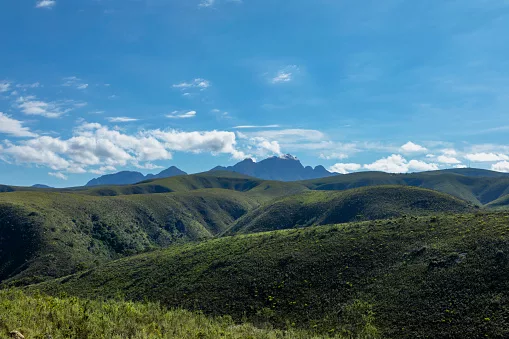
Mountain ridges and valleys of Baviaanskloof/By: HannesThirion/
iStock
Part of the Cape Floral Region Protected Areas World Heritage Site, the Baviaanskloof is recognised for its exceptional plant diversity, endemic species and varied landscapes. It is also rich in archaeological heritage, with Stone Age sites recorded throughout the area.
A 48-hour stay gives you enough time to slow down and experience some of what lies beyond the famous road: mountain trails, natural pools, waterfalls, rock formations, wildlife, farm stays and remarkably quiet wilderness.
Day 1: Enter the Baviaanskloof slowly

Panoramic view of steep gravel Combrink’s Pass in the Cambria Valley leading into the Baviaans Kloof Reserve in the Eastern Cape/By: geoffsp/iStock
Make the journey part of the experience
Getting into the Baviaanskloof is an adventure in itself, but resist the temptation to treat the route as something to get through as quickly as possible.
The landscape changes dramatically as the road enters the mountain country, with the Baviaans and Kouga ranges creating a rugged backdrop of cliffs, valleys and plateaus. The Cambria route offers an easier introduction to the landscape and can be accessed by sedan, while some of the deeper routes are better suited to high-clearance vehicles or 4x4s.
Stop where it is safe to do so and take in the geology, vegetation and enormous sense of space. The area is part of one of the world’s most important centres of plant diversity, making even a seemingly ordinary roadside landscape worth examining more closely.
Stay somewhere that puts you in the landscape
Rather than using the Baviaanskloof simply as a route between towns, spend at least one night in or around the wilderness area.
There are options ranging from rustic campsites to farm accommodation and wilderness lodges. Deep inside the reserve, places such as Rooihoek and Doodsklip offer a particularly remote experience, with basic facilities and little separation between visitors and the surrounding landscape.
If you prefer something more comfortable, farms and lodges around the Baviaanskloof provide a chance to experience the rural side of the region. Baviaans Lodge, for example, offers cottages and camping alongside activities including hiking, birding, mountain biking and San rock-art viewing.
The point is to make your accommodation part of the trip. Wake to mountain views, listen to the river or birds instead of traffic, and let the landscape set the pace.
Get out of the vehicle
Follow a trail to a waterfall
One of the easiest ways to experience the Baviaanskloof beyond its roads is to walk.
The reserve has several hiking options, including the Poortjies Waterfall Trail, Komdomo River Trail and trails from Bergplaas.
Poortjies is particularly appealing because the landscape changes from the exposed mountain scenery associated with the road to a greener, more sheltered environment. Forest, river and waterfall scenery make it a good reminder that the Baviaanskloof is far more varied than its dry, rugged reputation suggests.
The Cedar Falls day hike is another option in the western Baviaanskloof. Go Baviaans currently lists Cedar Falls as a day hike and the Leopard Trail as a four-day hiking experience.
Choose a walk that matches your fitness, vehicle access and available time rather than trying to tick off as many trails as possible.
Look for life in the wilderness
The Baviaanskloof is not a conventional safari destination, and that is part of its appeal.
The wider conservation area supports species including mountain zebra, black rhino, Cape buffalo and Cape leopard, according to Kouga Municipality.
You may also encounter smaller and more familiar residents, from baboons and birds to reptiles and insects. Bring binoculars and spend time watching rather than simply passing through.
Birding is particularly rewarding around the riverine and forested areas. The Poortjies area, with its trees, water and more sheltered conditions, offers a different habitat from the open mountain slopes.
ALSO READ:
Day 2: Water, rock and ancient history

A weathered information board at Doodsklip (dead rock) Camp Site in the Baviaanskloof (baboon valley)/By: GroblerduPreez/Getty Images
Cool off in a natural pool
The Baviaanskloof’s rivers are one of its greatest attractions.
Doodsklip is known for its natural pools, while the wider reserve offers river landscapes where visitors can stop, swim where conditions are safe and enjoy the contrast between cool water and rugged mountains.
Keep the experience low-impact. Check local conditions before entering the water, particularly after heavy rain, and never underestimate the strength of a mountain river.
For travellers who have spent the previous day navigating dusty roads and rocky terrain, a quiet pool beneath the mountains can be the perfect change of pace.
Explore the rocks instead of just photographing them
View this post on Instagram
The Baviaanskloof’s sandstone cliffs and unusual geological formations are a major part of its character.
Some routes lead towards dramatic viewpoints and rock formations, while the Bakkrans area offers an especially unusual experience. The natural rock overhang has been used as a camp and provides access to hiking, climbing, birding and San rock-art sites.
The area’s geology also helps explain why the landscape looks so dramatic. Mountain ranges, narrow valleys and exposed rock create the spectacular scenery that has become synonymous with the Baviaanskloof.
Take time to look closely rather than simply waiting for the next viewpoint. Layers in the rock, succulents growing from seemingly impossible places and vegetation tucked into cracks all tell part of the story.
Look further back than the mountains
The Baviaanskloof’s story is much older than its roads, farms and modern settlements.
Stone Age archaeological evidence occurs throughout the area, while San rock art provides a tangible connection to people who lived in and moved through this landscape long before modern tourism.
Sites containing rock art should be treated with care. Do not touch, wet, trace or otherwise interfere with paintings, and follow any access rules or guidance from local operators.
Make time for the people and farms
See the rural side of the kloof
The Baviaanskloof is also a lived-in landscape, with farms and small rural communities forming part of the broader region.
A farm stay can be one of the best ways to experience this side of the destination. Around the reserve, accommodation includes working farms where visitors can experience a quieter rhythm of life and see how agriculture exists alongside the surrounding wilderness.
It is a useful counterpoint to the idea of the Baviaanskloof as nothing more than an isolated wilderness. People live, work and run tourism businesses here, and choosing local accommodation and activities helps keep tourism connected to the communities around the reserve.
Stock up before you go
The remoteness is part of the attraction, but it requires preparation.
Willowmore and Steytlerville are important stopping points for fuel and supplies before entering the Baviaanskloof. South African Tourism advises travellers to stock up before entering the reserve, as there are no conventional fuel stops inside.
Pack enough food and water for your plans, especially if you are heading into the more remote sections. Cellphone coverage can also be limited, making it important not to rely entirely on your phone for navigation or emergency communication.
Leave time to simply stop
Watch the landscape change
The best part of a Baviaanskloof weekend may be the time between activities.
Sit beside the river. Watch the changing light on the cliffs. Listen for birds in the trees. Look for wildlife from a quiet viewpoint. Have a meal outdoors. Walk a little way along a farm track or simply sit outside your accommodation after dark.
The Baviaanskloof rewards travellers who resist the urge to turn every hour into an activity.
Its mountain passes may be what first draws visitors here, but the wilderness, biodiversity, history and rural character are what make it worth staying for.
Before you go
The Baviaanskloof is a remote wilderness destination, and conditions can affect access. Vehicle requirements vary depending on which section and route you plan to visit, so check current road conditions and access requirements before setting off.
The official Eastern Cape tourism information currently lists activities including hiking, wilderness self-drives and trails at Bergplaas and Poortjies, while Go Baviaans provides current information for activities such as the Cedar Falls day hike and Leopard Trail.
Plan your route around your vehicle, fitness level and accommodation rather than trying to cover the entire Baviaanskloof in one weekend.
Follow us on social media for more travel news, inspiration, and guides. You can also tag us to be featured.
Instagram | Facebook | Twitter | Spotify
ALSO READ:
Wild & Wise in the Overberg: What to expect from the renosterveld retreats this year