



What began as an ordinary day for two Cape Sparrows ended in tragedy after the birds became trapped on a glue board intended to catch rodents, prompting the Cape of Good Hope SPCA to renew its campaign for a complete ban on the devices.
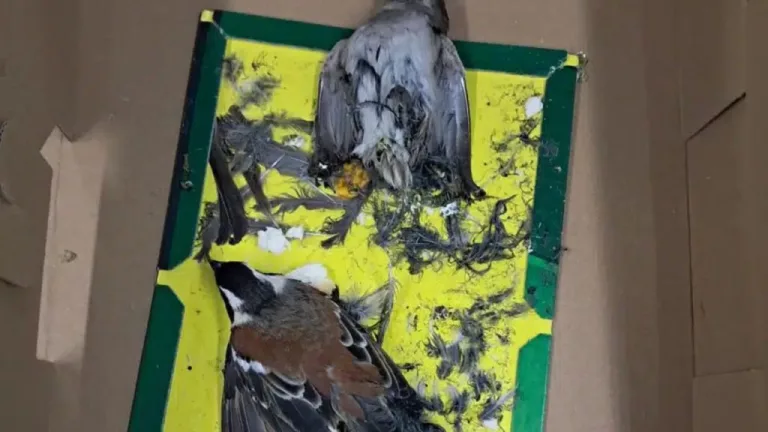
Picture: Cape of Good Hope SPCA / Facebook
According to the animal welfare organisation, the sparrows were discovered alive but in severe distress after becoming stuck to the powerful adhesive. Every attempt to free themselves only made matters worse, with their feathers becoming increasingly embedded in the glue as they struggled to escape.
The homeowner immediately contacted the Cape of Good Hope SPCA after realising what had happened and voluntarily surrendered the remaining glue traps to prevent any further animals from suffering the same fate.
Despite inspectors responding as quickly as possible, the rescue ended in heartbreak.
The SPCA said the glue had become so tightly entangled in the birds’ feathers and against their fragile bodies that there was no safe or humane way to remove them.
Freeing the sparrows would have caused catastrophic injuries, leaving inspectors with what they described as the only compassionate option: to end the birds’ suffering humanely.
The organisation hopes the devastating incident serves as a wake-up call about the hidden consequences of glue traps, which are commonly sold as an easy solution to pest problems.
While many people purchase glue traps specifically to catch rodents, the SPCA says the devices do not discriminate.
Every year, they unintentionally trap a wide range of animals, including birds, geckos, snakes, bats, insects and even domestic pets that happen to come into contact with the adhesive.
Unlike traditional traps, glue boards do not kill instantly.
Instead, animals often remain alive for hours or even days, experiencing extreme stress, dehydration, starvation and exhaustion as they desperately attempt to break free. Many suffer broken bones, torn skin, ripped feathers or fur before eventually dying where they are trapped.
The SPCA argues that this prolonged suffering makes glue traps one of the cruellest forms of pest control still widely available.
ALSO READ:
Where to go birdwatching in South Africa: 8 destinations every birder should experience
The Cape of Good Hope SPCA says it has spent years advocating for the sale and use of glue traps, glue boards and similar adhesive devices to be prohibited.
The organisation has been working alongside the City of Cape Town to include such a ban in the municipality’s proposed Animal Keeping By-law, which is expected to be released for public participation next month.
According to the SPCA, these devices have no place in a society that values animal welfare because they are inherently indiscriminate and expose animals to unnecessary suffering.
The organisation also challenged the common belief that glue traps are acceptable simply because they are intended for rodents.
The SPCA says rodents are sentient animals capable of experiencing fear, pain and distress, and therefore deserve protection from unnecessary cruelty like any other living creature.
It added that the fact glue traps regularly capture non-target species only highlights the need for more humane alternatives to rodent control.
Following the deaths of the two Cape Sparrows, the SPCA is urging residents not to purchase or use glue traps.
Those who already own them are encouraged to dispose of them responsibly and replace them with humane pest control methods that do not cause prolonged suffering.
While the two sparrows could not be saved, the organisation hopes their deaths will encourage more people to rethink the use of glue traps before another bird, gecko, snake, bat, rodent or pet suffers the same fate.
For the Cape of Good Hope SPCA, the message is simple: no animal deserves to die trapped on a sheet of glue.
Article shared by Cape Etc
Follow us on social media for more travel news, inspiration, and guides. You can also tag us to be featured.
Instagram | Facebook | Twitter | Spotify
ALSO READ:
Jeff Bezos and Leonardo DiCaprio back $200m endangered species fund