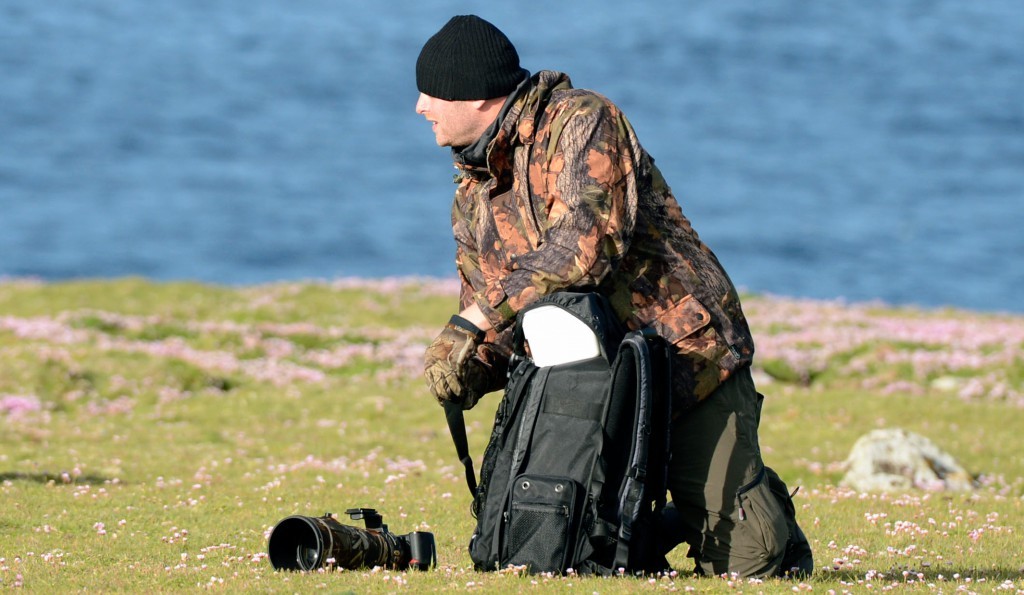
Johan Siggesson is a wildlife and nature photographer from Sweden but resides on the small Mediterranean island of Malta. His images have placed numerous times in the Getaway Gallery.
From an early age I was passionate about animals and the natural world. Before Animal Planet, Nat Geo Wild and the likes, I was always glued in front of the weekly nature program on Swedish state television. No matter if it was lions in Africa, wolves in Yellowstone or Polar bears in Svalbard, I practically grew up with Sir David Attenborough’s voice at the back of my head.
The very first memory I have of being impressed by great photography was as a young boy looking through the books in my grandmother’s bookshelf. I found this book with some type of green felt as a cover. This book was full of amazing photographs of animals, but sadly I cannot remember the title or author of the book. I remember sitting on the floor in my grandmother’s flat totally mesmerised by the photos of all the exotic animals.
From the moment I bought my first digital camera I was hooked. The creativity that is unleashed with instant feedback on the screen, variable ISO and more or less unlimited image capacity is something that really appeals to me.
I really strive for simple and clear images, where the viewer in some way can connect with the animals depicted. I try to evoke some kind of emotion. I believe that if any kind of emotion is triggered I have succeeded in telling a short story with my work and people would look at and remember that image a little bit longer.
-
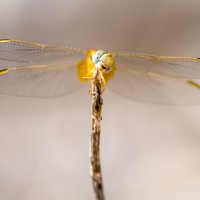
- A smiling female Scarlet darter dragonfly (Crocothemis erythraea) sitting on a stick in Salina, Malta.
-
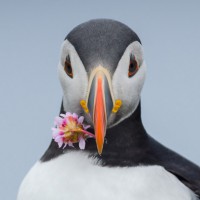
- After 6 days photographing the Atlantic Puffin for 10-12 hours a day, I unexpectedly got an extra day on the remote island of Fair Isle due to a canceled flight as a result of fog. Despite the urge to stay in and rest I ventured back out to the cliffs and found this little fellow close to the cliff edge on this minute island north of mainland Scotland. He (I presume) looked so human and apologetic with the flower in his bill. Exactly like he has been out doing something he wasn’t proud of and is now on his way home to ask for forgiveness.
-
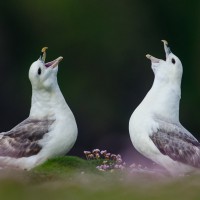
- A pair of Fulmars displaying bonding behaviour in Scotland
-
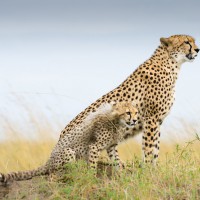
- Malaika the cheetah (Acinonyx jubatus) with her only remaining cub
-
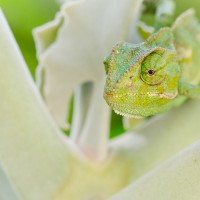
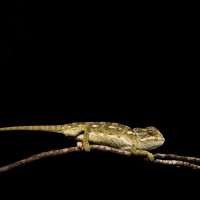
- The common chamaeleon like others of its family enjoys an arboreal habitat, scrambling about in trees and bushes with feet that have four toes, two on each side for grasping branches. It also uses its prehensile tail to maintain balance and stability. Movement is usually leisurely, often with a slight swaying motion to avoid detection by predators. The animal can move more rapidly when involved in a territorial dispute. They are usually solitary animals which maintain a territory and only tolerate members of the opposite sex during the mating season. Average length of the common chameleon is from 20 to 40 cm, with females often being substantially larger than males. The colour of the common chameleon is variable, between yellow/brown through green to a dark brown. Whatever the background colour is the common chameleon will have two light coloured lines along its side. It has a small beard of scales and some small hard scales on the top of its back. Many assume the color changes undergone by the chameleon are a result of its attempting to camouflage itself, when in reality the chameleon changes its color as a response to light and temperature stimuli and as an expression of its emotions (like chameleon body language). Often when caught for analysis, the chameleon may turn a dark color, Their colors are also important for interspecies communication, especially during the mating season.
-
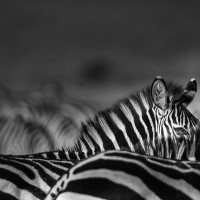
- From a mayhem of hooves, stripes and whinnying, suddenly an eye popped up between the manes. Originally set out to take a more abstract image of the zebra herd, I quickly changed from S to A on the camera and just managed to capture the eye before the moment was gone. For me it serves as a reminder that someone, or something is always watching you on the plains of The Maasai Mara in Kenya. I wanted a short DOF so an aperture of f4 was used. The image was converted into black and white in post processing where some dodge and burn and neutral density gradients was applied. The image was also cropped slightly.
-
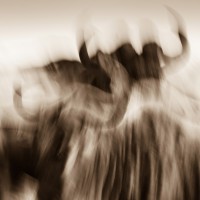
- Whilst waiting for a wildebeest crossing at one of the major crossing points in the area I captured this rather abstract image of some wildebeest waiting to cross.
-
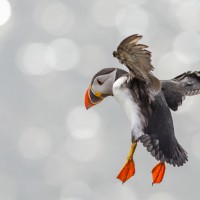
- Atlantic Puffin in Flight on Fair Isle in Scotland.
-
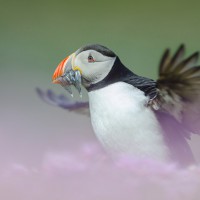
- Was photographing Atlantic Puffins on Fair Isle which is a small island just north of mainland Scotland. I was there for 6 days only photographing puffins and the last few days it felt like you had every single puffin image possible but of course I didn’t. All of a sudden all of the elements that I had tried to capture during the week came together in one image. The fish in the bill, the low angle, the pin sharp eye looking straight at me, the blurred out pink Thrift, the short depth of field and the wing-flapping.
-
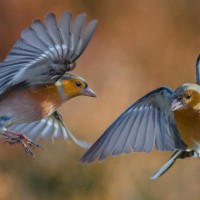
- The common chaffinch (Fringilla coelebs), usually known simply as the chaffinch, is a common and widespread small passerine bird in the finch family. The male is brightly coloured with a blue-grey cap and rust-red underparts. The female is much duller in colouring but both sexes have two contrasting white wings-bars and white sides to the tail. The male bird has a strong voice and sings from exposed perches to attract a mate. The chaffinch breeds in much of Europe, across Asia to Siberia and in northwest Africa. It prefers open woodland and often forages on the ground. The female builds a nest with a deep cup in the fork of a tree. The clutch is typically 4–5 eggs, which hatch in about 13 days. The chicks fledge in around 14 days but are fed by both adults for several weeks after leaving the nest. The chaffinch is a partial migrant; birds breeding in warmer regions are sedentary while those breeding in the colder northern areas of its range winter further south.
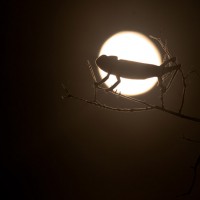
-
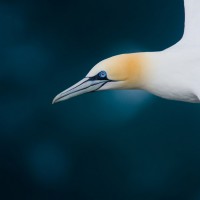
- I’ve had this photo in mind for a while and up at the cliffs of Hermaness in Scotland on a windy day I got my chance. Some of the gannets where flying eye level and after many tried I managed to get one with the sea as a backdrop.
-
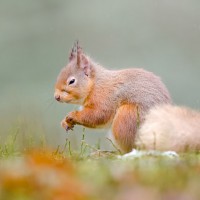
- The Red Squirrel is the native species of squirrel to the British isles. The Grey squirrel which is an alien species has pushed back the Red squirrel to the brink of extinction. A lot of resources are put in place in various parts of Britain to reverse the negative trend. This particular individual doesn’t seem to appreciative though…
-
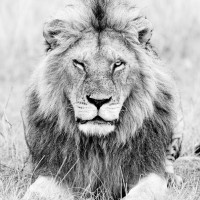
- Often described as the laziest animal on the savannah. This male did raise his head from the ground but didn’t bother to open both eyes when we approached. We simply weren’t worth the effort. I do think he looks like he is flirting with us though.
-
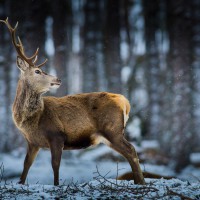
- The Red deer is an iconic species of the Scottish Highlands. Whilst photographing these amazing animals one day in the Cairngorms National Park it started snowing. Perfect! Since they are herd animals it is hard to single out one animal for the “less is more-approach”. Patience paid off and Mr. Deer decided to throw a pose as well.
-
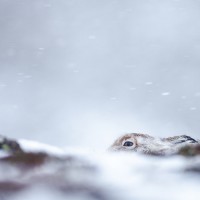
- The white Mountain hare relies on its camouflage to avoid predators and some of them are so confident that you literally can get within a few metres of them. This little guy really stayed low in the blizzard and after an hour crawling about in the snow and continuously wiping snow off the lens, I left the hare in the same place that I found it, which is always a nice feeling.
-
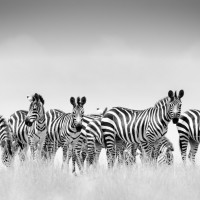
- A group of female zebras up on a hill. Their stallion is not far away and always keep a watchful eyes on them and any intruders. Taken in Masai Mara, Kenya
-
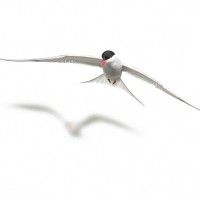
- At first glance it might look like there is only one Arctic Tern and its shadow. But in fact it is two separate terns in the image.