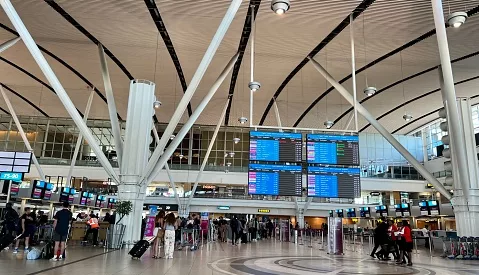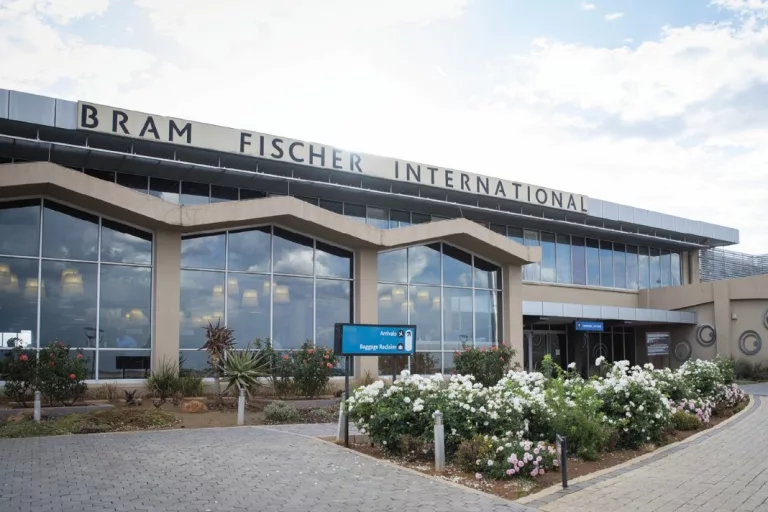
Bram Fischer International Airport is set to play a bigger role in the Free State’s future, with new plans aimed at expanding its impact beyond travel.
Source: Global Africa Network
According to Bizcommunity, a formal agreement signed on 16 March between Airports Company South Africa and Mangaung Metropolitan Municipality is setting that shift in motion. While it may sound like standard government collaboration, the focus is on coordinated development that supports broader regional growth.
More than just arrivals and departures
Airports have traditionally focused on connectivity, but they are increasingly being developed as hubs where business, logistics, tourism, and industry intersect. That is the direction being mapped out for Bram Fischer.
The partnership creates a shared framework for planning and development in and around the airport precinct. The goal is to support economic growth while improving infrastructure and attracting investment into the region.
For the Free State, this approach positions Bloemfontein as a gateway connecting the province to broader trade routes and travel networks.
A logistics hub in the making
One of the key areas of focus is the development of a logistics precinct. This includes improved cargo capabilities, stronger supply chains, and the potential for aviation-linked industries to operate nearby.
For businesses, this could support more efficient movement of goods and improved trade links. For the city, it opens opportunities for economic diversification and job creation.
There is also a broader national role. Strengthening regional logistics hubs contributes to South Africa’s wider trade corridors, which rely on efficient transport networks.
The aerotropolis vision comes to life
At the centre of the project is ACSA’s aerotropolis strategy. This approach focuses on using airport infrastructure to support economic growth and urban development.
In Bloemfontein’s case, the aim is to align airport expansion with the city’s long-term development plans. Instead of separate initiatives, infrastructure, investment, and skills development are expected to be coordinated.
What this means for locals
For residents, the impact is expected to unfold over time. Increased investment is linked to job creation, while skills development forms part of the agreement’s priorities.
There is also potential for tourism to benefit. Improved access and infrastructure may support greater visibility for the Free State as a destination.
A step towards long-term growth
The agreement signals a step towards implementing joint initiatives aimed at strengthening the airport’s role as a regional gateway.
If successfully implemented, the development of Bram Fischer International Airport is expected to contribute to broader socio-economic benefits for Mangaung and the Free State.
This website uses cookies to improve your experience while you navigate through the website. Out of these, the cookies that are categorized as necessary are stored on your browser as they are essential for the working of basic functionalities of the website. We also use third-party cookies that help us analyze and understand how you use this website. These cookies will be stored in your browser only with your consent. You also have the option to opt-out of these cookies. But opting out of some of these cookies may affect your browsing experience.
Necessary cookies are absolutely essential for the website to function properly. These cookies ensure basic functionalities and security features of the website, anonymously.
Cookie
Duration
Description
cookielawinfo-checkbox-analytics
11 months
This cookie is set by GDPR Cookie Consent plugin. The cookie is used to store the user consent for the cookies in the category "Analytics".
cookielawinfo-checkbox-functional
11 months
The cookie is set by GDPR cookie consent to record the user consent for the cookies in the category "Functional".
cookielawinfo-checkbox-necessary
11 months
This cookie is set by GDPR Cookie Consent plugin. The cookies is used to store the user consent for the cookies in the category "Necessary".
cookielawinfo-checkbox-others
11 months
This cookie is set by GDPR Cookie Consent plugin. The cookie is used to store the user consent for the cookies in the category "Other.
cookielawinfo-checkbox-performance
11 months
This cookie is set by GDPR Cookie Consent plugin. The cookie is used to store the user consent for the cookies in the category "Performance".
viewed_cookie_policy
11 months
The cookie is set by the GDPR Cookie Consent plugin and is used to store whether or not user has consented to the use of cookies. It does not store any personal data.
Functional cookies help to perform certain functionalities like sharing the content of the website on social media platforms, collect feedbacks, and other third-party features.
Performance cookies are used to understand and analyze the key performance indexes of the website which helps in delivering a better user experience for the visitors.
Analytical cookies are used to understand how visitors interact with the website. These cookies help provide information on metrics the number of visitors, bounce rate, traffic source, etc.
Advertisement cookies are used to provide visitors with relevant ads and marketing campaigns. These cookies track visitors across websites and collect information to provide customized ads.