



There’s something spine-tingling about a ghost town — the eerie hush of empty buildings, the crumbling remains of once-grand hotels, and the relics of lives that chased treasure across the South African landscape.
During the 19th- and 20th-century gold and diamond rushes, entire towns mushroomed overnight, promising untold riches. But when the seams dried up, the people left, leaving behind bones of industry and dreams.
From Mpumalanga’s gold-drenched valleys to the windswept diamond coast of the Northern Cape, these abandoned settlements tell powerful stories of hope, greed, innovation — and abandonment.
1. Pilgrim’s Rest, Mpumalanga: The Gold Rush time capsule

Pilgrim’s Rest/South African Tourism from South Africa/Wikimedia Commons
This once-thriving town is less a ghost town than a time machine. Declared a national monument in the 1980s, Pilgrim’s Rest was the site of the 1873 gold rush, when prospectors flooded the area in search of their fortune.
Today, the town functions as an open-air museum. Visitors can walk its preserved main street, sip drinks at the old Royal Hotel, tour the Diggings Site Museum, or visit the haunted (some say) Alanglade House. Though commercial tourism has waxed and waned, Pilgrim’s Rest remains one of South Africa’s best-preserved mining towns — a place where ghosts linger in the architecture, not just the air.
Tip: Visit in autumn when the surrounding hills blaze gold with leaves, echoing the wealth once pulled from the ground.
2. Eureka City, Mpumalanga: A ghost above the clouds
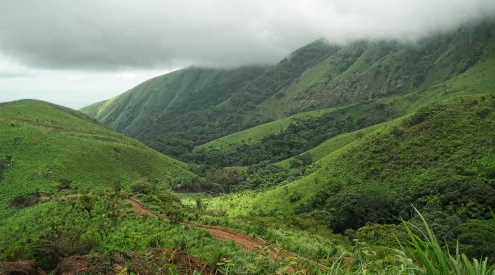
Hidden high in the Makhonjwa Mountains above Barberton, the ruins of Eureka City lie within the northern section of the Mountainlands Nature Reserve. Once a bustling mining town in the 1880s, today it stands abandoned, with only stone ruins and overgrown remnants hinting at its past life.
Access to Eureka City is controlled, and visitors must obtain a permit from the authorities before entering this protected ghost town. Whether reached by 4×4 or hiking the scenic Barberton Makhonjwa Geotrail, the journey is as rewarding as the destination.
Tip: Combine your trip with a geology-themed road trip along the geotrail — Eureka is part of the broader Barberton greenstone belt.
3. Leydsdorp, Limpopo: Gold Rush tales from the Bushveld

Old signboard of Leydsdorp/Ossewa/Wikimedia Commons
Leydsdorp is one of South Africa’s lesser-known gold rush ghost towns, tucked off the R71 near Gravelotte in Limpopo. Once a rough-and-ready settlement with a population of around 3,000 miners, it sprang to life in the late 1880s after gold was discovered in the nearby Murchison Range.
The town’s colourful characters — with nicknames like Paraffin Joe and Brandy Smith — named their claims with flair, and eight bars kept spirits high. But the Lowveld’s deadly blackwater fever and the lure of richer reefs on the Witwatersrand meant Leydsdorp’s boom was short-lived.
Now, only dusty ruins remain, but tales survive — like that of “Sandy,” a miner whose coffin fell apart on the way to the cemetery, leading to a final night spent in the local pub, and the story of miners who hollowed out a giant anthill to build a home.
Leydsdorp remains a vivid glimpse into South Africa’s rugged gold rush frontier.
Tip: Visit the nearby Modjadji Nature Reserve to explore the culture of the Rain Queen and see the largest concentration of cycad trees in the world.
4. Port Nolloth & Namaqualand’s forgotten diamonds

Port Nolloth/Gerald de Beer/Wikimedia Commons
Before the discovery of richer diamond fields inland, Port Nolloth was a vital hub for diamond exports. Today, the town clings to its fishing roots, but the ghosts of fortune-seekers linger — as do the rusted mining relics strewn along the coast.
Further south, Hondeklip Bay and other Namaqualand settlements once served as logistics hubs for diamond operations but are now peaceful seaside outposts. In spring, the region bursts into bloom with Namaqualand daisies — a surreal contrast to the region’s hard mining past.
Tip: Time your trip with flower season (August to September) for a hauntingly beautiful contrast between nature and human ambition.
5. Alexander Bay, Northern Cape: Diamonds, dust and decline

The now-abandoned terminal building of Alexander Bay airport/Emilemyburgh/Wikimedia Commons
Perched on the southern bank of the Orange River where it meets the Atlantic, Alexander Bay was once a high-security diamond town, off-limits to outsiders without permits. After the 1925 diamond discovery by Dr. Hans Merensky, the area boomed, fuelling the Diamond Coast Rebellion in 1928 and establishing Alexander Bay as a strategic mining hub.
Linked to Namibia’s Oranjemund via the Ernest Oppenheimer Bridge, the town gradually faded as diamond yields declined. Today, Alexander Bay is quiet and remote, with relics of its former life scattered across the arid Richtersveld landscape.
Tip: Combine your visit with the |Ai-|Ais/Richtersveld Transfrontier Park — a stark and stunning wilderness ideal for solitude seekers.
6. Kolmanskop, Namibia: A desert swallowed by sand

Kolmanskop/Max Murauer/Unsplash
Just outside Lüderitz, Kolmanskop is one of Africa’s most iconic ghost towns — a former German diamond settlement slowly being reclaimed by the Namib Desert. It boomed in the early 1900s after diamonds were discovered by railway worker Zacharias Lewala, quickly becoming a luxurious mining town with a hospital, ballroom, casino, and even Africa’s first tram.
But the good times didn’t last. Richer diamond finds near the Orange River in 1928 drew miners away, and by 1956, Kolmanskop was abandoned. Today, the desert has filled its elegant buildings with sand, creating hauntingly beautiful scenes that draw photographers from around the world.
Tip: A permit is required to enter the ghost town, which lies in the restricted Sperrgebiet area.
7. Bethulie, Free State: Echoes of war and worship

DH Steyn Bridge near Bethulie/Aliwal2012 at English Wikipedia/Wikimedia Commons
Bethulie may be small, but its past runs deep. Set on the banks of the Orange River, this quiet Free State town was once home to one of the largest British-run concentration camps during the Anglo-Boer War. Its origins date back to an 1828 mission station built for the San people — the oldest settler structure still standing in the province.
Bethulie’s layered history includes Bushman rock art, pioneer buildings, and war memorials. A sense of stillness hangs over the town, especially near the historic rail-and-road bridge — the longest in South Africa — which stretches across the Orange River like a forgotten monument to movement.
Tip: Visit the old Royal Hotel for dusty charm and a massive personal library, or explore the Jean Pellissier Museum for a window into missionary life and frontier conflicts.
How to visit South Africa’s ghost towns responsibly
- Leave no trace. Take only photos; leave only footprints.
- Support local. Some towns still have small communities — stop at local stalls or stay overnight to contribute to their survival.
- Travel smart. Many sites require 4×4 access or guided hikes. Be prepared.
- Do your research. Some areas may be on private or protected land; ask permission before visiting.
These ghost towns aren’t just derelict ruins — they’re time capsules, cautionary tales, and evocative places to ponder the cycles of boom and bust. As we crisscross the country on our modern road trips, it’s worth pausing at these forgotten places to hear the echoes of a very human history — one built on grit, hope, and the glint of treasure in the rock.
Follow us on social media for more travel news, inspiration, and guides. You can also tag us to be featured.
TikTok | Instagram | Facebook | Twitter
ALSO READ: From bushveld to beach: Wild places that end in a swim




.jpg)
