

Nieuwoudtville in the Northern Cape is best known for its spectacular spring wildflower displays, when the surrounding landscape transforms into a colourful carpet of blooms. But there is far more to this small town on the Bokkeveld Plateau than its seasonal flowers.

Gravel road through the brightly coloured flowers near Nieuwoudtville/By: JeremyRichards/iStock
From ancient dolerite formations and traces of prehistoric glaciers to towering quiver trees, dramatic waterfalls and nature reserves protecting remarkable plant diversity, the region offers an extraordinary glimpse into South Africa’s natural heritage.
Its landscapes tell a story millions of years in the making, shaped by geological forces, changing climates and the remarkable ability of plants to adapt to challenging conditions. Whether exploring rocky outcrops, following walking trails through indigenous vegetation or visiting one of the area’s conservation sites, Nieuwoudtville offers plenty to discover beyond flower season.
A landscape shaped by ancient geological forces
Part of what makes Nieuwoudtville so fascinating is the geology beneath its landscapes. The Bokkeveld Plateau contains a variety of rock formations, each contributing to the area’s distinctive scenery and ecological diversity.
One of the most noticeable features is the presence of dolerite formations. These dark, resistant rocks were formed when molten magma pushed into existing layers of sedimentary rock before cooling and solidifying underground. Over millions of years, erosion exposed these formations, leaving behind rocky koppies, unusual boulders and distinctive outcrops.
The result is a landscape that changes noticeably as visitors travel through the surrounding countryside. Flat expanses give way to rocky hills, ridges and scattered stone formations, creating habitats that support different plant communities.
Traces of an ancient ice age
Nieuwoudtville also offers a glimpse into a very different chapter of Earth’s history. Long before the Northern Cape became the semi-arid region we know today, parts of southern Africa experienced extensive glaciation.
Evidence of this ancient period can be found in glacial pavements around the Bokkeveld Plateau. These are exposed rock surfaces bearing marks left by moving glaciers approximately 300 million years ago, when southern Africa formed part of the ancient supercontinent Gondwana.
As enormous sheets of ice moved across the landscape, rocks and sediment embedded beneath them scraped and polished the underlying bedrock. Some of these surfaces preserve grooves and striations that reveal the direction in which the ice once travelled.
For visitors interested in geology, these formations provide a remarkable connection to a time when the region’s climate and appearance were dramatically different.
The botanical treasures of the Bokkeveld

The Aloe “forest” is to be found north of Nieuwoudtville and south of Loeriesfontein/Andy Bytheway, CC BY-SA 3.0, via Wikimedia Commons
The area’s geology is closely connected to its botanical diversity. Different rock types weather into different soils, creating a patchwork of habitats that support an impressive variety of indigenous plants.
Nieuwoudtville lies at the meeting point of several vegetation types, including fynbos, succulent Karoo and renosterveld. This combination helps explain why the surrounding landscape supports such an extraordinary range of plant species.
Although the spring flower displays attract much of the attention, the region’s botanical interest extends throughout the year. Succulents, bulbs, shrubs and other specialised plants have adapted to the area’s seasonal rainfall and often harsh conditions.
The quiver tree forest
Among the region’s most recognisable natural landmarks is its quiver tree forest, where clusters of distinctive quiver trees stand against the open Northern Cape landscape.
The quiver tree, Aloidendron dichotomum, is a striking succulent tree with a thick trunk and branches that divide repeatedly into smaller sections. Its yellow-green foliage grows in dense rosettes at the ends of its branches, giving it an unmistakable silhouette.
The trees are particularly well adapted to arid conditions, storing water in their thick stems and leaves. Their unusual branching structure and ability to thrive in rocky, dry environments make them an iconic feature of the region.
The quiver tree forest is situated along the road towards Loeriesfontein, north of Nieuwoudtville. It is a worthwhile stop for visitors interested in the area’s distinctive plant life, particularly those looking to explore the landscape outside the spring flower season.
Quiver trees are also of conservation interest. Climate change, habitat pressures and changing environmental conditions make the long-term protection of these distinctive succulents increasingly important.
Exploring the Hantam National Botanical Garden
A visit to the Hantam National Botanical Garden offers another opportunity to appreciate the botanical richness of the Bokkeveld Plateau.
Managed by the South African National Biodiversity Institute (SANBI), the garden protects a remarkable variety of indigenous vegetation across an extensive conservation area. Its habitats include Nieuwoudtville Shale Renosterveld, Nieuwoudtville-Roggeveld Dolerite Renosterveld and Hantam Succulent Karoo.
Together, these vegetation types support an impressive collection of plant species, including many that are endemic to the region.
The garden has a network of walking trails that allow visitors to explore its different habitats and appreciate how variations in soil and geology influence the plants growing in each area.
While spring remains a particularly popular time to visit, the garden also offers botanical interest beyond the main flowering season. Autumn, for example, brings the opportunity to see the striking flowering of Brunsvigia bosmaniae, a bulbous plant known for its large, spherical flower heads.
For anyone wanting to understand why Nieuwoudtville is considered such an important botanical destination, the garden is an excellent place to start.
Waterfalls, kloofs and rugged wilderness

Beautiful Nieuwoudtville Waterfall on Doorn river near Nieuwoudtville in Northern Cape, South Africa/By: geoffsp/iStock
Beyond its unusual rock formations and botanical diversity, Nieuwoudtville is surrounded by landscapes that invite visitors to slow down and explore.
The region’s escarpments, river valleys and rocky outcrops create opportunities for hiking, photography and nature-based excursions.
The Nieuwoudtville waterfall
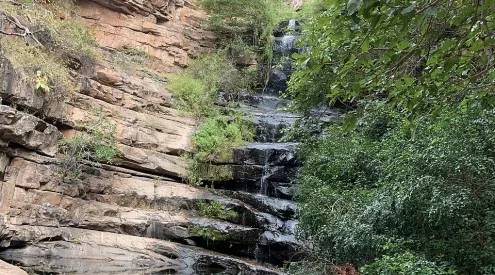
One of the area’s most impressive natural attractions is the Nieuwoudtville waterfall, situated along the Doorn River, a short drive from the village.
The waterfall plunges approximately 90 metres into a rocky gorge, creating a dramatic contrast with the surrounding landscape. Its appearance changes with the seasons, with the flow generally most impressive following periods of good rainfall.
The surrounding gorge and rocky slopes add to the experience, offering visitors a chance to appreciate the area’s rugged topography and the role water has played in shaping the landscape.
It is worth remembering that the waterfall is a seasonal attraction, so its flow can vary depending on recent rainfall. Visitors hoping to see it at its most impressive should consider local conditions before setting out.
Discovering Oorlogskloof Nature Reserve
For those wanting to spend more time outdoors, Oorlogskloof Nature Reserve offers a different perspective on the region’s natural heritage.
Located near Nieuwoudtville, the reserve protects a rugged landscape of deep kloofs, sandstone formations, indigenous vegetation and striking mountain scenery.
It is particularly appealing to hikers, with trails taking visitors through varied terrain and offering opportunities to experience the area’s quieter wilderness.
Oorlogskloof is also important for its cultural heritage. San rock art found in the reserve provides evidence of the people who lived in and travelled through this landscape long before the establishment of the modern town.
The combination of natural scenery, archaeological heritage and outdoor activities makes the reserve an important part of the broader Nieuwoudtville experience.
Visitors should check trail conditions, access arrangements and any permit requirements before planning a hike.
A closer look at Avontuur Nature Reserve
Another conservation area worth exploring is Avontuur Nature Reserve, which protects a variety of habitats on the Bokkeveld Plateau.
The reserve’s landscape includes fynbos, tillite renosterveld and dolerite renosterveld, highlighting the relationship between the region’s geology and its remarkable plant diversity.
Its walking trails provide an opportunity to explore these different ecosystems at a slower pace, with the changing vegetation and rocky terrain offering plenty to appreciate along the way.
Avontuur also has an interesting conservation history. The property was acquired by WWF South Africa in 2008 to help protect its biodiversity and important natural habitats.
Access is arranged by appointment, so visitors should make enquiries before including it in their itinerary.
Discovering Nieuwoudtville beyond flower season
Nieuwoudtville’s spring flowers may be its biggest drawcard, but they represent only one part of a much bigger natural story.
The region’s geological formations reveal evidence of ancient volcanic activity and prehistoric glaciers, while its botanical landscapes demonstrate how plants have adapted to different soils, climates and environmental conditions.
From the unmistakable silhouettes of quiver trees to the waterfalls and deep kloofs surrounding the village, the Bokkeveld Plateau offers a variety of experiences for nature lovers, hikers, photographers and curious travellers.
Exploring Nieuwoudtville beyond its famous flower displays also offers a different appreciation of the Northern Cape. It is a destination where the landscape itself becomes the attraction, revealing layers of natural history that stretch far beyond a single season.
Follow us on social media for more travel news, inspiration, and guides. You can also tag us to be featured.
Instagram | Facebook | Twitter | Spotify
ALSO READ:
Kosi Bay’s traditional fish traps: An ancient fishing system still in use