



India used to be home to a native species of cheetah, the Acinonyx jubatus, up until their extinction in 1947. Nearly 80 years later, an experimental conservation project seeks to reintroduce African cheetahs in their place, writes Joshua Kearney.

A South African cheetah, haloed by sunset/Wikimedia Commons
Spotted cats in India

A cheetah photographed in Sabi Sands/Wikimedia Commons
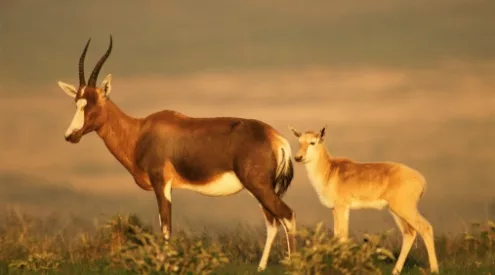
It may not be common knowledge, but India used to be home to its own unique species of cheetah. Historically, they predominantly lived alongside the blackbuck populations of the Punjab region’s thorn forests. Over time, these forests were cleared to make room for agriculture and human settlement.
As their habitats were peeled back, both animal populations suffered, though the real deathblow only came with British colonisation. Trophy hunting and prey depletion largely saw to the eventual end of the Indian cheetah. The last recorded killing took place in 1947, just too late to see the nation’s decolonisation.
Reintroduction over the years

Two cheetah brothers in the Okavango Delta, Botswana/Wikimedia Commons
Various efforts to reintroduce cheetahs, drawing from foreign populations, have been proposed since at least the 1970s. Initially these were targeted at Iran, but by the 1980s Kenya began making offers instead.
However, the Supreme Court of India outlawed the project in 2012, considering it too risky. It was, in their eyes, going to result in an invasive species or one that could not survive rather than a return to healthier wilds.
This decision was ultimately reversed in January of 2020. Importing small numbers of cheetahs was carefully allowed on an experimental basis, with the understanding that the project could be shuttered if it proved unsuccessful. It still took nearly three years for the first cheetahs to be transplanted.
Big cat expats

A cheetah looking back at the photographer in Masai Mara National Park/Wikimedia Commons
Beginning in September of 2022, a total of 8 cheetahs were translocated from Namibia into a quarantined enclosure in Kuno National Park. With 5 females and 3 males, the hope was that they could provide a stable “seed” population for the future. They were later moved to larger enclosure in November.
12 more cheetahs joined them in February of 2023, this time drawn from South Africa, and in March 2023 the first litter of cheetahs were born. Four cubs marked the first recorded live birth of cheetahs in India in over 70 years.
Unfortunately, not all was good news. That same month also saw the first of their number to die – they would not be the first, as by the start of the next year a full 10 cheetahs had died.
Scientific reception

A namibian cheetah on the run/Wikimedia Commons
The scientific community has overall experienced a mixed response to the project. Some conservationists and scientists view it as an opportunity for an endangered animal to flourish in a protected space, while others view it as another possible threat to already-struggling populations in Africa.
The fear is that continuous deaths within the Indian population could result in repeated replacement from African cats. Another concern is that the 748 km2 area of the park’s main areas is too small for their cheetahs, who normally have large individual territories of as much as 100 km2.
In light of these fears, efforts have been made to alleviate them. The Supreme Court of India has ordered for the cheetahs to be moved to alternative parks who may be better able to accommodate them, though no such movement has happened yet.
Current standings
As of the end of 2024, a total of 12 adult cheetahs and 12 cubs are reported to still be living in Kuno National Park. A further 2 cheetahs were reintroduced to Gandhi Sagar Wildlife Sanctuary in 2025, though only time will tell how these populations will develop going forwards.
Follow us on social media for more travel news, inspiration, and guides. You can also tag us to be featured.
TikTok | Instagram | Facebook | Twitter
ALSO READ:
From terror to triumph: the story of Tsar and Jamil, two rescued lions thriving in South Africa