
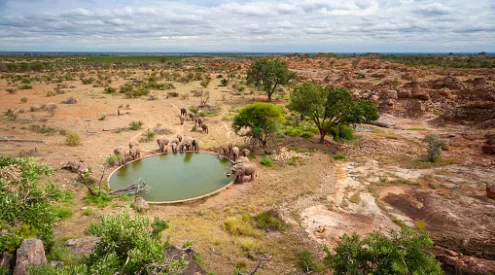


In Southern Africa, summer runs roughly from November to March and coincides with the wet season. The rains bring lush greenery and full water sources, creating ideal conditions for food and water abundance.
This triggers a surge in wildlife activity, including births, migrations, and breeding.
For travellers, this makes summer one of the best times to witness natural behaviours that are rare or impossible to see during other seasons.
Birth boom new life across the plains

Impala lambs at Kruger National Park/Bernard DUPONT from FRANCE/Wikimedia Commons
Many antelope species, such as impala, time their births to coincide with the start of summer rains. Most impala lambs are born between late November and early December. Other herbivores such as zebra foals, warthog piglets, and young grazers also appear during this green season.
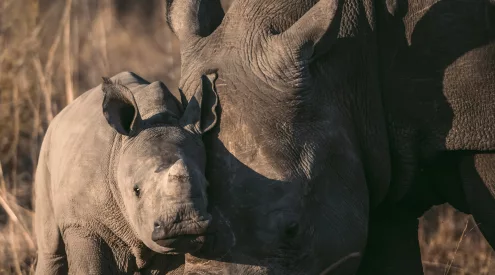
Even though large mammals like elephants and rhinos may give birth year-round, the concentration of newborns across reserves makes summer the peak season for spotting young wildlife.
Why summer
Abundant food and water make summer ideal for nursing mothers and growing young. The green season ensures good nutrition, cover from predators, and reliable water sources.
What it means for safari-goers
Visitors are likely to see newborns wobbling on their first legs, mothers with calves hidden in bushes, and predator-prey interactions. This is a rare opportunity to observe the vulnerability and energy of young animals in the wild.
Coastal and marine magic: sea turtle nesting season

Leatherback sea turtle hatchling/Max Gotta/Unsplash
Along the KwaZulu-Natal coast, particularly in iSimangaliso Wetland Park and Kosi Bay, summer marks sea turtle nesting season. Between November and February, female loggerhead and leatherback turtles come ashore to dig nests and lay eggs.
By January and February, hatchlings begin emerging and make their way to the sea. This ancient ritual is influenced by moon phases and tides, and observing it requires guided and responsible tours.
Birds on the move: migration, breeding, and nesting

Damara Tern in Cape Recife, Eastern Cape/baldcoot, CC0, via Wikimedia Commons
Summer sees a surge in both resident and migratory bird species. Many migrate from Europe, Asia, or North Africa to Southern Africa to take advantage of food, water, and nesting grounds.
Species such as the southern carmine bee-eater move south into savannah and woodland areas, feeding on the insect boom triggered by summer rains. The Damara tern breeds along coastal and desert shorelines before migrating north for the non-breeding season.
Birdwatchers can enjoy courtship displays, nest-building, and feeding of chicks, offering an extraordinary chance to see summer-specific bird behaviour.
Why summer wildlife makes the perfect safari experience
Summer in Southern Africa is more than just warm weather and green landscapes. It is a season that brings life to every corner of the ecosystem, making it ideal for different types of travellers and wildlife enthusiasts. Families will find this season particularly rewarding, as baby animals are everywhere. Young impala lambs, zebra foals, warthog piglets, and other newborns offer unforgettable sights for children and adults alike, making the safari experience both educational and magical. Observing these tiny creatures learning to stand, feed, and explore the world is an intimate glimpse into nature’s rhythms.
For travellers who care about conservation, summer also highlights the delicate balance of ecosystems. The arrival of rains, the surge of food and water, and the timing of births, migrations, and breeding seasons all reveal how wildlife depends on seasonal cycles. Ethical safari experiences, such as guided tours to observe nesting sea turtles or bird breeding sites, allow visitors to witness these natural processes while supporting conservation efforts.
Birdwatchers and wildlife enthusiasts who focus on species beyond the Big Five will find summer especially rewarding. Migratory birds return to coastal estuaries, wetlands, and savannahs, while resident birds engage in courtship, nest-building, and chick-rearing. The season transforms ordinary landscapes into vibrant arenas of avian activity, perfect for both casual observation and dedicated bird photography.
Photographers and nature storytellers will also find summer an unmatched season. The combination of newborn wildlife, lush greenery, flowing rivers, and nesting turtles provides a rich tapestry of natural moments. From dramatic skies after summer storms to intimate close-ups of babies exploring their surroundings, every safari becomes a visual feast.
More than just big mammals, diverse summer encounters
Summer rains rejuvenate wetlands, pans, rivers, and coastlines, supporting reptiles, amphibians, fish, and wetland species. This makes the season ideal for observing the full spectrum of Southern Africa’s biodiversity, from iconic Big Five species to smaller creatures whose life cycles are tied to seasonal rhythms.
Follow us on social media for more travel news, inspiration, and guides. You can also tag us to be featured.
TikTok | Instagram | Facebook | Twitter
ALSO READ: Safari stays with water views, perfect for summer days

_lambs_..._(32804877043).jpg)
