

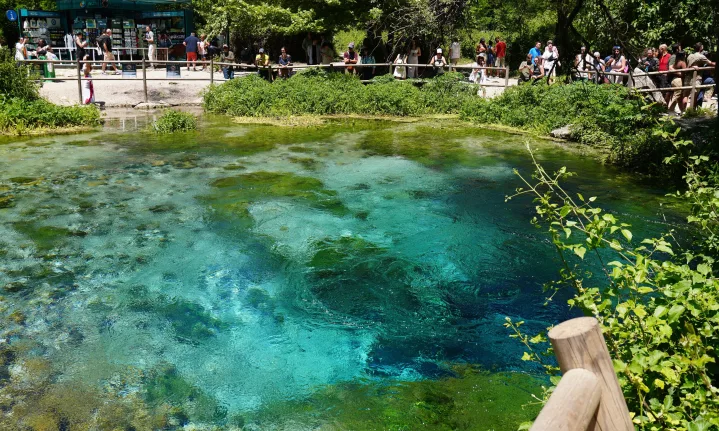
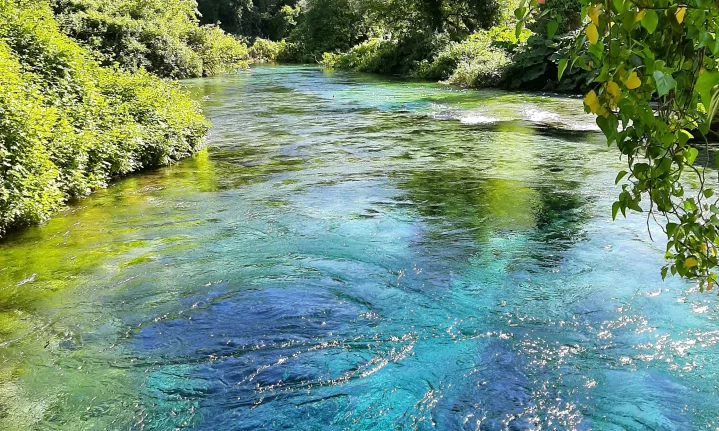
Deep in southern Albania, a brilliant blue spring rises from beneath the mountains, its depths still largely hidden from view.
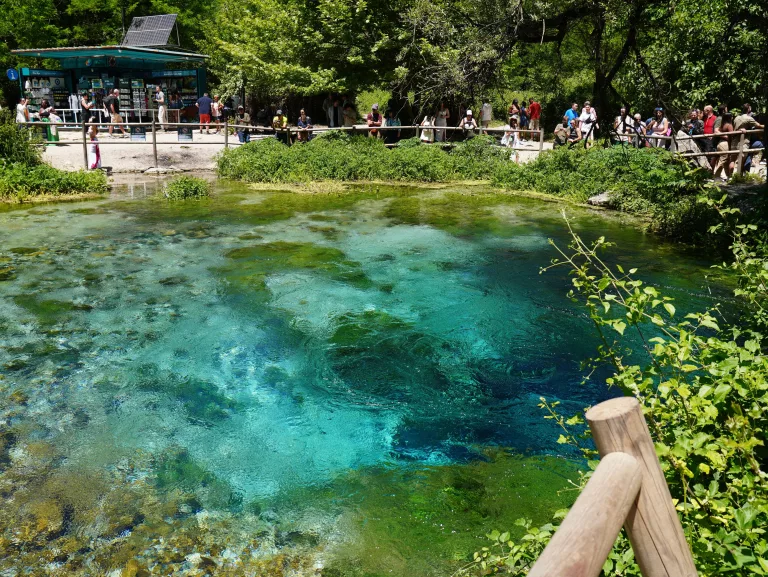
Tourists explore the stunning Blue Eye spring with its vibrant turquoise waters in Albania’s natural landscape / Salih Zeqiri / Pexels
Known as the Blue Eye, or Syri i Kaltër, this extraordinary karst spring seems almost too vivid to be real. The water shifts from turquoise at the edges to a deep, inky blue at its centre, where it disappears into an underground world that remains largely unseen.
Reached by a short walk through the forest near Muzinë, around 18km from Sarandë, it’s the kind of place that makes you lean into the rhythm of nature. Not because you have to, but because there is something mesmerising about watching water emerge from somewhere you cannot see.
A river begins here
The Blue Eye is much more than a beautiful pool.
The spring sits within the Mali Gjerë karst massif, where rainwater filters through cracks and cavities in the limestone before travelling underground. Some of the water also comes from the gravel aquifer of the nearby Drinos River valley.
Research estimates the spring’s average discharge at around 18.4 cubic metres per second. Put simply, more than 18 000 litres of water can emerge every second. Standing beside it, that scale is difficult to wrap your head around.
The water looks calm at first, but at the centre of the pool you can see the force of the spring pushing upwards from below. The darker blue marks the place where the water disappears into the depths, giving the Blue Eye its name.
The water is cold too, around 12°C, even in the warmth of an Albanian summer. It’s easy to understand why people once wanted to jump in. Today however, they cannot. Swimming in the spring is prohibited and the central pool is fenced off, although older photographs still show visitors taking the plunge.
Take the scenic route
After leaving your vehicle near the entrance, you follow a roughly 1.5 to 2km route through the surrounding landscape towards the spring. The walk generally takes around 20 to 30 minutes, depending on your pace.
Its’s not exactly a demanding hike, but it gives the Blue Eye a proper sense of arrival.
The road disappears behind you. The trees close in. The sound of running water becomes more noticeable. And then there it is.
The Blue Eye is surrounded by dense greenery, with the Bistrica River flowing away from the spring towards the Ionian Sea. The landscape feels cool and alive, a welcome contrast to the heat of southern Albania in summer.
There are tourist facilities around the attraction, and seasonal transport is available for visitors who would rather not walk the entire route. But if you have the time, walking is definitely worth it. The anticipation is part of the experience.
The mystery beneath the surface
The Blue Eye has been studied as a source of water, an important karst feature and part of southern Albania’s wider hydrological system.
Yet for all the research, there is something wonderfully unknowable about it. The spring is deep. The water is exceptionally clear. And beneath that electric blue surface, the underground network continues beyond what the naked eye can see.
That’s perhaps what makes the place feel so much bigger than it looks. You can stand at the edge and watch the water emerge, but you can’t see where it began.
The spring has been recognised as a Natural Monument for its geological, ecological and aesthetic value, and it plays an important role in the Bistrica River system. It’s also a reminder that some of Albania’s most extraordinary landscapes are found away from its famous coastline.
When to go
The Blue Eye is now one of southern Albania’s better-known natural attractions, so it’s worth arriving early if you want a quieter experience. Summer can be especially busy, with visitors combining the spring with trips from Sarandë and Gjirokastër.
It’s location makes it an easy addition to a southern Albania road trip, sitting roughly between the two destinations.
Allow enough time to walk to the spring, linger beside the water and explore the surrounding area rather than treating it as a quick photo stop. Because visitor arrangements and fees can change, check the latest information before travelling.
The Blue Eye
The Blue Eye is no longer a secret, but it still feels somewhat like a discovery.
Perhaps that’s the magic of it. You can walk the path, stand beside the brilliant blue pool and watch thousands of litres of water rise from beneath the mountains, but you cannot see where it begins.
You can only stand at the edge and wonder what lies beneath.
Follow us on social media for more travel news, inspiration, and guides. You can also tag us to be featured.
Instagram | Facebook | Twitter | Spotify
ALSO READ: