




Some of the world’s most extraordinary travel experiences involve looking back in time. A twisted tree can carry thousands of years of history in its rings, while a stone monument can reveal how ancient communities understood the world around them. Elsewhere, exposed rock formations preserve evidence of a planet almost unrecognisable from the one we know today.
These places are more than records of the past. They are landscapes, cultural sites and living environments that can still be explored today, offering a tangible connection to the immense timescale of Earth’s history.
1. Barberton Makhonjwa Mountains, South Africa
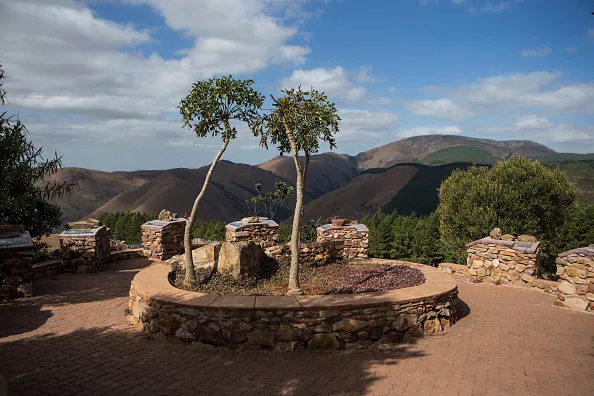
Rocks are displayed with information about their history and creation at the Lebombo Viewpoint on the geotrail of Makhonjwa Mountains near Barberton, Mpumalanga (WIKUS DE WET/AFP via Getty Images)
Explore some of Earth’s oldest surviving rocks
South Africa’s Barberton Makhonjwa Mountains in Mpumalanga offer a remarkable glimpse into the planet’s earliest history. Part of the Barberton Greenstone Belt, the UNESCO World Heritage Site preserves exceptionally well-preserved volcanic and sedimentary rocks dating back between 3.6 and 3.25 billion years. They record conditions on Earth long before complex life emerged.
The rocks preserve clues about early oceans, the development of the continents, ancient volcanic activity and meteorite impacts. Together, they provide scientists with an important record of how the young planet evolved.
The landscape is also a destination in its own right, with rugged mountains, scenic roads and geological outcrops that bring this distant past into view. Visitors can explore the wider Barberton area and learn about the region’s geological heritage, although access to individual sites can vary.
Standing among these ancient rocks is a reminder that the history of human civilisation represents only a tiny fraction of Earth’s story.
2. Vredefort Dome, South Africa

Vredefort Dome signage/Leo za1/Wikimedia Commons
Visit the remains of an ancient cosmic collision
Another South African destination takes visitors back billions of years, this time to a dramatic event that reshaped the planet’s surface.
The Vredefort Dome in the Free State is part of a vast impact structure formed approximately 2.023 billion years ago, when a massive meteorite struck Earth. According to UNESCO, it is the oldest known and largest, most deeply eroded complex meteorite impact structure on the planet.
The original crater has long since eroded, but the surviving geological formations reveal the extraordinary forces involved in the collision. The impact altered rocks deep beneath the surface, leaving evidence that geologists can still study today.
The wider region offers rural scenery, river landscapes and opportunities for outdoor activities. Visitors can explore parts of the impact structure through local routes and geological points of interest, making it an intriguing addition to a trip through the northern Free State.
Rather than a single crater to photograph, Vredefort is a much larger geological story written across the landscape.
3. Ancient Bristlecone Pine Forest, United States
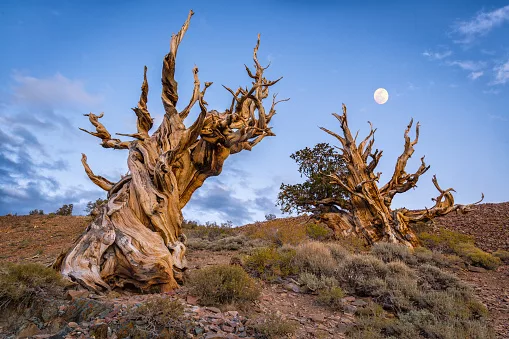
Moon rising over Bristlecone Pine Trees in the ancient forest at dusk/By: Photography by Deb Snelson/Getty Images
Meet trees that were growing thousands of years ago
In California’s White Mountains, ancient bristlecone pines cling to rocky slopes in an environment where cold temperatures, strong winds and poor soil slow their growth. Their twisted trunks and weather-beaten branches give the forest an almost otherworldly appearance.
Some of these trees are more than 4,000 years old, making bristlecone pines among the longest-lived individual trees known to science. Their longevity is partly explained by their slow growth and the harsh conditions in which they survive. Even when parts of a tree die, other sections can remain alive.
Walking among them offers a different perspective on ancient history. While civilisations rose and fell, these trees continued to grow, season after season, recording environmental changes in their annual rings.
The Ancient Bristlecone Pine Forest has trails that allow visitors to experience this unusual landscape. However, the precise location of some of the oldest individual trees is kept secret to protect them from damage.
The experience is less about finding one famous tree and more about appreciating a remarkable forest of living survivors.
4. Göbekli Tepe, Türkiye
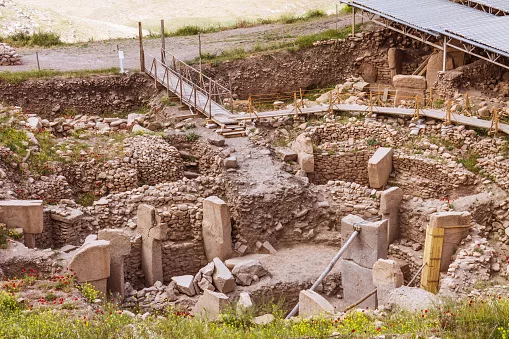
Göbekli Tepe archaeological site; it was founded in the 10th millennium BCE and abandoned in the 8th millennium BCE, thus being the world’s oldest known megaliths/By: Luis Dafos/Getty Images
Discover monumental architecture from the Stone Age
Long before the pyramids of Egypt rose above the desert, communities in what is now southeastern Türkiye were building monumental stone structures.
Göbekli Tepe dates to approximately 9600 to 8200 BC, placing its earliest structures around 11,000 years ago. The archaeological site contains monumental enclosures featuring distinctive T-shaped limestone pillars, some decorated with carvings of wild animals.
The site has transformed how archaeologists think about early human societies. Its builders were hunter-gatherers, and the scale of the structures suggests that these communities could organise complex construction projects well before farming became widespread.
The purpose of the enclosures remains a subject of research, although they are generally understood to have had ceremonial or communal significance.
Today, visitors can explore the archaeological site and see the surviving pillars that have made Göbekli Tepe one of the world’s most important prehistoric destinations. The surrounding landscape also connects the site to the wider history of early settlements in Upper Mesopotamia.
For travellers interested in ancient history, it offers a glimpse into a period when monumental architecture was only beginning to emerge.
ALSO READ:
5. Newgrange, Ireland
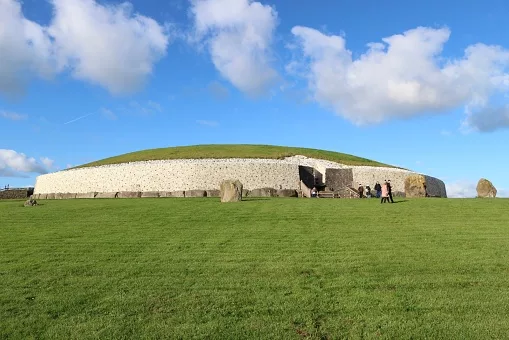
Ancient Newgrange/By: Leandro-Bai/Getty Images
Step inside a prehistoric monument older than the pyramids
In Ireland’s Boyne Valley, Newgrange is a prehistoric passage tomb that demonstrates just how sophisticated ancient engineering could be.
Built around 3200 BC, the monument is more than 5,000 years old and predates the Great Pyramid of Giza. Its enormous circular mound contains a stone-lined passage leading to an inner chamber, while the entrance is decorated with distinctive megalithic art.
One of its most remarkable features becomes apparent around the winter solstice. A specially designed opening above the entrance allows the rising sun to shine along the passage and illuminate the inner chamber for a brief period. The alignment reveals the builders’ careful attention to the movement of the sun.
Visitors can experience Newgrange through guided tours accessed via the Brú na Bóinne Visitor Centre. Entry to the inner chamber during the winter solstice is extremely limited and allocated through a lottery, so travellers should not assume they will witness the phenomenon from inside.
Even outside the solstice period, the monument offers a powerful connection to the people who built it thousands of years ago.
6. Great Zimbabwe, Zimbabwe
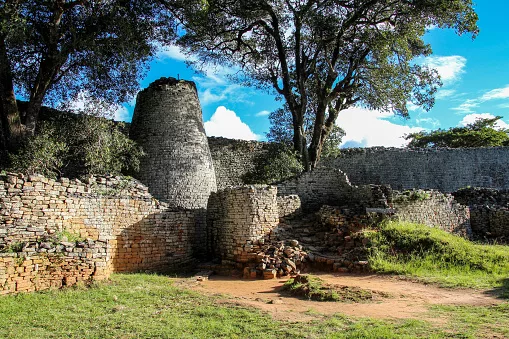
Great Zimbabwe is a medieval city in the south-eastern hills of Zimbabwe near Lake Mutirikwe and the town of Masvingo/By: evenfh/iStock
Explore the stone city of a powerful African civilisation
Great Zimbabwe is one of Southern Africa’s most significant archaeological sites, preserving the remains of a major medieval city built by the ancestors of the Shona people.
Constructed and developed between approximately 1100 and 1450 AD, the settlement became an important political and trading centre. Its influence extended across a region connected to long-distance trade networks, including the exchange of gold and other goods.
The site covers an extensive area and includes the Hill Ruins, the Great Enclosure and the Valley Ruins. Its most striking features are the dry-stone walls, built without mortar and decorated in places with intricate patterns.
The Great Enclosure is particularly impressive, with towering curved walls that demonstrate the skill of the builders. The ruins also challenge the idea that monumental architecture and sophisticated urban societies were confined to Europe, North Africa or the Middle East.
Visitors can walk among the surviving structures and explore a landscape that tells the story of an influential African civilisation. It is a destination that rewards time and curiosity, particularly for travellers interested in the continent’s history beyond its colonial period.
7. Uluru, Australia
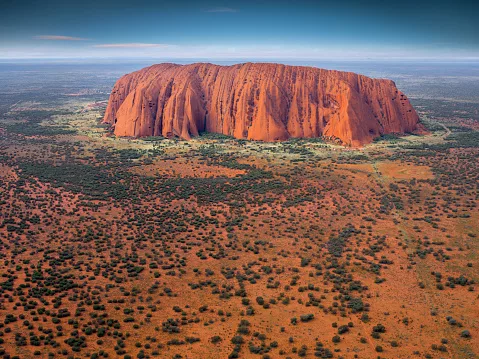
Uluru (Ayers Rock) aerial/By: Ignacio Palacios/Getty Images
See a sandstone monolith with a history spanning hundreds of millions of years
Rising dramatically from Australia’s Red Centre, Uluru is one of the country’s most recognisable natural landmarks. Its red sandstone surface changes colour throughout the day, particularly at sunrise and sunset, when the shifting light reveals different shades across the rock.
Uluru’s geological history stretches back around 500 million years. The rock formed from ancient sediments that were eventually compressed into sandstone, then tilted and exposed by geological processes and erosion.
Yet its importance extends far beyond its age and appearance. Uluru is an ancestral and spiritual landscape for the Anangu Traditional Owners, whose cultural knowledge and stories are inseparable from the rock and its surroundings.
Visitors can learn about this heritage at the cultural centre, join guided experiences and explore designated walking routes around the base. The area also supports distinctive desert plants and animals, offering opportunities to understand the ecology of Australia’s arid interior.
A visit to Uluru is therefore not simply a chance to see an ancient geological formation. It is an opportunity to experience a living cultural landscape that continues to hold deep meaning for its traditional custodians.
8. The Great Pyramid of Giza, Egypt
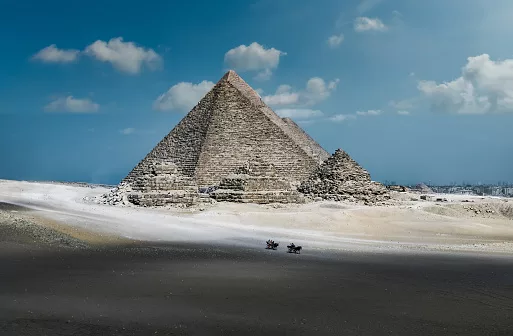
The Great Pyramid with camel in Giza/By: Eric Yang/Getty Images
Stand before one of the last surviving ancient wonders
The Great Pyramid of Giza has stood on the outskirts of modern Cairo for roughly 4,500 years. Built as a royal tomb for the Fourth Dynasty pharaoh Khufu, it remains the only surviving structure of the Seven Wonders of the Ancient World.
When it was completed, the pyramid was the tallest human-made structure in the world. Its immense scale, carefully arranged limestone blocks and enduring presence demonstrate the organisational ability and engineering knowledge of ancient Egyptian society.
The pyramid forms part of the wider Giza pyramid complex, which includes the pyramids of Khafre and Menkaure, monumental tombs and the Great Sphinx. Together, these structures provide insight into ancient Egyptian beliefs about kingship, death and the afterlife.
Travellers can visit the Giza plateau, explore designated areas around the monuments and, subject to ticketing and access arrangements, enter the Great Pyramid. Visiting with a qualified guide can help put the site’s history and construction into context.
Although the pyramid is among the youngest entries on this list compared with Earth’s ancient rocks, its survival is extraordinary. It remains a direct link to a civilisation that flourished thousands of years ago.
Travelling through time
The world’s oldest places offer very different ways to understand the past. Some preserve evidence of Earth’s earliest geological processes, while others reveal how ancient people built monuments, organised communities and interpreted the world around them.
From South Africa’s ancient rock formations to the prehistoric structures of Türkiye and Ireland, these destinations show that history is not confined to museums or textbooks. It is preserved in landscapes, stone walls, trees and places that people can still visit.
The next time you plan a trip, consider choosing a destination not only for its scenery but also for the story it tells. Few experiences put the passage of time into perspective quite like standing somewhere that has endured for thousands, or even billions, of years.
Follow us on social media for more travel news, inspiration, and guides. You can also tag us to be featured.
Instagram | Facebook | Twitter | Spotify
ALSO READ: