




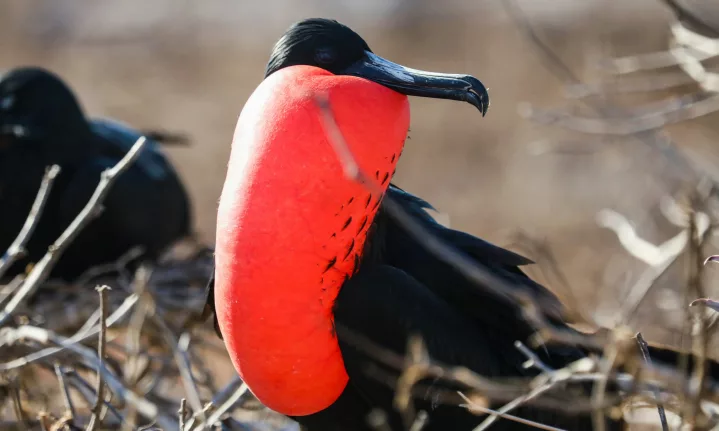
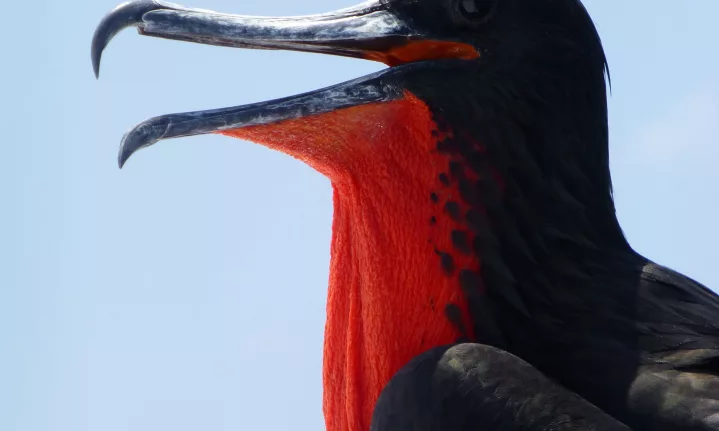
With a wingspan of more than two metres, a talent for stealing food mid-air and a rather unusual way of attracting a mate, the magnificent frigatebird is not your average seabird. This tropical aerialist spends much of its life soaring above the ocean, rarely touching the water and making the most of other birds’ fishing efforts.
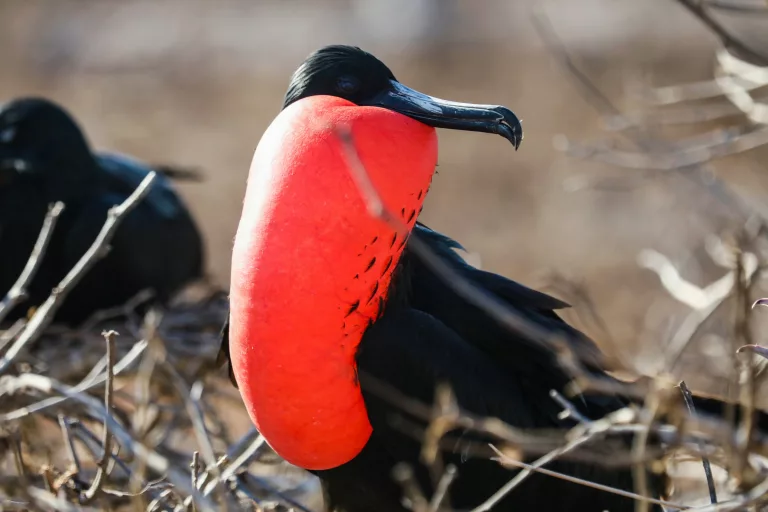
Photo: Unsplash
A pirate with wings
The magnificent frigatebird (Fregata magnificens) is built for life in the air. Its long, angular wings and deeply forked tail help it glide over tropical waters with remarkable ease, often using rising air currents to stay airborne without much effort.
But it has another trick up its sleeve. Rather than relying entirely on its own fishing skills, this seabird sometimes chases other birds until they drop or regurgitate their catch, then swoops in to steal the meal. The behaviour is known as kleptoparasitism, and it has earned frigatebirds a reputation as pirates of the skies.
They do catch their own food, including fish and squid, usually snatching prey from the ocean’s surface.
Why it avoids the water
For a seabird, the magnificent frigatebird has an unusual weakness: its feathers are not waterproof enough to allow it to land on the sea comfortably. It therefore relies on its aerial skills to find food rather than diving beneath the waves like many other seabirds.
Its wingspan measures around 2.2 metres, making it an impressive sight as it glides above the coastline. It can spend long periods in flight, using air currents to conserve energy while searching for food.
Its courtship display is hard to miss
When it comes to attracting a mate, the male magnificent frigatebird has a particularly eye-catching strategy. During breeding season, he inflates a bright red pouch on his throat until it resembles a balloon.
Males gather in groups, raise their bills, rattle their beaks and call to females flying overhead. The display is difficult to miss, although it might not be everyone’s idea of romance.
The pouch, known as a gular sac, becomes much less conspicuous outside the breeding season. Females look different, too, with a dark head and white breast, while young birds have white heads and underparts.
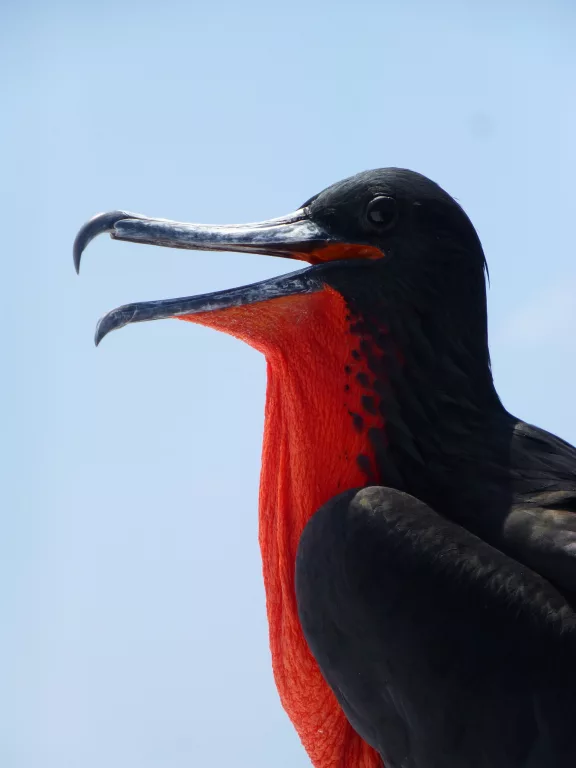
Photo: Pexels
Dedicated parents
Despite their opportunistic feeding habits, magnificent frigatebirds invest considerable time in raising their young. Both parents help incubate the egg for around 56 days, and the chick can remain in the nest for roughly five to six months before fledging.
The female may continue feeding the young bird for up to a year. It is a lengthy commitment, particularly for a species that spends so much of its life on the wing.
Where can you see a magnificent frigatebird?
The species occurs across tropical and subtropical parts of the Americas, including the Caribbean, the Gulf of Mexico, Central America and parts of the Pacific coast of South America. The Galápagos Islands are also a destination where visitors may spot frigatebirds soaring overhead.
Look for their distinctive silhouette above coastal waters: long, narrow wings, a forked tail and effortless gliding. If other seabirds suddenly become noisy or start chasing one another, it may be worth looking up. A frigatebird could be trying to turn someone else’s catch into its own lunch.
For South African birdwatchers, there is an important distinction: the magnificent frigatebird is primarily found in the Americas, while the great frigatebird is a separate species found across parts of the Indian and Pacific oceans.
ALSO SEE: 6 Marine animals surviving Earth’s harshest environments