





Bali is famous for its beaches, rice terraces and tropical landscapes, but some of the island’s most fascinating sights are built by human hands. Ancient Hindu temples rise above the ocean, intricate stone gateways frame volcanic mountains, and royal water palaces combine ornate architecture with ponds, fountains and carefully planned gardens.
For travellers interested in architecture, Bali offers a remarkable mix of religious landmarks, traditional villages, historic royal residences and contemporary cultural monuments. Many reflect the island’s Hindu traditions and its close relationship with nature, while others reveal the craftsmanship and design influences that have shaped Balinese life over centuries.
Some attractions, such as Uluwatu Temple and the famous gates of Lempuyang, are already firmly on the tourist trail. Others, including an unusual temple in northern Bali and one of the island’s largest Buddhist monasteries, offer a different perspective on the destination.
If you’re planning a trip to Indonesia’s Island of the Gods, these architectural attractions in Bali deserve a place on your itinerary.
Uluwatu Temple
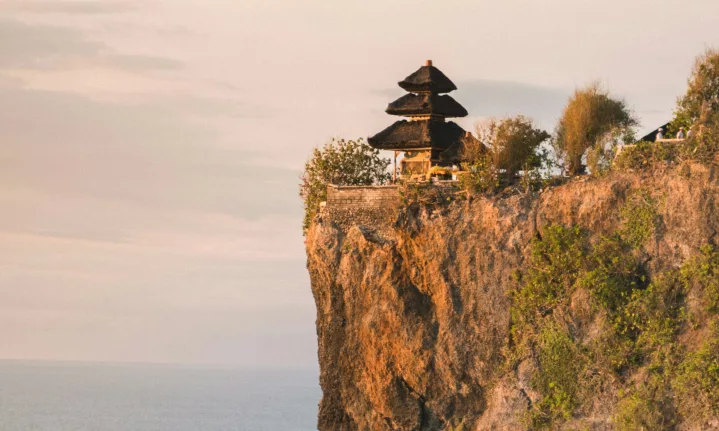
Perched on a limestone cliff about 70 metres above the Indian Ocean, Uluwatu Temple is one of Bali’s most recognisable architectural landmarks. Its dramatic setting attracts visitors for the views alone, but the temple itself is an important part of the island’s Hindu heritage.
Known locally as Pura Luhur Uluwatu, the temple features traditional Balinese stonework, ornate gateways and sacred courtyards positioned along the cliff edge. Its design is closely connected to its spiritual purpose, with the temple regarded as one of the island’s important sea temples.
Visit in the late afternoon to see the complex in the changing light, then stay for the traditional Kecak fire dance, often performed against the sunset. Keep an eye on your belongings, as the resident monkeys are known for grabbing loose items.
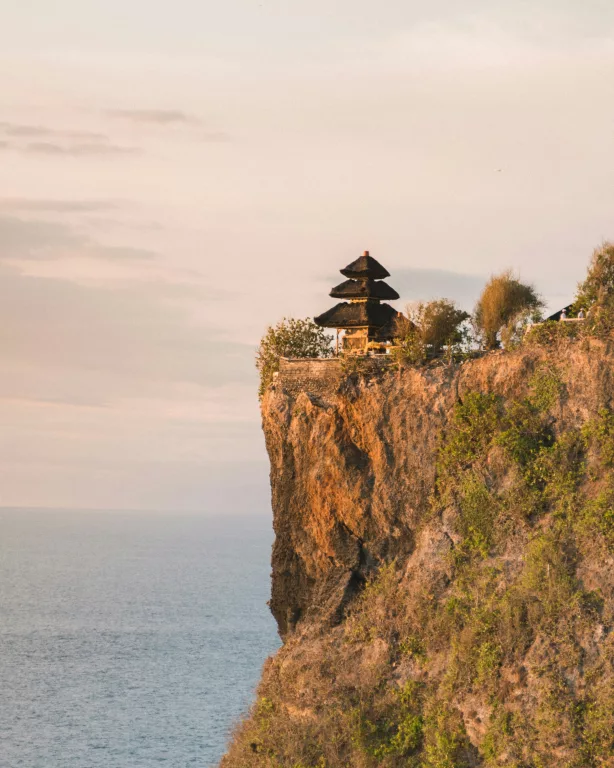
Photo: Unsplash
Tanah Lot Temple
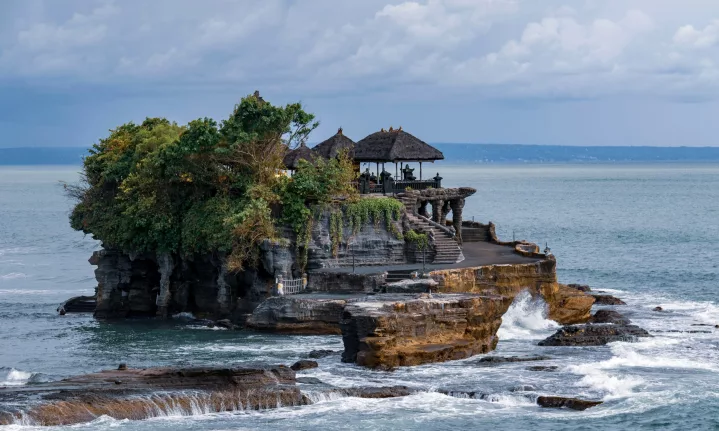
Few sights capture Bali’s relationship with the ocean quite like Tanah Lot Temple. Built on a rocky outcrop just offshore, the temple appears almost detached from the mainland at high tide, creating one of the island’s most photographed architectural scenes.
Tanah Lot is a Hindu place of worship with strong connections to Bali’s coastal spiritual traditions. Its appeal lies partly in the contrast between the dark volcanic rock, the crashing waves and the temple’s traditional rooflines.
The surrounding complex includes landscaped pathways, smaller shrines and viewpoints, making it easy to spend more time here than a quick sunset photograph might suggest.
Travel tip: Arrive well before sunset if you want time to wander around the grounds. Access to the rock itself depends on tidal conditions, and visitors should follow local guidance around the sacred areas.
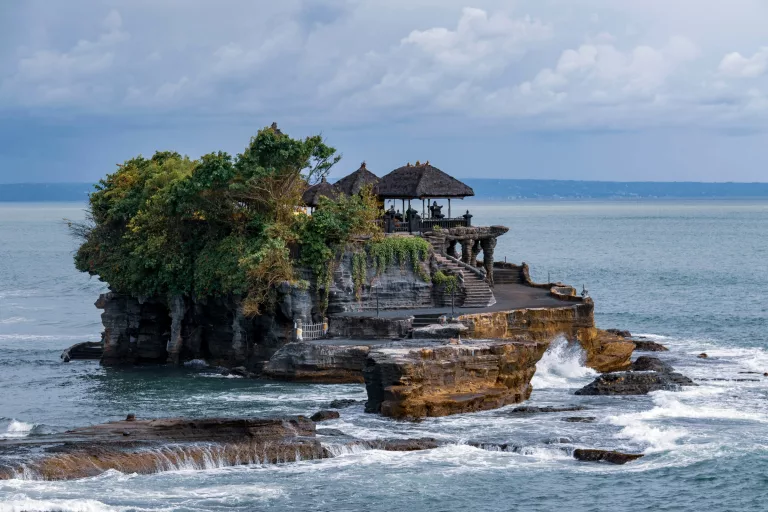
Photo: Unsplash
Ulun Danu Beratan Temple
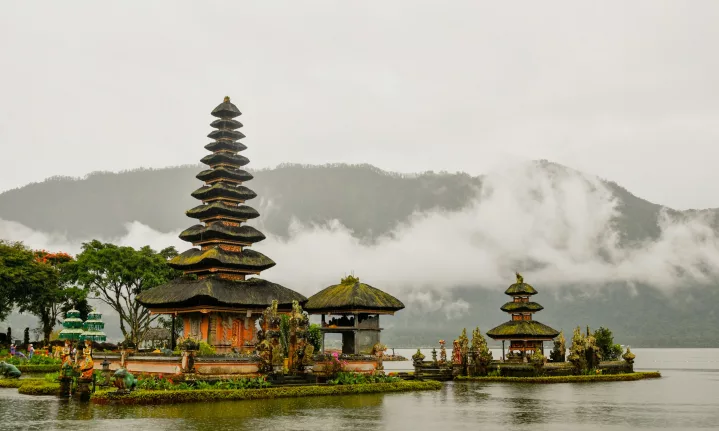
One of Bali’s most distinctive landmarks appears to float on the surface of a lake. Ulun Danu Beratan Temple stands beside Lake Beratan in the island’s cooler central highlands, where its multi-tiered meru shrines rise above the water against a backdrop of green mountains.
The temple is associated with Dewi Danu, a Hindu goddess linked to lakes and water. Its setting reflects the importance of water in Balinese spiritual life and agriculture, where religious practices and the management of irrigation have long been closely connected.
The tiered roofs, traditional pavilions and carefully maintained grounds make this a rewarding stop for anyone interested in sacred architecture. Early morning is particularly atmospheric, especially when mist hangs over the lake.
Bedugul is also a worthwhile detour for travellers heading inland, offering a cooler change of scenery from Bali’s busier coastal resorts.
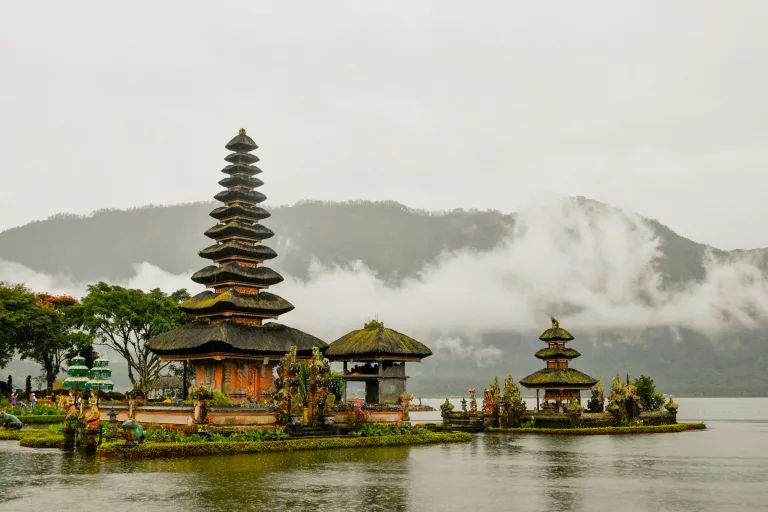
Photo: Unsplash
Lempuyang Temple and the Gates of Heaven
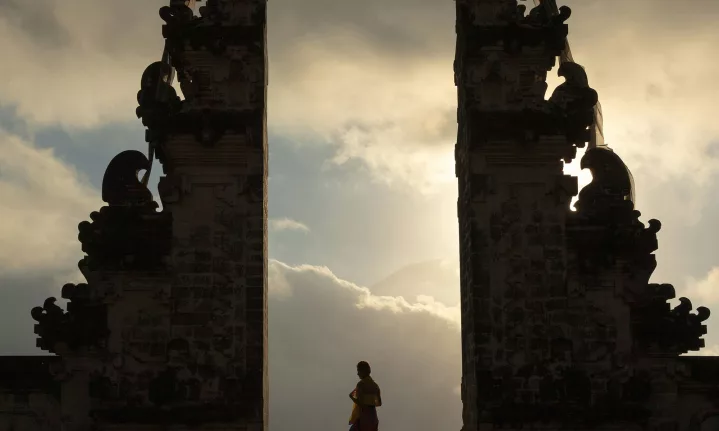
The striking split gate at Lempuyang Temple has become one of Bali’s most recognisable travel images. Framing Mount Agung in the distance, the tall stone gateway creates a dramatic composition that draws visitors to the island’s eastern reaches.
The complex is part of Pura Lempuyang Luhur, a sacred temple site associated with Bali’s important mountain sanctuaries. The split gateway, known as a candi bentar, is a familiar feature of Balinese architecture. Its two halves create a symbolic threshold between spaces rather than a conventional enclosed entrance.
Although the gateway is often called the Gates of Heaven by tourists, there is much more to the site than its famous photo opportunity. The wider temple complex extends up the mountain and includes additional shrines and gateways.
Travel tip: Go early to improve your chances of clear mountain views and avoid some of the busiest periods. Remember that this is a sacred place of worship, not simply a photography location.
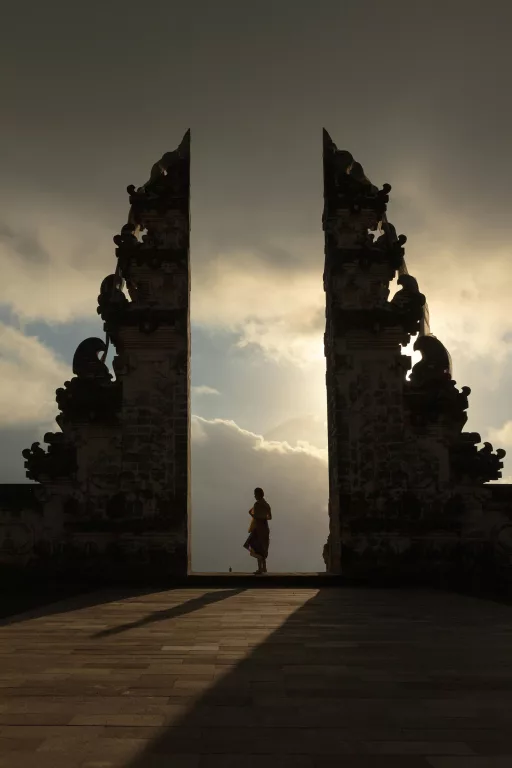
Photo: Unsplash
Besakih Temple, Bali’s Mother Temple
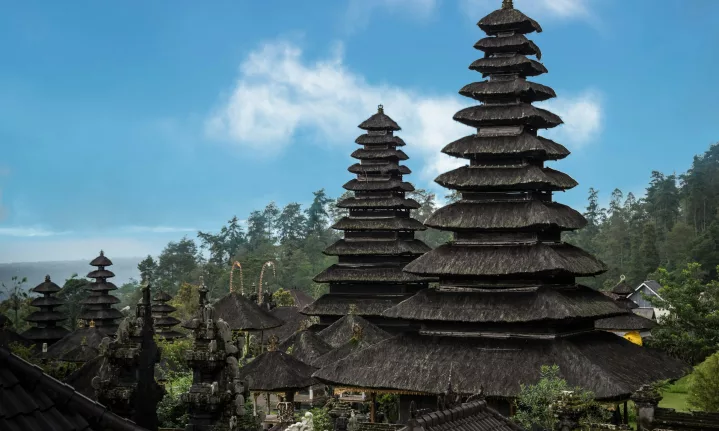
For a sense of the scale of Balinese religious architecture, few places compare with Besakih Temple. Often called the Mother Temple, this expansive complex sits on the slopes of Mount Agung, Bali’s highest volcano, and comprises numerous temples and sacred structures.
Rather than a single building, Besakih is a collection of interconnected sanctuaries, stairways, courtyards and shrines arranged across the mountainside. Its layered meru roofs, stonework and elevated position create an impressive architectural landscape.
The complex holds major religious significance for Balinese Hindus and remains an active place of worship. Ceremonies take place throughout the year, so visitors may encounter processions and worshippers dressed in traditional clothing.
Allow several hours for a visit, particularly if you want to appreciate the different levels and viewpoints. A local guide can help explain the temple’s layout and cultural importance.
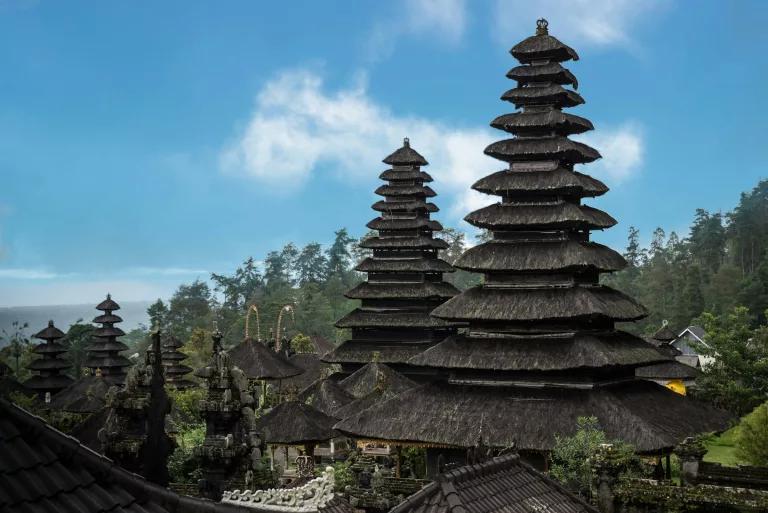
Photo: Unsplash
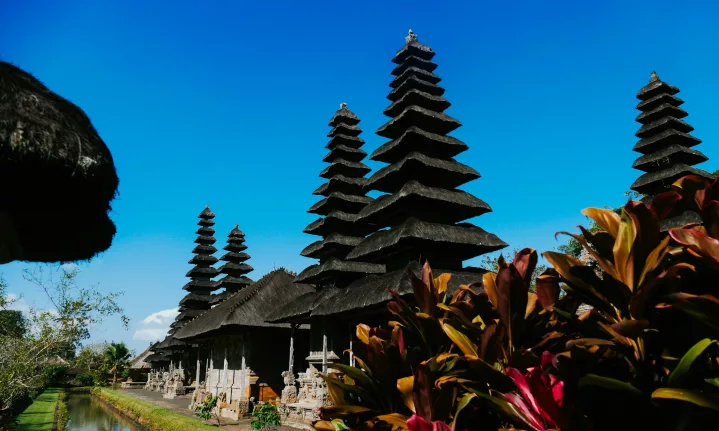
Taman Ayun Temple
Not every architectural highlight in Bali requires a dramatic cliff or volcanic backdrop. In Mengwi, Taman Ayun Temple offers a more measured kind of beauty, with traditional temple towers, landscaped gardens and a broad moat surrounding the complex.
Built as the royal temple of the Mengwi kingdom, Taman Ayun is an important example of Balinese religious and royal architecture. Its name is commonly translated as ‘beautiful garden’, a fitting description of its green grounds and water features.
The complex is also part of the UNESCO-listed Cultural Landscape of Bali Province, which recognises the relationship between traditional water temples, agriculture and the island’s spiritual philosophy.
The temple’s carefully arranged courtyards and tiered shrines are particularly interesting for visitors who want to understand how Balinese architecture organises sacred space.
It is a useful stop when travelling between southern Bali and the island’s central interior, and can be combined with a visit to nearby traditional villages.
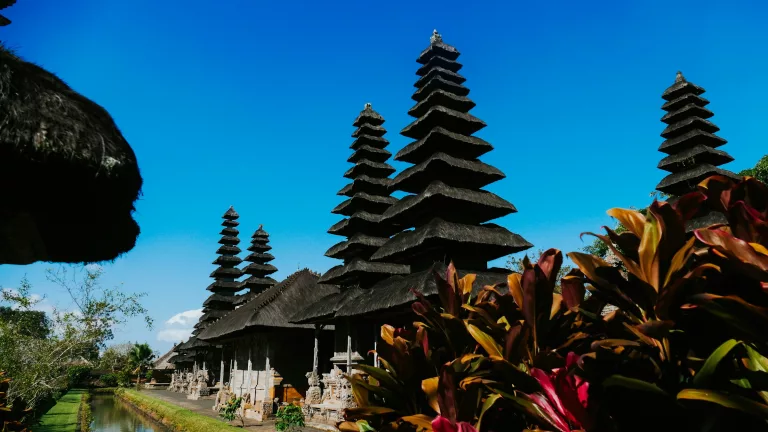
Photo: Unsplash
Tirta Gangga Water Palace
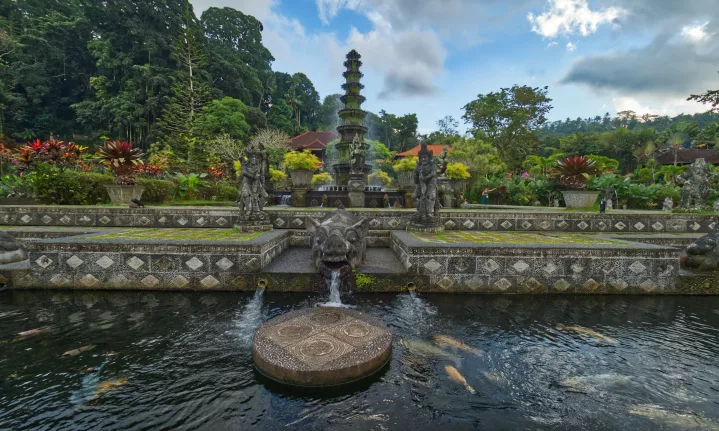
In eastern Bali, Tirta Gangga Water Palace offers a different take on the island’s architectural heritage. Built as a royal water garden, the complex combines pools, fountains, statues, stepping stones and lush planting in a series of carefully arranged spaces.
The palace was developed under the royal family of Karangasem and takes its name from the sacred Ganges River in Hindu tradition. Water is central to the design, flowing through the gardens and connecting different levels of the grounds.
The most photographed section features stone stepping stones crossing a large pond filled with ornamental fish. Look beyond the obvious photo spots, though, and you will find fountains, sculptural details and smaller architectural features that reward a slower walk.
Tirta Gangga is an excellent choice for travellers interested in the relationship between landscape design and architecture. Its location in eastern Bali also makes it a natural addition to a trip that includes Lempuyang Temple or the nearby Taman Ujung Water Palace.
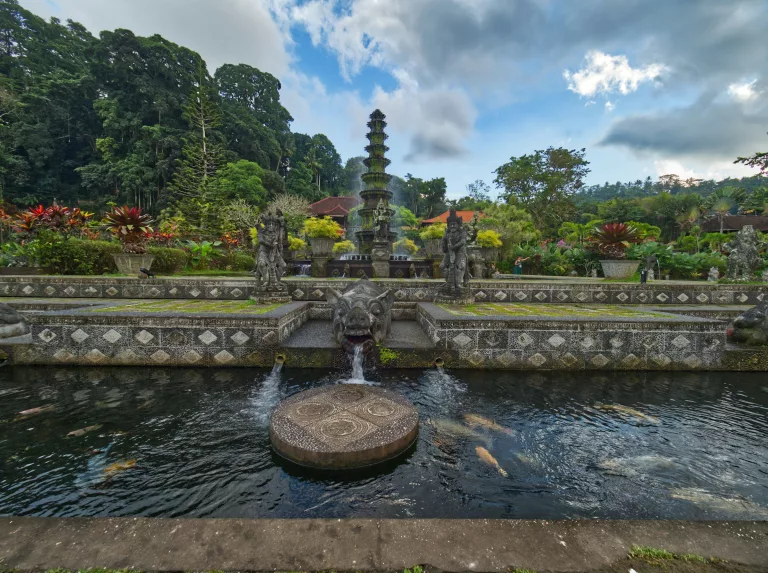
Photo: Unsplash
Taman Ujung Water Palace
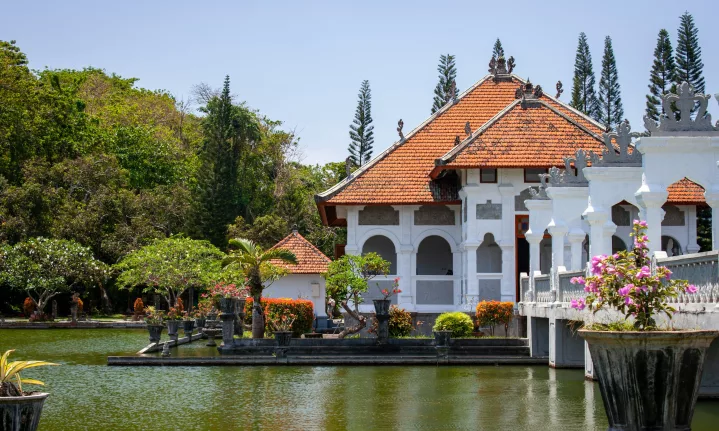
If you enjoy historic buildings but would rather avoid the crowds around Bali’s most famous landmarks, make time for Taman Ujung Water Palace. Also known as Taman Soekasada Ujung, this former royal retreat is one of the island’s most interesting architectural sites.
The complex was developed in the early 20th century under the Karangasem royal family. Its design blends Balinese, European and Chinese influences, with elegant pavilions, bridges and broad reflecting pools set against hills and coastal scenery.
Unlike a traditional temple complex, Taman Ujung was designed as a royal garden and retreat. Its buildings sit within an expansive landscape, with water forming a central part of the overall composition.
The result is a fascinating mix of architectural styles that reflects Bali’s history and its connections with the wider world.
Visit alongside Tirta Gangga to make a day of exploring eastern Bali’s royal heritage. The two sites offer contrasting interpretations of the water palace, each with its own character.
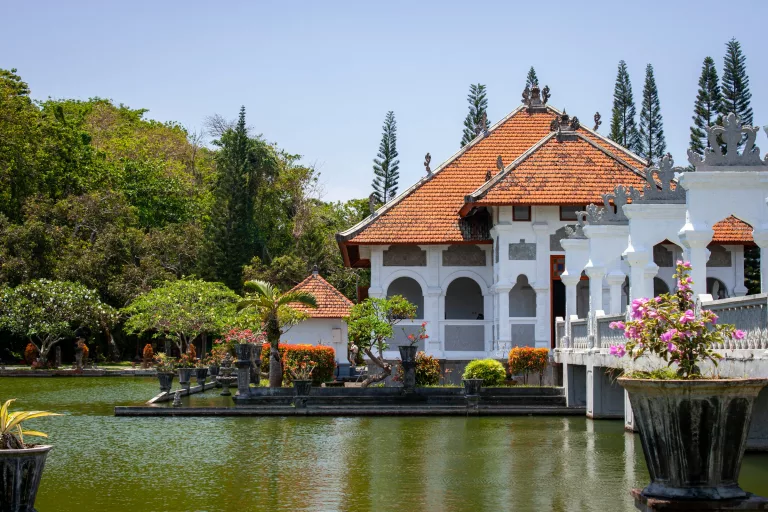
Photo: Unsplash
Brahmavihara-Arama Buddhist Monastery
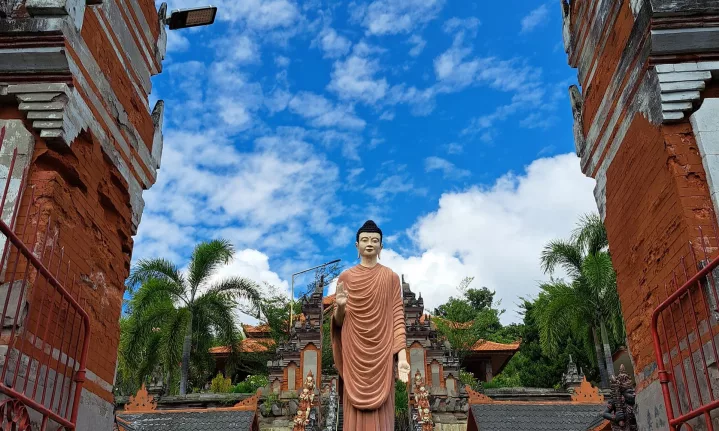
Bali’s architectural heritage is not limited to Hindu temples. In the hills above Banjar in northern Bali, Brahmavihara-Arama is the island’s largest Buddhist monastery and a peaceful complex of terraced courtyards, meditation spaces and ornamental structures.
The monastery opened in 1971 and combines Buddhist symbolism with elements of traditional Balinese stonework. Its hillside setting creates a natural progression through the grounds, with gardens and buildings arranged across several levels.
One of its standout features is a miniature version of Borobudur, the famous Buddhist monument in Java. Built in 1999, it sits at the highest point of the complex and provides a striking architectural focal point.
The monastery is still an active place of worship and meditation, so visitors should keep noise to a minimum and dress modestly. Its calm atmosphere and views over northern Bali make it an appealing stop for travellers looking beyond the island’s better-known attractions.
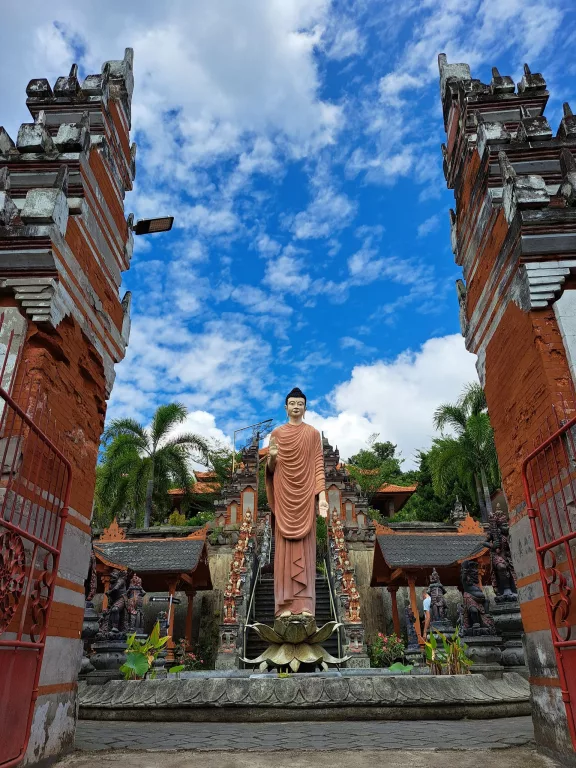
Photo: Pexels
Penglipuran Traditional Village
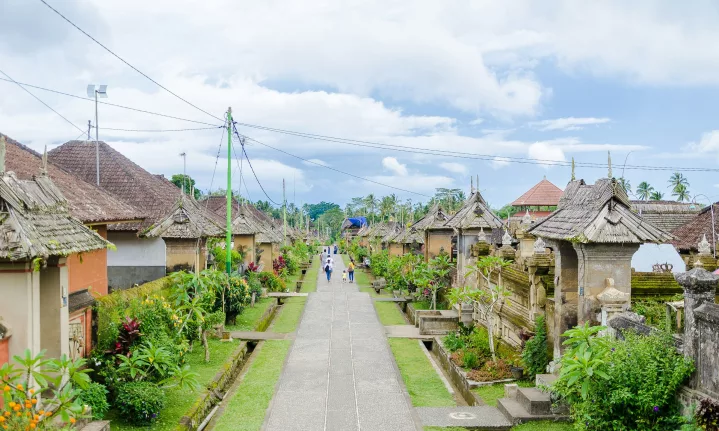
Architecture in Bali is not confined to grand monuments. At Penglipuran Traditional Village, the layout of an entire community offers insight into traditional Balinese design and everyday life.
The village is known for its orderly main pathway, traditional compound entrances, stone walls and carefully maintained gardens. Homes are arranged in a distinctive layout, with entrances and buildings reflecting local customs and ideas about the organisation of domestic and communal space.
Rather than admiring a single building, visitors can see how architectural features repeat throughout the settlement. Gateways, courtyards and traditional materials give the village a consistent appearance, while the bamboo forest nearby adds another dimension to the landscape.
Penglipuran is popular with visitors, but it remains a living community. Respect residents’ privacy, follow local guidance and remember that the houses are homes rather than museum exhibits.
For anyone interested in vernacular architecture, it is a useful reminder that the built heritage of Bali is as much about the way people live as it is about monumental temples.
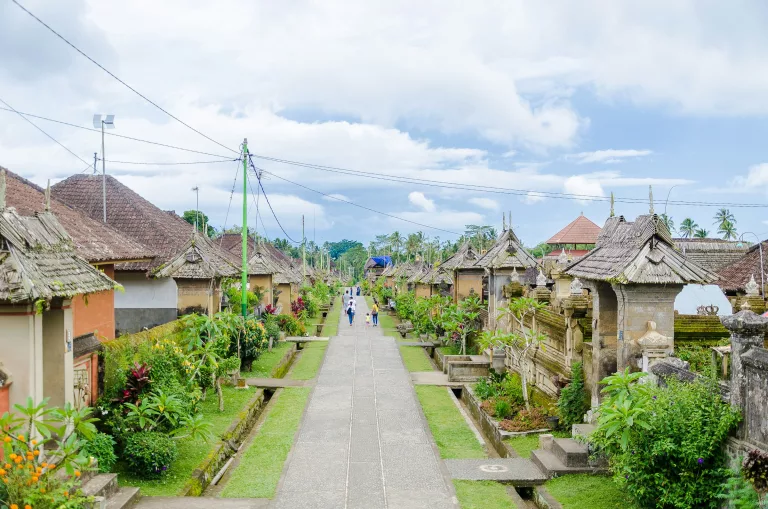
Photo: Unsplash
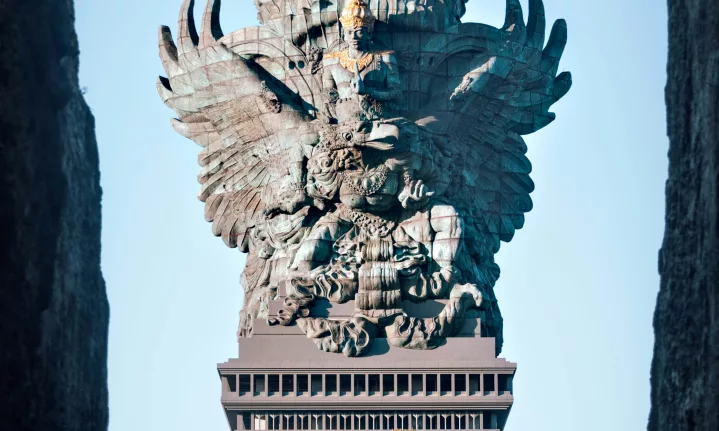
Garuda Wisnu Kencana Cultural Park
For a more contemporary architectural landmark, visit Garuda Wisnu Kencana Cultural Park on the Bukit Peninsula. The enormous statue of the Hindu god Vishnu riding the mythical bird Garuda is one of Bali’s most recognisable modern monuments.
The monumental sculpture dominates the surrounding limestone landscape and forms the centrepiece of a cultural park dedicated to Indonesian heritage, performances and events. Its scale offers a striking contrast with the more intimate stone temples found across the island.
The statue is also an example of how traditional religious imagery continues to shape contemporary Indonesian art and public landmarks. Within the wider park, visitors can explore open spaces, cultural venues and areas used for performances.
Allow enough time to see the monument from different viewpoints and investigate the rest of the grounds. It is a worthwhile addition for travellers interested in large-scale sculpture as well as traditional architecture.
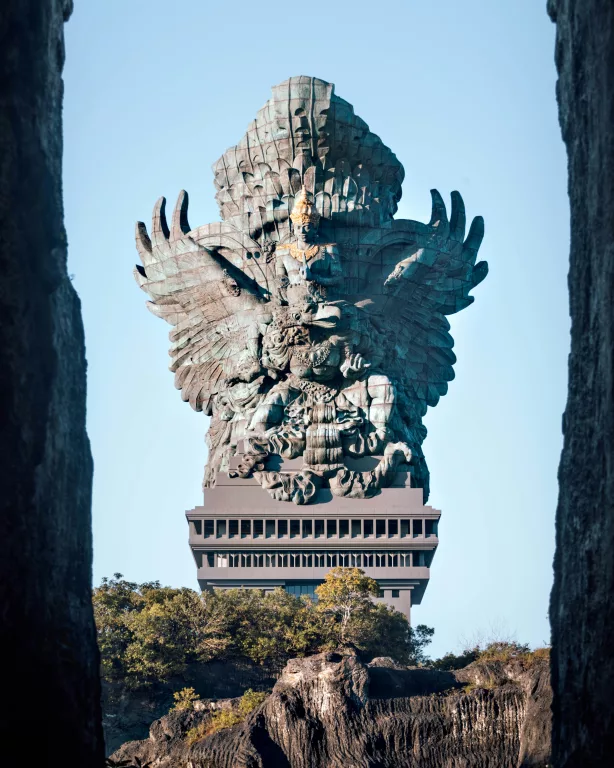
Photo: Unsplash
Tips for visiting Bali’s architectural attractions
A little preparation can make temple visits more rewarding and help ensure you show respect for the communities that maintain these sites.
- Dress appropriately. Many temples require visitors to cover their shoulders and knees. Sarongs may be available at the entrance, but check the requirements before you arrive.
- Remember that temples are active places of worship. Keep your voice down, avoid interrupting ceremonies and follow instructions from temple staff.
- Check photography rules. Some areas may be restricted, particularly during religious rituals. Always ask before photographing worshippers.
- Plan around Bali’s geography. The island’s attractions are spread across different regions, and traffic can make journeys longer than expected. Group nearby sites together rather than attempting to visit the entire island in one day.
- Look beyond the famous landmarks. Meduwe Karang Temple and Brahmavihara-Arama offer a different perspective on Bali’s architectural heritage, particularly if you are travelling through the north.
- Consider a local guide. Architectural details often have religious or historical meanings that are not immediately obvious. A knowledgeable guide can explain the symbolism behind gateways, shrines and temple layouts.
Why Bali’s architecture deserves a closer look
Bali’s architecture tells stories about religion, royal history, craftsmanship and the island’s relationship with its natural environment. A temple perched above the sea serves a different purpose from a royal water palace, while a traditional village reveals how design influences daily life.
The famous landmarks are worth seeing, but some of the most interesting details appear when you venture beyond the usual tourist route. Whether you are admiring the stone gateways of Lempuyang, the intricate carvings of Meduwe Karang or the unusual blend of influences at Taman Ujung, Bali offers plenty of reasons to look beyond its beaches.
ALSO SEE: 12 must-see architectural landmarks in Turkey