




South Africa’s remarkable trees are more than landmarks along a scenic route. Some have stood for centuries, surviving fires, droughts and dramatic changes to the landscapes around them. Others have grown into extraordinary shapes, developed unusual root systems or become part of the country’s history.
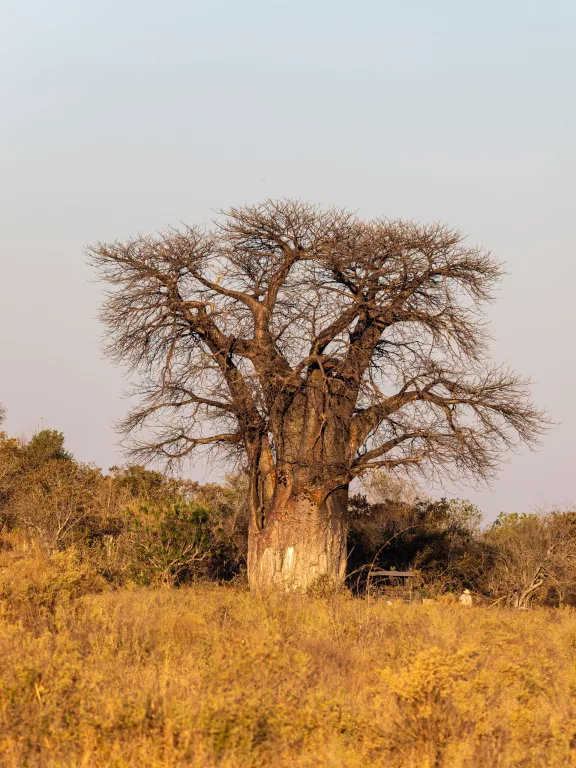
Photo: Pexels
Some are well-known attractions with accessible walking trails, while others are worth adding to an itinerary through the country’s quieter corners.
Here are some of South Africa’s oldest, tallest and most unusual trees, including where to find them and what makes each one worth a visit.
1. Sagole Baobab, Limpopo
Location: Near Tshipise, in the Vhembe region of Limpopo.
If there is one tree to put on your South African bucket list, it is the Sagole Baobab, also known as the Big Tree. This enormous baobab (Adansonia digitata) is estimated to be around 1,200 years old and is recognised as one of the country’s most remarkable living landmarks. It is also regarded as South Africa’s largest indigenous tree, with a trunk circumference of approximately 34 metres reported in official descriptions.
Baobabs are instantly recognisable by their swollen trunks and sprawling branches, which can make them look as though they have been planted upside down. They are adapted to hot, dry conditions and can store water in their trunks, helping them survive in challenging environments.
The Sagole Baobab is particularly special because its hollows provide habitat for wildlife, including birds. The tree also holds cultural significance for local communities, for whom baobabs can symbolise a connection to ancestors.
Why visit: This is an opportunity to see a tree on a scale that is difficult to appreciate in photographs. Combine the stop with a trip through Limpopo’s northern landscapes, but check local access arrangements before setting off.
2. Wonderboom, Pretoria
Location: Wonderboom Nature Reserve, Pretoria, Gauteng.
The Wonderboom is unusual because it is not simply one enormous fig tree. Over time, its branches have grown downwards until they reach the ground, where they take root and develop into additional trunks. The result is an extraordinary network of interconnected growth surrounding the original tree.
The name Wonderboom means ‘wonder tree’ in Afrikaans, and it is easy to understand why. This giant wild fig (Ficus salicifolia) has been described as having 13 trunks and a canopy spread of approximately 55 metres. Its distinctive growth habit has helped make it one of Pretoria’s best-known natural landmarks.
Local legend connects the tree’s size to the burial place of an Indigenous chief beneath its roots. This is a traditional story rather than a verified explanation of its growth. The tree has also suffered damage from fire and disease, making its continued survival significant.
Why visit: A walk through the reserve offers a chance to see the tree up close while enjoying the surrounding natural environment. It is a particularly interesting stop for anyone curious about how trees grow and reproduce.
3. The Outeniqua Yellowwood, Knysna
Location: Diepwalle, Garden Route National Park, near Knysna, Western Cape.
South Africa’s indigenous forests contain some extraordinary giants, but few are as famous as the Outeniqua Yellowwood at Diepwalle, also known as the King Edward VII tree.
This towering Afrocarpus falcatus, formerly known as Podocarpus falcatus, is approximately 39 metres high and is estimated to be more than 800 years old. It is one of the surviving giants of the Knysna forest, where indigenous yellowwoods were once heavily harvested for timber. Protecting these remarkable trees helps preserve an important part of the Garden Route’s forest heritage.
Yellowwoods are indigenous evergreen trees that can grow exceptionally tall in the right conditions. Their age and size make them valuable parts of the forest ecosystem, providing habitat and contributing to the complex life of the indigenous woodland.
The Diepwalle tree is reached from the forest station, making it a rewarding stop for travellers exploring the area’s walking routes and forest attractions.
Why visit: The forest setting is part of the experience. Instead of viewing a giant tree in isolation, you can see how it rises above the surrounding vegetation and forms part of an ancient woodland.
4. The Tsitsikamma Big Tree, Eastern Cape
Location: Tsitsikamma forest, close to the N2 near Storms River, Eastern Cape.
Another giant yellowwood awaits visitors in the Tsitsikamma section of the Garden Route National Park. Commonly called the Tsitsikamma Big Tree, this specimen is estimated to be between 600 and 800 years old and stands approximately 36.6 metres tall.
The tree is a reminder of how different the indigenous forests of the southern Cape are from the open landscapes that many visitors associate with South Africa. Here, tall trunks, dense vegetation and filtered light create a cooler, sheltered environment.
A short boardwalk through the forest leads to the tree, making it a manageable stop for travellers who want to experience the indigenous forest without committing to a long hike.
Why visit: Its accessible setting makes it an excellent addition to a Garden Route road trip, particularly if you are travelling between the Western and Eastern Cape.
5. The Post Office Tree, Mossel Bay
Location: Bartolomeu Dias Museum Complex, Mossel Bay, Western Cape.
Not every remarkable tree is famous for its age or size. In Mossel Bay, an old milkwood has a place in South Africa’s maritime history.
According to the story preserved by the Bartolomeu Dias Museum, Portuguese captain Pêro de Ataíde left a letter in a sailor’s shoe tied to a tree after arriving in the bay around 1500 or 1501. The message was later retrieved by another Portuguese fleet. This early exchange helped establish the tree’s reputation as a meeting point for messages between ships.
Today, the Post Office Tree remains a popular heritage attraction. A boot-shaped postbox stands beside it, and visitors can post letters or postcards bearing a special commemorative cancellation.
The tree is a white milkwood (Sideroxylon inerme), an indigenous species found in coastal areas of southern Africa. Its low, spreading branches and gnarled appearance are quite different from the towering yellowwoods of the Garden Route.
Why visit: Bring a postcard and send someone a message from one of the country’s most unusual historic landmarks. The tree is on the museum grounds, so you can combine it with a visit to the complex.
6. The saffron pear tree, Company’s Garden, Cape Town
Location: Company’s Garden, central Cape Town, Western Cape.
You do not have to travel into the bush to find a tree with centuries of history behind it. In the heart of Cape Town, the Company’s Garden is home to a saffron pear tree (Pyrus communis) believed to date back to the mid-17th century.
The tree is recognised as South Africa’s oldest cultivated tree. It was brought from the Netherlands and is traditionally associated with the early Dutch settlement at the Cape, with planting often attributed to Jan van Riebeeck.
The garden itself was established in the 1650s by the Dutch East India Company to grow fresh produce for ships travelling along the sea route around the Cape. Its original purpose was practical, but it has since become one of Cape Town’s important green spaces, with historic buildings, mature trees and landscaped paths.
The saffron pear is a reminder that the city’s history can be read in its gardens as well as its architecture.
Why visit: This is one of the easiest ancient-tree stops to include in a city itinerary. You can visit the tree while exploring the Company’s Garden and nearby museums and historic landmarks.
7. The historic camphor trees at Vergelegen, Somerset West
Location: Vergelegen Wine Estate, Somerset West, Western Cape.
At Vergelegen Wine Estate, some of the most impressive features are found in the gardens rather than the vineyards. The estate is home to five historic camphor trees that were declared national monuments in 1942.
These trees are associated with the estate’s early history and are estimated to be around 300 years old. Their broad canopies create a striking setting within the landscaped grounds, where gardens, heritage buildings and mature trees form part of the visitor experience. The trees are also recognised under South Africa’s Champion Tree Project.
Camphor trees (Cinnamomum camphora) are native to East Asia, rather than South Africa. Their presence here reflects the history of cultivated gardens and introduced tree species at old Cape estates.
Vergelegen is also worth visiting for its other historic trees and gardens, making it a rewarding stop for anyone interested in the relationship between horticulture and the Cape’s colonial history.
Why visit: If you enjoy gardens and heritage, this is an opportunity to see how trees have shaped the character of a historic Cape estate. Check the estate’s current visitor arrangements and heritage-tour requirements before visiting.
8. The giant Moreton Bay fig at Arderne Gardens, Cape Town
Location: Arderne Gardens, Claremont, Cape Town, Western Cape.
Arderne Gardens is known for its collection of mature trees, but one of its most striking residents is the enormous Moreton Bay fig (Ficus macrophylla), commonly known as the Wedding Tree.
Native to eastern Australia, this fig has a massive spreading canopy and a network of thick, visible roots. Its branches extend more than 30 metres, making it an impressive example of what an introduced species can become when it grows for decades in a suitable environment.
The gardens were established in the 19th century and contain a rich collection of exotic trees and shrubs. The fig’s broad canopy offers a sense of scale that can be difficult to appreciate until you stand beneath it.
Despite its nickname, you do not need to be planning a wedding to visit. The public garden is a green escape in Cape Town’s southern suburbs, with paths and shady spaces for a leisurely walk.
Why visit: For Cape Town residents, this is a relatively easy outing that offers something different from the city’s beaches and mountain trails. It is also a worthwhile stop for anyone interested in botanical gardens and unusual tree architecture.
9. The towering saligna gums of Woodbush, Limpopo
Location: Woodbush Forest Estate, near Haenertsburg and Magoebaskloof, Limpopo.
Not all South Africa’s tree giants are ancient indigenous specimens. Some of the country’s most impressive trees are known for their extraordinary height.
The Woodbush area near Magoebaskloof is home to towering saligna gums (Eucalyptus saligna) planted in 1906. One of these trees was measured at 81.5 metres in 2011, earning recognition as the tallest tree in South Africa and Africa at the time of measurement. The stand is recognised through South Africa’s Champion Tree Project.
Unlike the broad, squat baobab or the spreading fig, these trees grow tall and relatively straight, rising above the surrounding forest. Their height makes them a different kind of spectacle, particularly for visitors interested in forestry and tree measurement.
It is worth noting that these are introduced trees planted for forestry, not indigenous forest giants. Their significance lies in their remarkable dimensions rather than their natural origin.
Why visit: Add the area to a Magoebaskloof itinerary if you are interested in South Africa’s lesser-known natural records. Because the trees are in a managed forest area, check access and viewing arrangements before travelling specifically to see them.
10. The quiver trees of the Northern Cape
Location: Gannabos and the wider Namaqualand region of the Northern Cape.
For a tree that looks as though it belongs in a science-fiction landscape, head towards the arid reaches of Namaqualand. Here, quiver trees (Aloidendron dichotomum) stand against rocky hills and open skies, their thick trunks and forked branches creating striking silhouettes.
Despite their name and appearance, quiver trees are actually tree-like succulents in the aloe family, rather than conventional woody trees. Their unusual shapes are adaptations to the dry conditions of southern Africa, where water is scarce and temperatures can be extreme.
The branches were traditionally hollowed out to make quivers for arrows, which explains the plant’s common name. In Afrikaans, it is known as the kokerboom.
The Northern Cape is home to several notable quiver tree populations, including Gannabos, where these plants contribute to the area’s distinctive arid scenery. Quiver trees face growing pressure from climate change and prolonged drought in parts of their range, making their conservation increasingly important.
Why visit: The stark landscape is especially striking in the softer light of early morning or late afternoon. Plan this as part of a wider Northern Cape road trip, and confirm access to the specific site before travelling.
11. The Three Queens, Limpopo
Location: Amorentia Estate, near Modjadjiskloof, Limpopo.
For a lesser-known tree attraction, seek out the Three Queens, a trio of remarkable matumi trees (Breonadia salicina) at Amorentia Estate.
Matumi trees are indigenous to southern Africa and are usually found in warm areas, particularly near rivers and other sources of water. Their dense foliage and substantial trunks make mature specimens impressive features of the landscape.
The Three Queens are recognised in South Africa’s Champion Tree records for their exceptional size. They offer a different kind of tree encounter from the better-known baobabs, which tend to draw attention for their enormous, swollen trunks.
The trees are a reminder that South Africa’s botanical landmarks are not confined to national parks and popular tourist routes. Some of the country’s most remarkable specimens are found on private land, where access needs to be arranged with the landowner.
Why visit: If you are travelling through Limpopo, this is an interesting addition for anyone keen on indigenous trees and botanical heritage. Contact the estate before making plans, as access may be restricted.
12. The ancient baobabs of Limpopo
Location: Around Hoedspruit and the wider Limpopo region.
The Sagole Baobab may be the best-known giant, but it is not the only baobab worth knowing about. Limpopo is home to several enormous specimens, some with estimated ages stretching well beyond a millennium.
One notable example is the baobab on the farm Glencoe near Hoedspruit, which has been described in government records as exceptionally old, with carbon dating indicating an age of more than 1,835 years. Its crown has suffered significant damage, and the tree’s condition has changed over time, illustrating how even the largest trees are vulnerable to environmental pressures.
Baobabs are an important part of the ecology and cultural landscape of southern Africa. Their flowers, fruits and trunks support wildlife and people, while their distinctive shapes have inspired stories and traditions for generations.
When visiting baobabs on private land, always obtain permission and follow local guidance. Not every famous tree is located within a public reserve, and some sites are not equipped for tourism.
Why visit: If you are already exploring Limpopo, look beyond the most famous baobab and learn about the region’s wider collection of monumental trees. Each has its own story, and the condition of individual specimens can change over time.
Protecting South Africa’s remarkable trees
Some of the trees on this list are recognised through South Africa’s Champion Tree Project, which identifies trees of exceptional size, age, historical significance or cultural value.
The programme helps protect important trees under the National Forests Act of 1998. Recognised examples include the Sagole Baobab, the Tsitsikamma Big Tree, the Post Office Tree and the historic camphors at Vergelegen.
These trees also offer a reminder that age and size are not the only measures of significance. A tree can be important because it provides habitat for wildlife, holds cultural meaning for a community or marks a moment in the country’s history.
When visiting, stick to designated paths, avoid damaging bark or roots, and never carve names into trunks. These are living landmarks, and their continued survival depends partly on how they are treated today.
ALSO SEE: More than one million trees planted in Gauteng since April