




The mummified remains of an ancient Egyptian priest, housed in a Scottish museum for more than a century, could soon return to Egypt following a repatriation request.
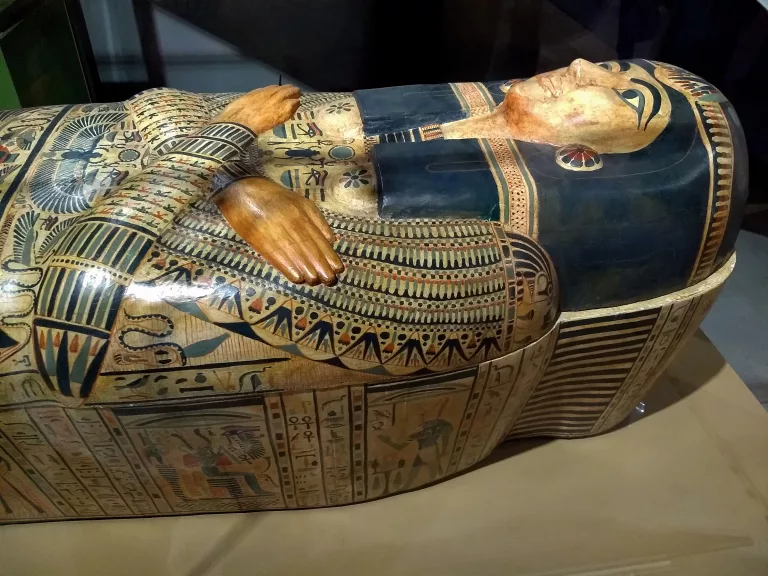
Ancient Egyptian sarcophagus with ornate hieroglyphs and patterns on display indoors / Miguel Á. Padriñán / Pexels / Illustrative purposes only
The remains of Nekht were recently removed from public display at Kelvingrove Art Gallery and Museum in Glasgow amid growing ethical concerns about exhibiting human remains without the consent of the deceased or their descendants.
Glasgow Life, which operates the museum, confirmed receiving a request for Nekht’s return to Egypt. Although reports suggest it came from Egyptian authorities, the organisation has not confirmed it’s source.
Nekht is believed to have lived between 1985 and 1797 BC. His remains were excavated at Beni Hasan in Middle Egypt during the early 20th century before being donated to Glasgow in 1923. His painted coffin has also been removed from display.
The decision forms part of a wider reassessment of how museums care for and exhibit human remains. The International Council of Museums’ revised code of ethics, published in June 2026, calls on institutions to treat human remains with dignity and respect.
Other Egyptian remains at Kelvingrove, including a mummified male head, hand and foot recovered from the Valley of the Kings in Luxor, have also been taken off public display.
The changes extend to the University of Glasgow’s Hunterian Museum, where the mummified remains of Lady Shep-En-Hor have been covered with a specially designed textile, while her ornate sarcophagus remains on display.
Glasgow Life has confirmed that further archaeological human remains will be removed from public display and placed in secure storage with restricted access.
Rethinking how museums display the past
The decision reflects a wider shift in how museums approach cultural heritage, particularly human remains and artefacts taken from their countries of origin during earlier periods of archaeological exploration and colonial rule.
Egypt’s efforts to celebrate and preserve it’s ancient heritage have also gained renewed attention with the opening of the Grand Egyptian Museum near the Pyramids of Giza in 2025.
For Nekht, however, the issue goes beyond where an archaeological collection belongs. His remains once belonged to a person with a life, beliefs and burial traditions of his own.
Whether the repatriation request will be approved remains to be seen. His removal from public display is already part of a broader conversation about ownership, dignity and the responsibility museums have towards the people whose histories they hold.
Source (BBC)
Follow us on social media for more travel news, inspiration, and guides. You can also tag us to be featured.
Instagram | Facebook | Twitter | Spotify
ALSO READ:
Cape Town Taxi Industry confirms services will run for Monday morning commute