






A safety net for stranded travelers emerges in the Middle East
For thousands of international visitors caught in recent airspace disruptions, uncertainty has been mounting around one critical issue: what happens when your visa runs out but your flight doesn’t take off?
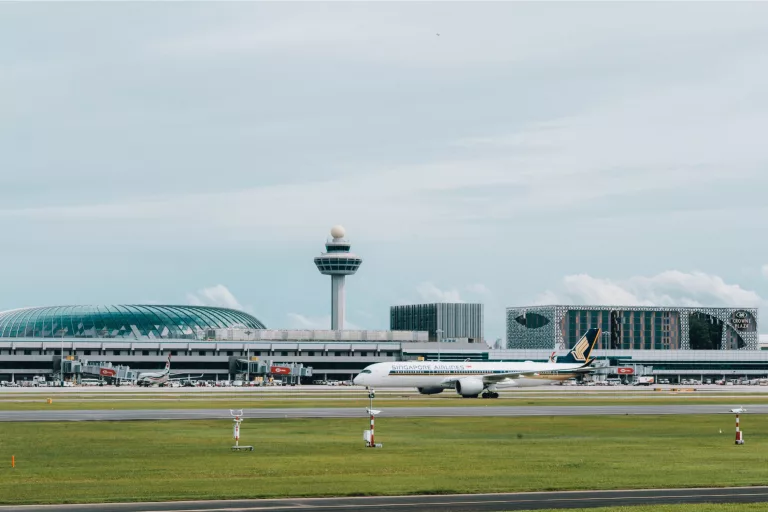
Sourced: X:{@ChangiAirport}
According to The Traveler, Now, Saudi Arabia has moved decisively to ease that pressure, rolling out temporary visa relief measures designed to protect stranded tourists, business travellers, and pilgrims from penalties they had no control over.
At the same time, Russia and several other countries are joining a broader international push to strengthen traveler protection and consular support, reflecting growing concern over disrupted global routes.
Visa extensions, fee waivers and exit flexibility offered
Saudi authorities have introduced time-sensitive measures aimed at preventing stranded visitors from falling into irregular immigration status.
Under the new arrangements, visitors whose visas expired from late February 2026 may:
- Extend their stay through official request channels, or
- Depart the country without facing standard overstay penalties
While extensions may still involve normal administrative fees, the option to leave without fines has been widely viewed as the most immediate relief for those unable to continue their journeys.
The policy applies to short-term visitors, including tourists and business travellers whose travel plans were disrupted by regional airspace instability.
Officials say the goal is simple: ensure that travellers are not punished for circumstances outside their control.
24/7 helpline created for confused and stranded passengers
Alongside visa adjustments, Saudi Arabia has also strengthened its support infrastructure with a round-the-clock helpline and digital assistance channels.
The service is designed to help travellers:
- Understand whether they qualify for extensions
- Confirm legal status after visa expiry
- Decide between staying legally or exiting without penalties
For many travellers, especially those unfamiliar with rapidly changing immigration rules, the helpline provides a critical lifeline at a moment of confusion.
In a region where flight disruptions can cascade quickly across multiple countries, having a direct contact point is being seen as a major step toward reducing uncertainty at immigration counters.
Russia and global partners respond with coordinated messaging
Beyond Saudi Arabia’s internal measures, a broader international response is taking shape.
Russia has been cited alongside countries including Turkey, Switzerland, the United Kingdom, Italy, Germany, and Ireland, all of which have issued updated guidance or consular alerts aimed at protecting citizens affected by disrupted routes.
Rather than a formal alliance, this is a growing pattern of coordinated messaging focused on:
- Consular assistance for stranded citizens
- Clearer travel advisories
- Communication with airlines and airports
- Support registration for affected travellers
The inclusion of Russia in this grouping highlights just how widespread the impact of airspace instability has become, stretching across both European and Eurasian travel networks.
For governments, the concern is not only safety—but also avoiding diplomatic and reputational fallout if citizens feel abandoned abroad.
A regional shift in how travel crises are managed
Similar flexibility has also appeared in other regions dealing with stranded travellers, including temporary immigration relaxations in parts of Africa for passengers caught in transit disruptions.
This reflects a broader global shift: governments are increasingly treating mass travel disruption as a humanitarian and administrative issue, rather than a punitive immigration problem.
Instead of fines or bans, the emphasis is now on:
- Grace periods
- Digital extensions
- Emergency contact systems
- Airline coordination
Migration experts say this approach may set a precedent for future crises linked to geopolitics, climate shocks, or aviation system failures.
What this means for travellers on the ground
For visitors currently in Saudi Arabia, the message is reassuring but time-sensitive.
Those affected are advised to:
- Check eligibility for visa extension through official channels
- Use the 24/7 helpline for guidance
- Keep proof of cancelled or disrupted flights
- Act before deadlines listed in official notices
Tourists, pilgrims, and business travellers alike now have clearer options to remain compliant without facing penalties linked to circumstances beyond their control.
A new test of trust in global travel systems
Saudi Arabia’s intervention, paired with growing international coordination led by countries like Russia and several European states, signals something bigger than short-term relief.
It reflects a changing expectation in global travel: that destinations must not only attract visitors—but also protect them when systems fail.
As airlines, governments, and airports continue adjusting to unstable routing conditions, the way these temporary measures are handled may shape how travellers choose future transit hubs.
For now, stranded passengers finally have something rare during travel chaos: clarity, options, and a way forward.
Source: The Traveler
Follow us on social media for more travel news, inspiration, and guides. You can also tag us to be featured.
TikTok | Instagram | Facebook
ALSO READ: