


Severe flood damage has brought tourism to a standstill in Limpopo National Park, one of southern Africa’s most important transfrontier conservation areas, following heavy rains that swept across Mozambique earlier this year.

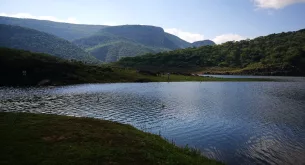
Image: Parque Limpopo
The park, located in Mozambique’s Gaza province and forming part of the Greater Limpopo Transfrontier Conservation Area, has been closed to visitors for more than a month as authorities assess and repair extensive infrastructure damage.
Roads washed away, access severely limited
According to park administrator Francisco Pariela, torrential rains in January caused significant destruction to internal road networks, with multiple sections washed away or left impassable.
“The roads crossing the park are in a critical condition,” Pariela said, noting that the damage has made it impossible for tourist vehicles to move safely through the reserve.
As a result, tourism has been halted on both the Mozambican side of the park and the cross-border access point linked to South Africa’s Kruger National Park.
ALSO READ:
Cross-border cooperation to reopen routes
Park authorities are now working closely with counterparts in South Africa to explore ways of reopening the border and restoring controlled access as soon as conditions allow.
“We are already doing basic road clearing to allow the circulation of people and goods,” Pariela said, adding that discussions are ongoing to prioritise critical repair work that would support the return of tourism.
A vital wildlife stronghold
Despite the closure, Limpopo National Park remains a cornerstone of regional conservation. The most recent wildlife census recorded healthy populations, including nearly 800 elephants, close to 6,000 buffalo, over 100 giraffes, and significant numbers of hippos and impalas.
The park plays a key role in facilitating wildlife movement between Mozambique, South Africa, and Zimbabwe, making its recovery important not only for tourism but for long-term ecological connectivity.
Floods hit communities beyond the park
The same floods that damaged the park infrastructure have had devastating impacts across southern and central Mozambique. More than 450,000 hectares of agricultural land were destroyed, along with hundreds of thousands of livestock. The flooding also claimed lives, injured dozens, and affected over 700,000 people across Gaza, Maputo and parts of Sofala.
For now, travellers planning cross-border safari routes are advised to monitor updates closely and consider alternative destinations until Limpopo National Park officially reopens.
Source: Club of Mozambique
Follow us on social media for more travel news, inspiration, and guides. You can also tag us to be featured.
TikTok | Instagram | Facebook | Twitter
ALSO READ:
Skukuza Airport in Kruger National Park ranked world’s most beautiful