





A new museum in north-western China is giving prehistoric flying reptiles their moment in the spotlight.
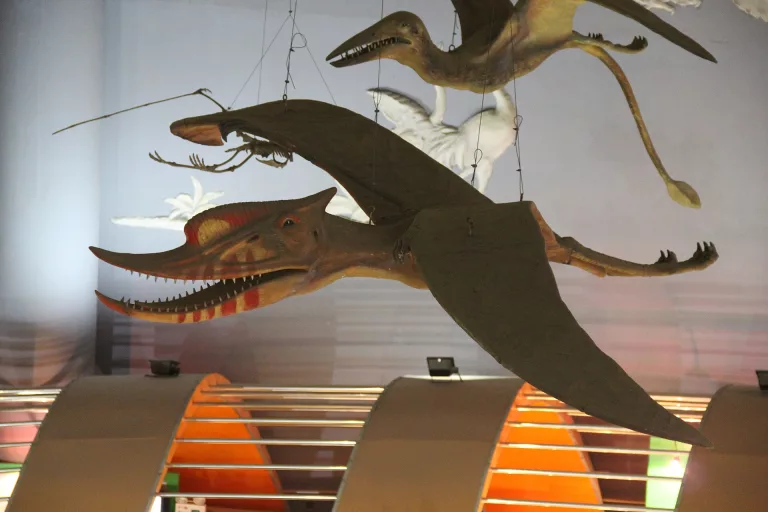
Pterosaur- Dsungaripterus / Gary Todd / Wikimedia Commons / Illustrative purposes only
The Hami Pterosaur Museum has opened in the Xinjiang Uygur Autonomous Region, becoming the world’s first museum dedicated specifically to pterosaurs, the flying reptiles that lived alongside dinosaurs millions of years ago.
Located within a national geopark in Hami, the museum covers around 4,600 square metres. Its six oval-shaped halls are arranged to resemble a cluster of pterosaur eggs when viewed from above.
Inside, visitors can explore fossils, replicas and reconstructions telling the story of these remarkable animals and their evolution.
A window into prehistoric skies
Pterosaurs were not dinosaurs, although the two groups were closely related. They were the first vertebrates known to evolve powered flight and lived for more than 150 million years before disappearing at the end of the Cretaceous period.
Hami is particularly important to scientists because of the area’s exceptional pterosaur fossils. The museum brings together specimens recovered through more than two decades of excavation by researchers from the Institute of Vertebrate Paleontology and Paleoanthropology at the Chinese Academy of Sciences.
Among the highlights are exceptionally preserved pterosaur eggs and embryos, as well as large specimens being displayed publicly for the first time. These fossils are more than impressive relics. They have helped researchers investigate how pterosaurs reproduced, developed and adapted to life in the skies of the prehistoric world.
A prehistoric attraction in the desert
The museum’s location adds another layer to the experience.
Rather than simply presenting fossils in a conventional city museum, the Hami attraction sits within a landscape that has produced important palaeontological discoveries. Visitors can therefore explore the museum while being surrounded by the same broader region in which evidence of these ancient creatures was uncovered.
For anyone fascinated by prehistoric life, it offers a rare chance to look beyond the familiar dinosaurs and meet some of the animals that shared their world.
Millions of years after pterosaurs disappeared, their fossils are giving visitors a glimpse of a time when enormous reptiles filled the skies. And in Hami, that ancient world has finally been given a museum of its own.
Source (IOL)
Follow us on social media for more travel news, inspiration, and guides. You can also tag us to be featured.
Instagram | Facebook | Twitter | Spotify
ALSO READ: