








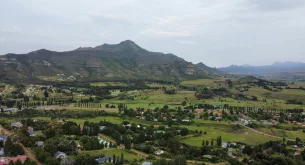
On Taiwan’s east coast, Hualien is a place where the landscape does much of the talking. The Pacific Ocean stretches out to the east, the Central Mountain Range rises to the west, and between the two sits a compact city filled with food, markets, creative spaces and a strong Indigenous cultural identity.
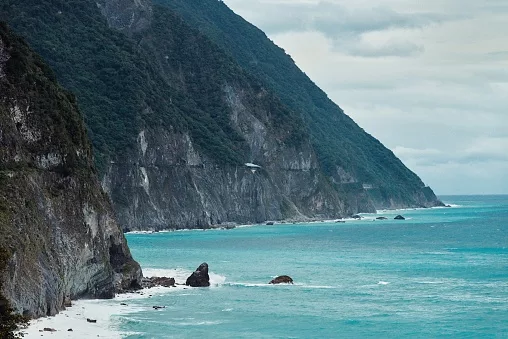
Hualien City,Hualien County,Taiwan/By: Michael Liu / 500px/Getty Images
Hualien is also one of Taiwan’s gateways to the spectacular Taroko region. The area is still recovering from the devastating April 2024 earthquake, so a visit in 2026 looks different from the classic Taroko itinerary that appeared in older guidebooks. Some trails and attractions remain closed, while others have reopened as restoration continues.
Spend 48 hours here, and you can combine a relaxed city stay with Pacific views, Indigenous flavours, mountain scenery and a glimpse into one of Taiwan’s most dramatic regions.
Day one: Discover Hualien City and the Pacific
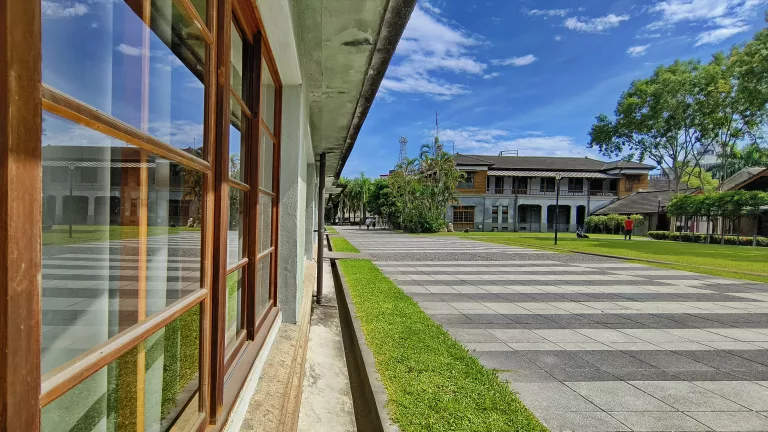
Hualien Cultural and Creative Industries Park, Hualien City/Mk2010/Wikimedia Commons
Morning: Start at Hualien Cultural and Creative Industries Park
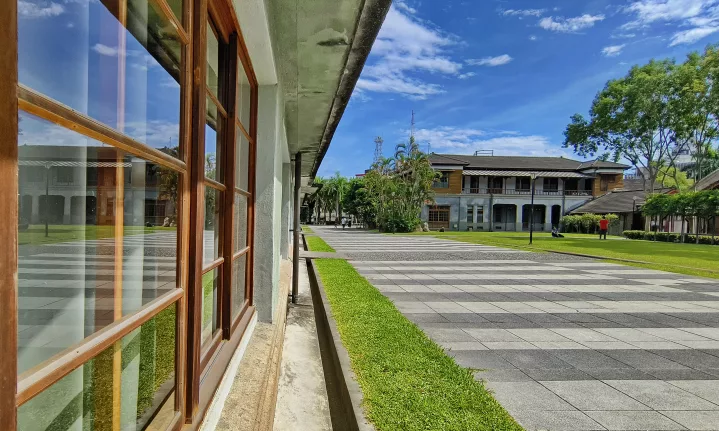
Begin your first morning in the city centre at the Hualien Cultural and Creative Industries Park, a former winery complex dating back to the Japanese colonial period.
The site has been transformed into a cultural and creative hub, with its old industrial buildings now used for exhibitions, performances, shops and cultural events. The original architecture has been retained, giving the complex a distinctly different feel from the modern city around it.
It is a good introduction to Hualien because it shows that the city isn’t simply a base for visiting the mountains. There is a slower, creative side to explore here, too.
Allow a couple of hours to wander between the old buildings, browse local products and stop for coffee before continuing towards the coast.
Late morning: Follow the road towards Qixingtan

Qixingtan Beach/Fred Hsu (Wikipedia:User:Fred Hsu on en.wikipedia)/Wikimedia Commons
From the city, head north towards Qixingtan Scenic Area.
Despite its name, Qixingtan isn’t a traditional sandy beach. Dark stones, clear water and sweeping views towards the mountains and Qingshui Cliff characterise its shoreline. The combination of ocean and mountains is quintessentially Hualien.
Take time simply to walk beside the water rather than trying to squeeze in too many activities. The coastline is also part of a longer cycling route connecting Hualien with Qixingtan, making bicycles an option for travellers who want to explore at a slower pace.
Lunch: Keep it local
Hualien is a good place to experiment with regional food rather than sticking to familiar Taiwanese dishes.
Look for restaurants and small eateries serving local ingredients, seafood and dishes influenced by the Indigenous communities of eastern Taiwan. The region’s food culture is particularly interesting because it reflects the meeting of Taiwanese, Japanese and Indigenous influences.
Leave room for the evening, though: Hualien’s night market is where the food adventure really gets going.
Evening: Eat your way through Dongdamen Night Market

Dongdamen Night Market/Sinchen.Lin/Wikimedia Commons
As the sun goes down, head to Dongdamen Night Market.
With more than 400 food stalls, the market is divided into different areas, including Chinese cuisine, the Street of Indigenous Cuisines and the former Ziqiang Night Market section. It has been a major part of Hualien’s evening food scene since 2015.
Rather than choosing one dinner, make the market your dinner.
Try a few small dishes and follow the aromas through the different sections. The Indigenous food area is particularly worth seeking out, with stalls serving dishes incorporating ingredients and flavours associated with eastern Taiwan.
One ingredient to look out for is maqaw, an Indigenous mountain pepper with a distinctive citrus-like flavour. It appears in everything from savoury dishes to grilled meats and snacks.
You could also try bamboo rice, mochi and grilled seafood, while leaving some time for the market’s games and lively atmosphere.
After dinner, wander through the surrounding old railway area, where the former railway corridor has become a pedestrian space lined with shops and evening stalls.
Stay overnight in Hualien City so you can make an early start for the mountains the next morning.
Day two: Into the mountains
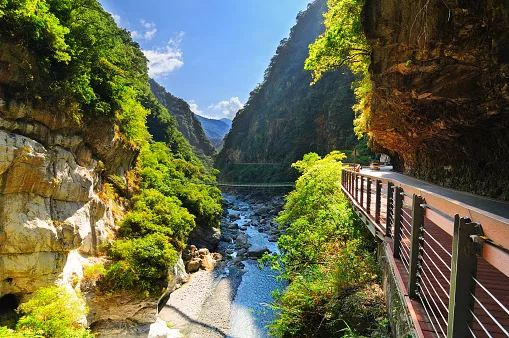
Taroko National Park in Hualien, Taiwan/By: Frank Chen/Getty Images
Morning: Head towards the Taroko region
The second day is about understanding why Hualien is such a sought-after destination in the first place.
Taroko National Park is known for its spectacular marble gorges, steep mountain walls and winding roads, but travellers visiting in 2026 need to plan differently.
The April 2024 earthquake caused extensive damage across the park. Recovery is ongoing, with roads, trails and facilities reopening in stages. Taroko National Park announced another reopening of routes within its ecological protection area from 29 August 2026, although other routes, including Mount Qingshui and Zhuilu Old Road, remain unavailable until further notice.
That means this isn’t the time to build an itinerary around ticking off famous pre-earthquake sights. Instead, check the park’s latest notices before travelling and choose from the areas currently accessible.
A landscape in recovery
The changing access is worth acknowledging in the article rather than glossing over it.
Taroko remains spectacular, but visitors are travelling through a landscape that is still being repaired. Heavy rain, typhoons, rockfalls and landslides can affect access, and the national park advises visitors to pay close attention to conditions in the mountains.
For current information, check the official Taroko National Park website before setting out.
If conditions allow, spend the morning exploring an officially open section of the park rather than attempting to recreate an old itinerary from before the earthquake.
Visit the Taroko National Park Visitor Centre
A useful starting point is the Taroko National Park Visitor Centre.
It provides context for the landscape and the park, making it easier to appreciate that the mountains aren’t simply a dramatic backdrop for photographs. They form part of a living cultural landscape with deep connections to Indigenous communities.
The visitor centre is also a sensible place to confirm current conditions and restrictions before continuing further into the park.
Afternoon: Explore Hualien’s Indigenous heritage
Hualien’s Indigenous culture deserves more than a passing mention alongside the scenery.
The wider region is home to Indigenous communities including the Truku, whose traditional territory encompasses the Taroko area. Their relationship with the mountains, forests and rivers is an important part of understanding eastern Taiwan.
Build some time into your second day to seek out Indigenous food, crafts or cultural experiences rather than treating the region purely as a hiking destination.
Even the food you encountered at Dongdamen Night Market offers an introduction. Indigenous ingredients and flavours such as maqaw, wild plants, millet, bamboo and locally sourced seafood appear in dishes across the region.
This is one of the details that gives a short Hualien trip more depth: you’re not simply moving between scenic viewpoints, but experiencing a region shaped by its people as much as its geography.
Late afternoon: Return to the Pacific
After the mountains, head back towards the coast.
If time allows, return to Qixingtan for another walk, or simply find somewhere along the waterfront to watch the light change over the Pacific.
It makes a fitting end to the trip because Hualien’s appeal lies in this dramatic proximity: within the space of a day, you can move from a bustling city street to a mountain valley and back towards an open ocean horizon.
There is no need to fill the final hours with another attraction. Sit down, eat something local and take in the view.
How to spend 48 hours in Hualien
The beauty of this itinerary is that it doesn’t require you to race between attractions.
Day one:
- Explore Hualien City
- Visit the Hualien Cultural and Creative Industries Park
- Head to Qixingtan
- Return to the city for Dongdamen Night Market
Day two:
- Travel towards the Taroko region
- Visit the Taroko National Park Visitor Centre
- Explore an officially open area or trail
- Learn more about the region’s Indigenous heritage
- Return to the coast for a final Pacific view
When to visit Hualien
Hualien’s east-coast location makes weather an important consideration. Conditions in the mountains can change rapidly, particularly during periods of heavy rain or after typhoons.
This is especially important for Taroko. Trail and road access can change at short notice, so travellers should check official updates immediately before setting out rather than relying solely on information found in older travel guides. Taroko National Park specifically directs visitors to current road and traffic information for Highway 8 and other routes.
For a two-day visit, flexibility is more valuable than trying to lock every stop into a strict schedule.
Getting around
Hualien is connected to Taiwan’s rail network, making the city relatively straightforward to reach without a car.
Within the city, taxis, buses, bicycles and walking can cover many of the main attractions. Qixingtan is further out, while the Taroko region requires more planning, particularly given the current road and trail restrictions.
If hiring a car or using a private driver to reach the mountains, check current highway restrictions and opening times before leaving Hualien. The situation continues to change as post-earthquake reconstruction progresses.
Why Hualien deserves more than a stopover
It would be easy to treat Hualien as little more than the jumping-off point for Taroko.
Spend 48 hours here, however, and a different picture emerges.
This is a city where the Pacific is always close, where a former winery has become a creative space, where Indigenous flavours appear alongside Taiwanese street food, and where the mountains begin almost immediately beyond the urban landscape.
Taroko remains an important reason to come, but Hualien itself is worth slowing down for.
Follow us on social media for more travel news, inspiration, and guides. You can also tag us to be featured.
Instagram | Facebook | Twitter
ALSO READ:







.jpg)

.jpg)