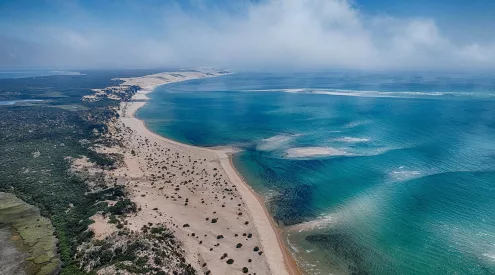

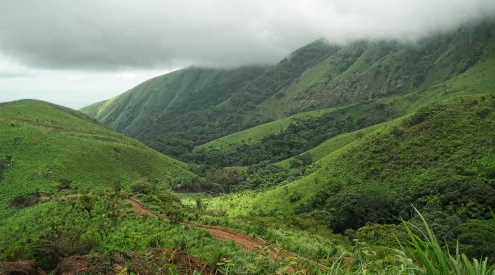
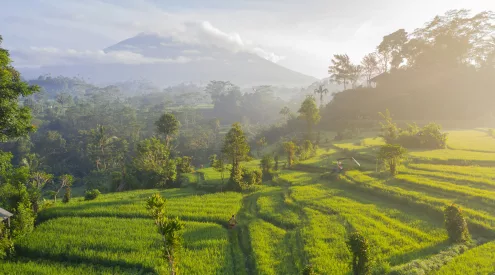


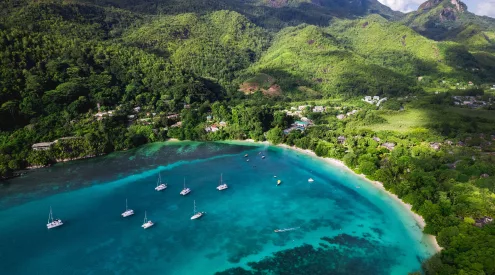

Not all training gains come from structured programmes or expensive equipment, writes Miriam Kimvangu. Sometimes, the biggest improvements come from changing your environment.

Alan J. Hendry/Unsplash
Think of it as upgrading your training plan without actually changing your training plan. Same effort, different setting, significantly more suffering. In a useful way. Here are seven destinations offering a distinct combination of conditions that can sharpen performance in different ways.
Namib Desert: Heat and resistance
The vast expanse of the Namib Desert presents a different kind of challenge. Here, heat and sand combine to create a high-resistance training environment. Running or cycling on soft sand increases muscular demand, while extreme temperatures require careful pacing and hydration strategies.
Heat acclimation is a key benefit. Training in these conditions can improve the body’s ability to regulate temperature and maintain performance under stress. It is not an environment for beginners, but for experienced athletes, it offers a powerful adaptation stimulus.
Stellenbosch: Precision on two wheels

Stellenbosch has earned its reputation as a cycling hub through a combination of infrastructure and terrain. Quiet farm roads weave through vineyards while purpose-built trails climb into the surrounding mountains. The gradients are varied enough to simulate race conditions, from steady endurance climbs to sharp anaerobic efforts. The town’s cycling culture also supports structured training. Group rides, bike shops and sports science facilities create an ecosystem where both amateur and elite riders can refine performance. Recovery is equally accessible, with nutrition-forward cafés and wellness centres catering to active travellers.
Drakensberg: Strength in every step

Arthur Hickinbotham/Unsplash
The towering Drakensberg Mountains offer some of the most demanding trail running terrain in the country. Altitude varies across the range, with routes that combine steep ascents, technical descents and long-distance endurance challenges. Running here builds more than cardiovascular fitness. It develops proprioception, balance and mental focus. Weather conditions can shift quickly, adding an additional layer of difficulty that prepares athletes for unpredictable race environments. For those training for ultra-distance events, the Drakensberg provides a realistic and rigorous testing ground.
Hermanus: Cold water, clear focus

Hermanus/Rudi De Meyer/Unsplash
On the southern coast, Hermanus is synonymous with open-water swimming. The Atlantic Ocean here is cold and often unpredictable, demanding both physical and psychological adaptation. Training in these conditions improves thermal tolerance and breath control, both essential for triathletes. The town’s coastal paths also allow for integrated training sessions, where swimming can be paired with running or cycling. Seasonal whale activity adds a unique dimension, though the focus remains firmly on disciplined, consistent effort in challenging water.
Dullstroom: Altitude advantage

Dullstroom/Nerene Grobler/Unsplash
At over 2,000 metres above sea level, Dullstroom offers a natural altitude training environment without leaving the country. Reduced oxygen levels stimulate physiological adaptations such as increased red blood cell production, which can enhance endurance performance when returning to lower elevations. The surrounding highveld terrain is ideal for steady-state training, particularly for runners and cyclists building aerobic capacity. Cooler temperatures further support sustained effort, making Dullstroom a practical choice for structured training camps.
Lesotho Highlands: Endurance at elevation

Tatenda Mapigoti/Unsplash
Few places test endurance like the Lesotho Highlands. Often referred to as the Kingdom in the Sky, Lesotho’s terrain sits consistently above 1,400 metres, with many areas exceeding 2,500 metres. Training here demands adaptation. Even moderate efforts feel significantly harder, forcing the body to become more efficient. The rugged landscape also introduces technical challenges that build strength and resilience. For athletes preparing for high-altitude races, the Lesotho Highlands provide conditions that are difficult to replicate elsewhere in the region.
Victoria Falls: Humidity and Hybrid Training

Eden Constantino/Unsplash
Around Victoria Falls, the climate introduces humidity as a training variable. Moist air increases cardiovascular strain, making even moderate sessions more demanding. The area also lends itself to cross-training. Trail runs through rainforest paths, strength work on uneven terrain and adventure activities such as rafting or hiking create a multidimensional training experience. For triathletes in particular, this variety can support overall conditioning while reducing monotony.
None of these destinations promise easy sessions. In fact, most of them guarantee the opposite. What they offer instead is progress that feels earned, and fitness that holds up when conditions are no longer ideal. And hey, nothing beats a good view.
Follow us on social media for more travel news, inspiration, and guides. You can also tag us to be featured.
TikTok | Instagram | Facebook | Twitter
ALSO READ: