





Across Europe, castles and medieval walls remain part of everyday life, standing beside homes, cafés and busy town squares. From Estonia to Portugal, these six towns show how historic fortifications continue to shape modern life.
1. Tallinn, Estonia
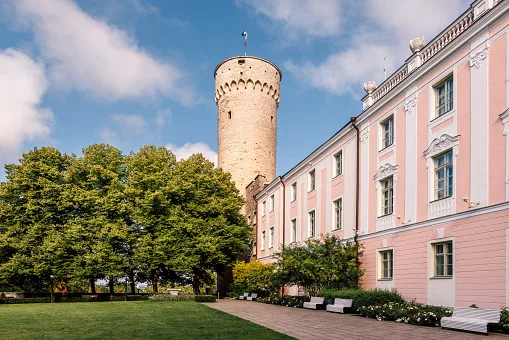
Toompea Tower and Estonian Parliament (Riigikogu)/By: Alexander Spatari/Getty Images
Where a medieval castle is home to parliament
Estonia’s capital combines a modern European city with one of the continent’s best-preserved medieval old towns. At its heart, Toompea Castle stands on a limestone hill above streets lined with historic buildings, independent shops, cafés and restaurants.
The castle’s story stretches back to a medieval fortress built on the site during the 13th and 14th centuries. Its appearance has changed over time, including the addition of a late Baroque façade in the 18th century. Today, it houses Estonia’s parliament, the Riigikogu, giving the historic complex a role that extends well beyond tourism.
Nearby, sections of Tallinn’s medieval defensive wall and its towers remain standing. Visitors can explore accessible portions of the fortifications and look across the red rooftops of the old town, while the streets below continue to serve residents and businesses.
Tallinn’s historic centre is particularly rewarding to explore on foot. Town Hall Square remains a focal point for gatherings and seasonal events, and its surrounding lanes reveal architectural details from different periods of the city’s history.
Here, the medieval past is not confined to a museum. It is part of the capital’s political life, urban layout and everyday surroundings.
2. Visby, Sweden
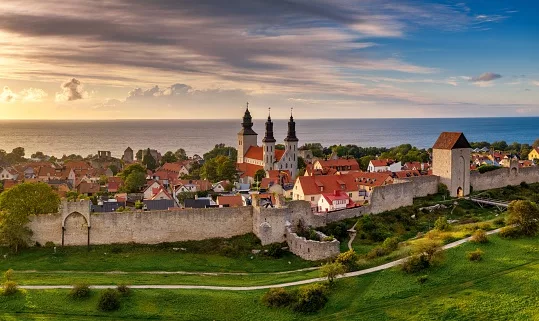
Drone panorama of the cityscape of Visby with the medieval city wall and landmark cathedral at sunset/By: makasana/Getty Images
A Baltic trading town protected by stone walls
On the Swedish island of Gotland, Visby offers a glimpse of the trading towns that flourished around the Baltic Sea during the Middle Ages. Once an important centre of the Hanseatic League, the town developed through maritime commerce, with merchants building warehouses, churches and substantial homes within its fortified boundaries.
Its most recognisable feature is the Ringmur, a medieval town wall stretching approximately 3.4km around much of the historic centre. Built during the 13th century, the wall survives with numerous towers and gates, creating a striking boundary between the old town and its surroundings.
Within the walls, cobbled lanes wind past historic buildings, small gardens and church ruins. St Mary’s Cathedral remains an active place of worship, while other medieval ruins have become part of the town’s cultural landscape and are used for events and performances.
Visby is still a functioning town, although its historic centre takes on a distinctly seasonal character as summer brings more visitors to Gotland. Its appeal lies in the way the surviving street plan, old merchant buildings and defensive structures tell a connected story of trade, settlement and change.
A walk along the wall offers a different perspective on the town, revealing how its historic boundaries once helped shape commercial life and how they continue to influence the experience of exploring Visby today.
3. Bragança, Portugal
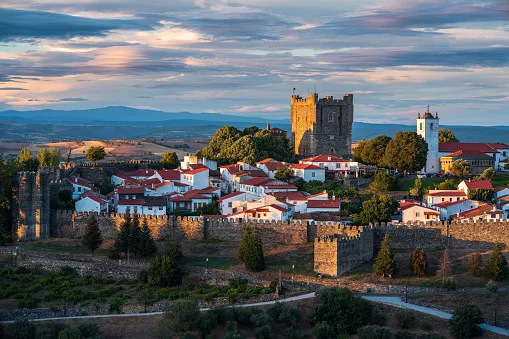
Panoramic view of the medieval citadel of Bragança in the Northern region of Trás-os-Montes, Portugal/By: Sergio Formoso/Getty Images
A medieval citadel in Portugal’s northeastern hills
Far from Portugal’s busiest coastal destinations, Bragança offers a quieter encounter with the country’s fortified heritage. Located in the northeast, close to the Spanish border, the town is known for its castle and the historic settlement preserved within its walls.
Bragança Castle rises above the surrounding landscape, its imposing keep once serving an important defensive purpose in a region where border security mattered. The surviving fortifications enclose a medieval core of narrow streets, traditional whitewashed houses and historic landmarks.
Inside the citadel, visitors can find the Church of Santa Maria and the Domus Municipalis, a distinctive Romanesque civic building associated with the town’s historic administration. The castle’s military museum adds context to the role of the fortress and the region’s changing political history.
The contrast between the old citadel and the wider modern town makes Bragança especially interesting. The fortified centre retains a sense of enclosure, while the surrounding settlement reflects a town that has developed beyond its medieval boundaries.
Bragança also provides a gateway to the landscapes of northeastern Portugal, including Montesinho Natural Park. Travellers can combine an exploration of the historic centre with walks, regional food and excursions into the surrounding countryside.
It is a reminder that fortified towns were not built simply to impress. Their position, walls and buildings reflected the practical realities of life along historic frontiers.
ALSO READ:
4. Český Krumlov, Czechia
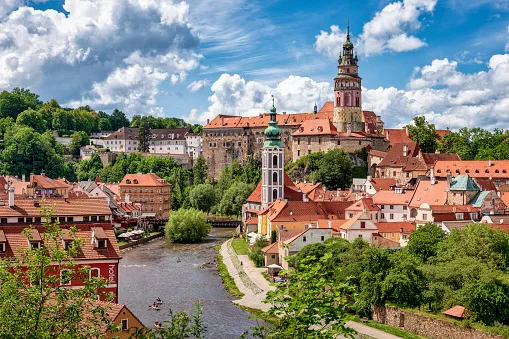
Old town of Cesky Krumlov/By: Harald Nachtmann/Getty Images
A castle that shaped an entire town
In South Bohemia, Český Krumlov has grown around a dramatic bend in the Vltava River, with its castle occupying a prominent position above the historic streets. Founded in the 13th century, the castle developed over successive periods, incorporating Gothic, Renaissance and Baroque features.
The result is a complex that feels closely connected to the town below. Its courtyards, historic buildings, gardens and distinctive round tower form an architectural backdrop to the winding streets and colourful façades of the old centre.
The relationship between the castle and the settlement is one of the reasons Český Krumlov has been recognised as a UNESCO World Heritage Site. The historic street layout and many of its buildings have survived centuries of change, preserving the character of a Central European town shaped by noble estates and regional trade.
Visitors can explore the old town on foot, crossing bridges over the river and following lanes towards the castle complex. The elevated viewpoints reveal the compact arrangement of terracotta roofs, river bends and historic buildings that make the town so distinctive.
Although tourism is now an important part of local life, Český Krumlov is more than a castle with a picturesque village attached. Its streets, river crossings and surrounding neighbourhoods demonstrate how the original settlement evolved around a powerful architectural centre.
The town is particularly appealing to travellers who enjoy exploring slowly, with time to wander beyond the main viewpoints and discover quieter corners of its historic centre.
5. Kotor, Montenegro
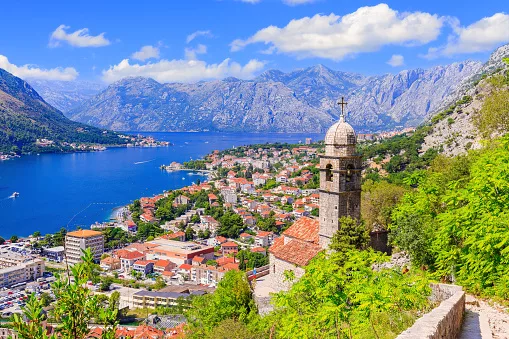
Kotor bay and Old Town from Lovcen Mountain/By: SCStock/iStock
Medieval walls climbing towards the mountains
On Montenegro’s Adriatic coast, Kotor presents a different kind of fortified landscape. Rather than a single castle dominating the skyline, its historic defences climb steeply up the mountainside behind the old town, following the rugged terrain above the Bay of Kotor.
Kotor’s stone walls reflect its strategic importance over several centuries, particularly during the period of Venetian rule. The fortifications protected a settlement positioned between the mountains and the sea, where control of the harbour and surrounding approaches was essential.
Inside the walls, the old town is a network of narrow lanes, small squares, historic churches and stone buildings. Cafés and shops occupy spaces that have served generations of residents, merchants and visitors, while public squares continue to provide natural meeting points.
Above the rooftops, the uphill fortification route leads towards the Church of Our Lady of Remedy and the ruins of the fortress of St John. The climb rewards visitors with views across the terracotta roofs, harbour and steep surrounding mountains.
Kotor’s setting helps explain why its fortifications look so different from those of a hilltop castle or a walled inland town. The defensive system was shaped by the geography of the bay, with stone walls extending from the waterfront towards the heights above the settlement.
Today, the same landscape that once gave Kotor strategic importance is central to its appeal as a coastal destination. Its historic architecture, waterfront setting and mountain scenery come together in a town where the past remains visible at almost every turn.
6. Sighișoara, Romania
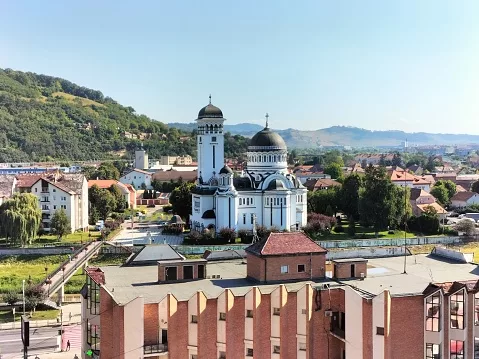
Views of Sighișoara in Romania, on a sunny day/By: Javier Jimenez Lopez/iStock
An inhabited citadel with colourful streets
In the heart of Transylvania, Sighișoara is known for its hilltop citadel, fortified towers and colourful historic buildings. Founded and developed as a medieval settlement, it offers a different perspective on Romania from the castles and legends commonly associated with the region.
The citadel’s defensive towers reflect the town’s historic guild system, with different craft communities responsible for sections of the fortifications. Several towers survive as distinctive landmarks, including the prominent Clock Tower, which overlooks the old town and its surrounding streets.
Inside the historic centre, cobbled lanes pass houses painted in warm shades of yellow, orange and pastel colours. Historic buildings, small businesses and places to eat give the citadel a character that extends beyond its reputation as a tourist attraction.
The covered Scholars’ Stairway, built to provide a sheltered route towards the Church on the Hill and the former school, is another reminder of how the town’s architecture responded to everyday needs. It connects the lower streets with important buildings on higher ground, linking practical movement with the historic layout of the settlement.
Sighișoara’s fortified centre forms part of a UNESCO World Heritage Site, recognised for its surviving medieval urban character. Exploring on foot allows visitors to appreciate the relationship between the towers, streets and buildings rather than viewing each landmark in isolation.
The result is a destination where the citadel’s defensive history remains part of the experience of moving through town, from its main square to the quieter lanes tucked behind the best-known sights.
Where Europe’s history is still part of daily life
Europe’s castles and fortifications were built for protection, authority and control. Over time, their roles changed, but many continued to influence the development of the towns around them.
In Tallinn, a medieval castle houses a modern parliament. In Visby, an extensive stone wall encloses a historic urban landscape. Bragança preserves a medieval citadel, while Český Krumlov demonstrates how a castle and river helped shape an entire settlement. Kotor’s fortifications follow the contours of a mountain, and Sighișoara’s towers remain part of an inhabited historic centre.
For travellers, these destinations offer more than a chance to admire old stonework. They invite a closer look at how people have adapted historic places for new generations, keeping their streets, buildings and public spaces relevant long after their original defensive purpose has faded.
Follow us on social media for more travel news, inspiration, and guides. You can also tag us to be featured.
Instagram | Facebook | Twitter | Spotify
ALSO READ:
The world’s most extraordinary castles: 7 places that look almost unreal