



Overlanding has become one of the most rewarding ways to explore Southern Africa’s remote environments, writes Miriam Kimvangu.
Unlike conventional road trips, overlanding focuses on self sufficient travel across rugged terrain, often through areas where infrastructure is limited and distances between settlements are large. Several landscapes stand out for their combination of ecological importance, geological features and cultural history. These routes offer an opportunity to experience environments that remain largely unchanged by modern development while also highlighting the importance of responsible travel and conservation.
Desert mountains of the ǀAi-ǀAis/Richtersveld Transfrontier Park

Ansie Potgieter/Unsplash
In the northwestern corner of South Africa along the Namibian border, Richtersveld Transfrontier Park is one of the country’s most remote protected areas. The park forms part of a transboundary conservation area shared with Namibia and is situated within the Succulent Karoo biome, a globally recognised biodiversity hotspot.
The terrain consists of rugged desert mountains, dry riverbeds, and rocky plains. Overlanding routes in the park are demanding and require a high clearance four wheel drive vehicle. Many tracks are slow moving due to loose rock, steep inclines, and uneven surfaces. Despite the harsh climate, the region supports an extraordinary diversity of succulent plants that have adapted to extremely dry conditions. Species such as quiver trees and halfmens are iconic features of the landscape. Seasonal rainfall can trigger spectacular wildflower displays across the desert plains.
Culturally, the Richtersveld is closely associated with the Nama pastoral communities who have historically practised seasonal grazing in the area. Travellers exploring the park are encouraged to learn about the traditional land use practices that have shaped this environment for generations.
Mountain wilderness of the Baviaanskloof Mega Reserve

The Baviaanskloof Mega Reserve forms part of a large protected corridor that links several conservation areas in the Eastern Cape. The main overland route runs through a long mountain valley between the towns of Willowmore and Patensie and covers roughly 200 kilometres of gravel and rocky terrain. The route is known for its varied topography. Drivers encounter narrow gorges and numerous river crossings that can change depending on seasonal rainfall. The remote nature of the reserve means that travellers must plan carefully and carry sufficient supplies.
Ecologically, the Baviaanskloof is notable for its biodiversity. The area lies at the intersection of multiple vegetation zones including fynbos, Albany thicket, and Karoo ecosystems. This diversity supports a wide range of wildlife such as kudu, bushbuck, leopard, and many bird species. The reserve has also been recognised as part of a UNESCO World Heritage Site within the Cape Floristic Region due to its botanical significance.
The salt plains of the Makgadikgadi Pans

Ed Wingate/Unsplash
The Makgadikgadi Pans are among the largest salt flats in the world. These expansive white plains are the remnants of an enormous prehistoric lake that once covered much of northeastern Botswana thousands of years ago.
During the dry season, the pans form a hard and flat surface that allows for long distance overland travel. Driving across them provides a clear view of the surrounding horizon with very little vegetation or elevation change. Seasonal rainfall dramatically alters the environment. When water collects in shallow depressions, the pans attract migratory birds including flamingos and pelicans. At the same time, grazing animals such as zebra and wildebeest move into nearby grasslands as part of regional migration patterns.
Many travellers combine visits to the pans with nearby conservation areas including Makgadikgadi Pans National Park and Nxai Pan National Park, both of which provide opportunities for wildlife viewing and guided exploration.
Remote routes of Kaokoland and Damaraland

Eelco Böhtlingk/Unsplash
Northern Namibia is widely regarded as one of the continent’s premier overlanding destinations. The regions of Kaokoland and Damaraland are characterised by rocky desert landscapes, dry river valleys, and scattered mountain ranges. Routes through these regions frequently follow ephemeral river systems such as the Hoanib and Hoarusib rivers. Although these rivers flow only after heavy rainfall, they support vegetation corridors that sustain wildlife populations. The area is particularly known for its desert adapted elephants that travel long distances between water sources. Other wildlife includes giraffe, oryx and springbok.
The region also contains several important cultural and archaeological sites. One of the most significant is Twyfelfontein, a UNESCO World Heritage Site that contains thousands of ancient rock engravings created by early hunter gatherer communities. Nearby Brandberg Mountain is Namibia’s highest peak and a prominent landmark within the desert landscape.
Wildlife landscapes of the Tuli Block
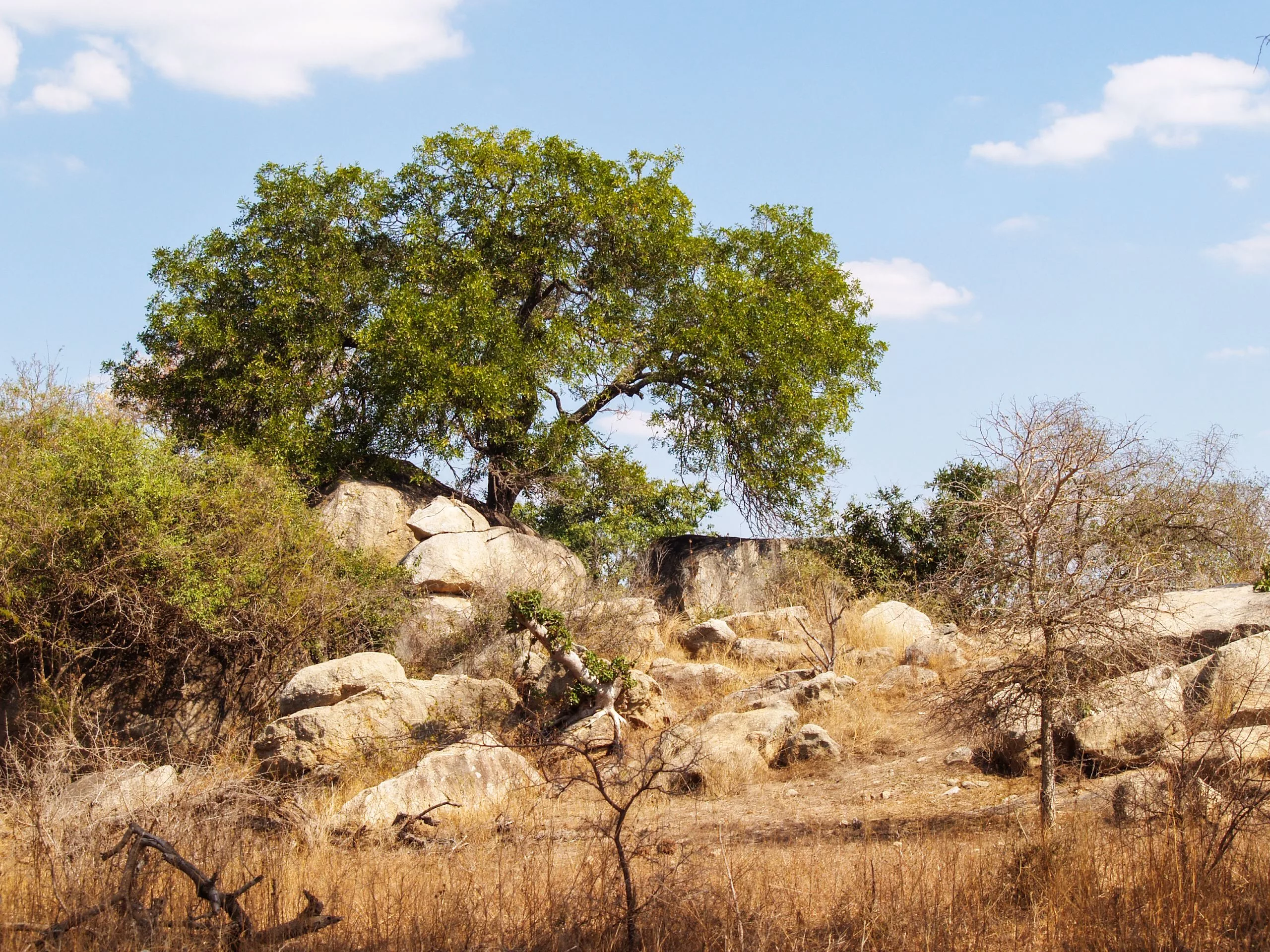
The Tuli Block is a narrow stretch of land located along Botswana’s eastern border with South Africa and Zimbabwe. The region forms part of the Greater Mapungubwe Transfrontier Conservation Area, which protects a shared ecosystem across national boundaries. The landscape is defined by sandstone outcrops, baobab trees, and the winding course of the Limpopo River. Several private reserves operate within the Tuli Block and offer overlanding routes that allow visitors to explore the region’s diverse terrain.
Wildlife sightings are common and may include elephant, giraffe, eland, and various antelope species. The relative lack of mass tourism compared with other safari destinations makes the region particularly appealing to travellers seeking quieter wilderness experiences.
Responsible overlanding
Exploring remote environments requires careful preparation and an understanding of local conditions. Travellers should ensure that their vehicles are properly equipped, carry adequate water and fuel, and consult local authorities or park management regarding current road conditions. Responsible travel practices are also essential. Remaining on designated tracks, respecting wildlife, and supporting conservation initiatives help protect these fragile ecosystems.
Follow us on social media for more travel news, inspiration, and guides. You can also tag us to be featured.
TikTok | Instagram | Facebook | Twitter
ALSO READ: