

South Africa holds pockets of ancient indigenous forest where yellowwoods and birdsong create an entirely different world.
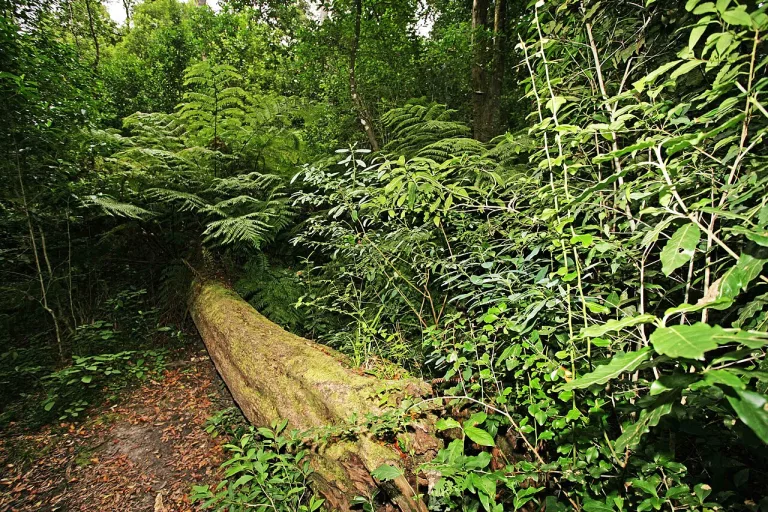
Knysna Forest – Garden Route, South Africa/South African Tourism/Wikimedia Commons
These forests are among the country’s most biodiverse ecosystems. Many have survived for thousands of years, sheltering rare wildlife, spectacular walking trails and some of the oldest trees in southern Africa. Whether you are chasing waterfalls, looking for elusive birds or simply craving the cool shade of towering trees, these forest escapes offer a refreshing change of scenery.
1. Knysna Forest, Western Cape
The forests surrounding Knysna form part of the Garden Route National Park and remain one of South Africa’s best-known indigenous forests. Giant Outeniqua yellowwoods soar overhead while moss-covered paths wind through dense vegetation.
Several trails showcase the forest’s beauty. The popular Circles in the Forest Trail takes hikers through towering trees and along streams, while Jubilee Creek offers a gentler walk with picnic spots and swimming pools tucked into the forest.
Diepwalle Forest is another highlight. Once home to the legendary Knysna elephants, it tells the story of one of South Africa’s most fascinating conservation mysteries. Although sightings are extraordinarily rare today, interpretive displays reveal the history of these elusive giants that once roamed freely through the forest.
Wildlife enthusiasts should keep an eye out for the colourful Knysna turaco, bushbuck and tree hyrax, while lucky birders may spot the secretive narina trogon.
2. Tsitsikamma, Eastern Cape and Western Cape
Further east, the indigenous forests of Tsitsikamma meet the Indian Ocean in spectacular fashion. Here, ancient trees give way to dramatic cliffs, rivers and suspension bridges.
The famous Big Tree is one of the area’s highlights. Estimated to be around 800 years old, this massive yellowwood stands over 36 metres tall and offers an impressive reminder of the forest’s age.
Adventure seekers can experience the canopy from above on guided zipline canopy tours, gliding between giant trees while learning about the forest ecosystem. Hikers can also sample sections of the world-famous Otter Trail, widely regarded as one of South Africa’s finest coastal hikes, or explore shorter walks around Storms River.
3. Magoebaskloof and Woodbush Forest, Limpopo
In Limpopo, mist often blankets the forests of Magoebaskloof, creating an almost magical atmosphere. This mountainous region combines indigenous forest, waterfalls and plantations into one of South Africa’s premier outdoor destinations.
Debengeni Falls is a favourite stop, with cascading water surrounded by lush vegetation and picnic sites. Nearby, the Woodbush Forest Reserve protects one of the country’s largest remaining Afromontane forests. Scenic forest drives reveal towering trees, while numerous walking trails explore the cool understorey.
Birdwatchers travel from across the country hoping to tick off species such as the narina trogon and other forest specialists. Mountain biking has also become increasingly popular, with trails weaving through plantations and indigenous forest alike.
4. Hogsback and the Amathole Forests, Eastern Cape
Perched high in the Amathole Mountains, Hogsback has long been associated with misty forests and fairy-tale scenery. Whether or not it inspired fantasy literature, its enchanted atmosphere is undeniable.
Visitors can stroll through the Hogsback Arboretum before venturing deeper into indigenous forest walks leading to waterfalls including the beautiful Madonna and Child Falls. The dramatic viewpoint known as The Edge overlooks forested valleys stretching towards the distant plains.
Beyond the village, the Amathole forests contain some of the country’s oldest indigenous woodland and support remarkable biodiversity. Towering trees provide habitat for samango monkeys, bushbuck and numerous bird species.
5. KwaZulu-Natal’s hidden forests
KwaZulu-Natal is home to several lesser-known forest gems. Dlinza Forest Nature Reserve near Eshowe protects a rare coastal scarp forest and features an elevated aerial boardwalk that allows visitors to explore the canopy while keeping an eye out for birds and monkeys below.
Further north, Ongoye Forest remains one of South Africa’s oldest surviving coastal forests. Rich in endemic plant species and birdlife, it rewards patient visitors with opportunities to spot rare forest birds in a peaceful setting far from the crowds.
Wildlife worth watching
South Africa’s indigenous forests may not offer the iconic Big Five experience, but they reward those who slow down. Listen for the unmistakable call of the Knysna turaco, scan the shadows for the brilliantly coloured narina trogon or watch as a samango monkey leaps effortlessly through the canopy.
Bushbuck often emerge quietly along forest edges, while tree hyraxes can sometimes be heard calling from hollow trunks after sunset. Every forest walk reveals something different, making these ancient ecosystems some of the country’s most rewarding places to explore.
As development has reduced much of South Africa’s original forest cover, these remaining pockets have become increasingly precious. Visiting them is not only an opportunity to experience remarkable biodiversity, but also a reminder that some of the country’s greatest natural treasures are found beneath a canopy of ancient trees rather than beneath endless African skies.
Follow us on social media for more travel news, inspiration, and guides. You can also tag us to be featured.
Instagram | Facebook | Twitter | Spotify
ALSO READ:
South Africa’s living fossils: Ancient survivors still walking the Earth