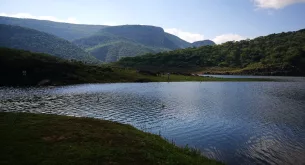

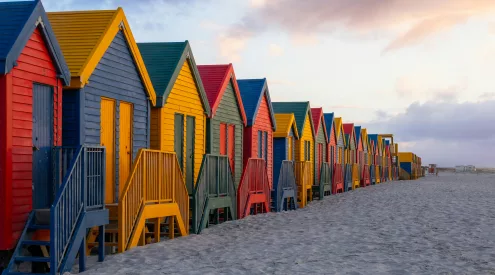
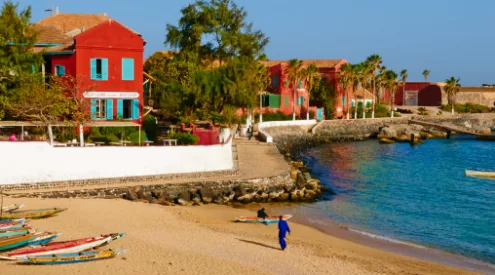


South Africa’s coastline is the sort of place that makes it easy to forget just how much life exists beneath the surface. Its marine protected areas safeguard some of the country’s most important coastal ecosystems, from kelp forests and coral reefs to whale breeding grounds and penguin habitat.
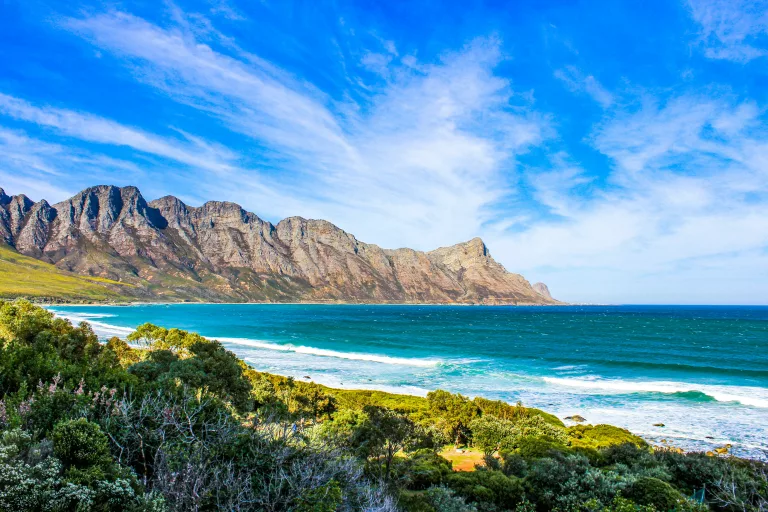
Photo by Cara Rodriguez / Unsplash
Beyond the beaches and famous viewpoints, our marine protected areas safeguard coral reefs, kelp forests, rocky shores, islands, estuaries and breeding grounds for everything from penguins and turtles to whales and dolphins.There are currently 41 marine protected areas around the country, protecting some of our most important coastal and marine ecosystems.
Some are famous. Others are far easier to overlook. But if you have ever wanted to understand why South Africa’s coastline is worth protecting, these are the places to start.
Tsitsikamma Marine Protected Area, Eastern Cape
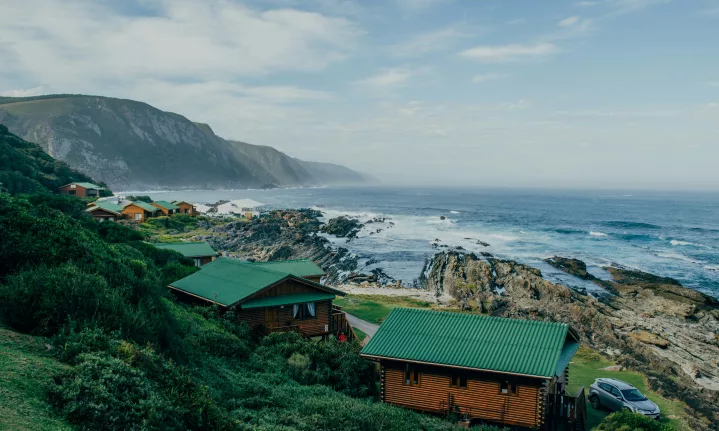
There is something particularly special about arriving at Storms River Mouth. The forest comes right down to the cliffs, the Indian Ocean pounds against the rocks and, somewhere below the surface, an entirely different landscape is unfolding.
The Tsitsikamma Marine Protected Area is Africa’s oldest marine protected area. Established in 1964, it protects roughly 60km of coastline and extends 5.6km offshore. It forms part of the Garden Route National Park and protects an exceptionally rich stretch of intertidal life, reefs and deep-sea fish.
Its history is also a reminder of how conservation thinking has changed. Tsitsikamma was initially managed as a strictly no-take area. Today, its management has evolved to balance marine conservation with access and the needs of neighbouring communities.
For visitors, the big draw is being able to experience the reserve rather than simply look at it. Guided scuba diving and snorkelling are available around Storms River Mouth, where you can explore reefs and look for rays and fish beneath the surface. Kayaking and lilo adventures offer another way to get onto the water, while the surrounding park provides some of the country’s best coastal hiking.
The famous Otter Trail follows the coastline for 42km over five days, while shorter walks around Storms River Mouth make the area accessible even if a multi-day hike is not on your agenda. Keep an eye out for dolphins, southern right whales, African black oystercatchers and the elusive Cape clawless otter.
Why go: For the rare combination of ancient forest, dramatic coastline and genuinely wild underwater scenery.
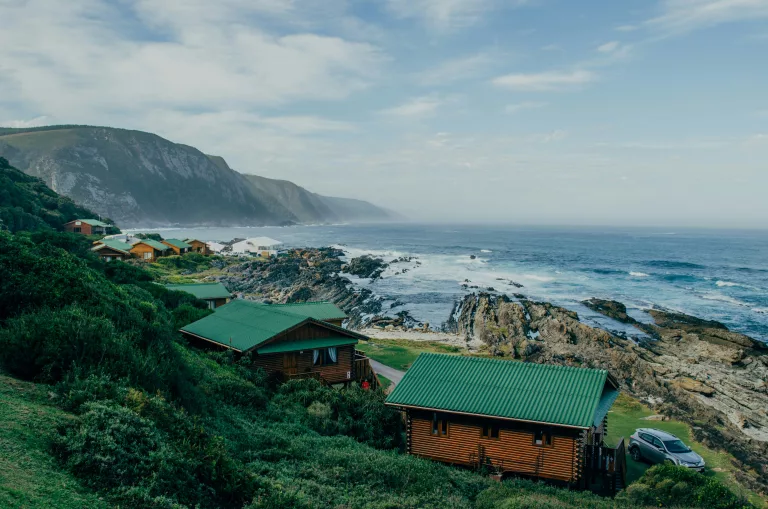
Photo by Mateus Maia / Unsplash
De Hoop Marine Protected Area, Western Cape
If whale watching is your reason for getting in the car, De Hoop deserves a place near the top of the list.
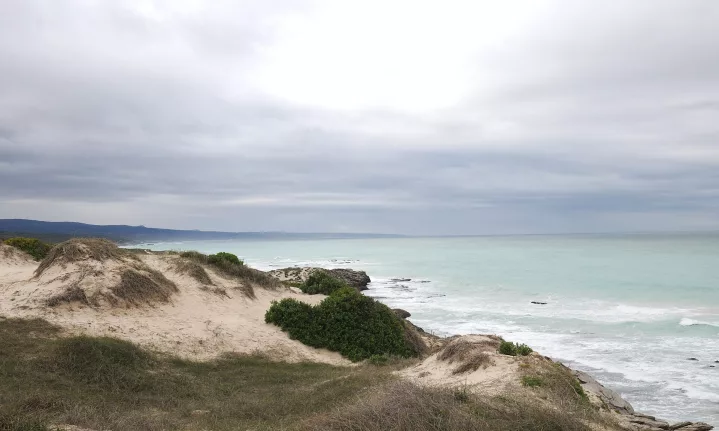
The marine reserve forms part of the greater De Hoop Nature Reserve, where the coastline becomes an important breeding and nursery area for southern right whales. Around 120 whales return to these waters each year to mate and calve, and between June and November they can often be seen remarkably close to shore.
You do not necessarily need a boat to experience it. One of the joys of De Hoop is simply finding a high point along the coast and watching the ocean. Koppie Alleen is particularly good for this, with elevated views across the reserve’s sweeping beaches and turquoise water.
And this is where De Hoop becomes more than a whale-watching destination. The reserve is one of those places where the marine and terrestrial landscapes feel inseparable. You can spend the morning walking along the coast, exploring rock pools and limestone formations, and the afternoon watching bontebok, eland, Cape mountain zebra or one of the reserve’s other wildlife species.
For something more ambitious, the 55km Whale Trail takes hikers from Potberg to Koppie Alleen over several days, crossing fynbos, beaches and dramatic coastal terrain.
Why go: For one of the best land-based whale-watching experiences in the country, with hiking and wildlife thrown in.
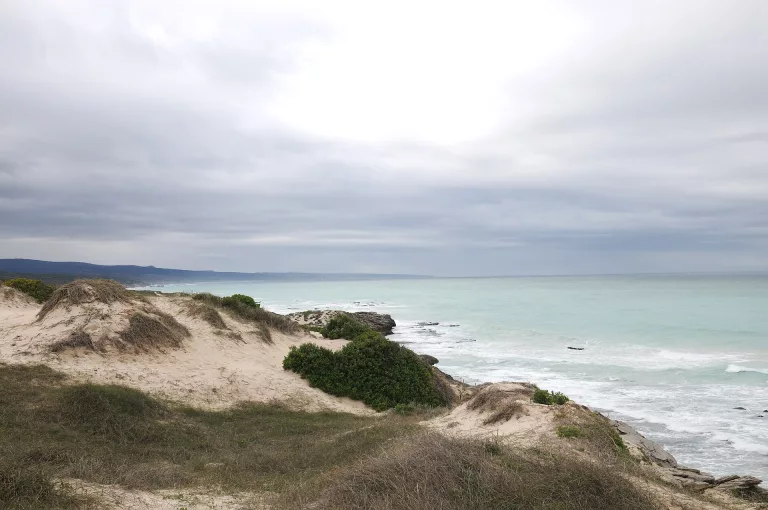
Photo by Josep M. Gracia / Wikimedia Commons
iSimangaliso Marine Protected Area, KwaZulu-Natal
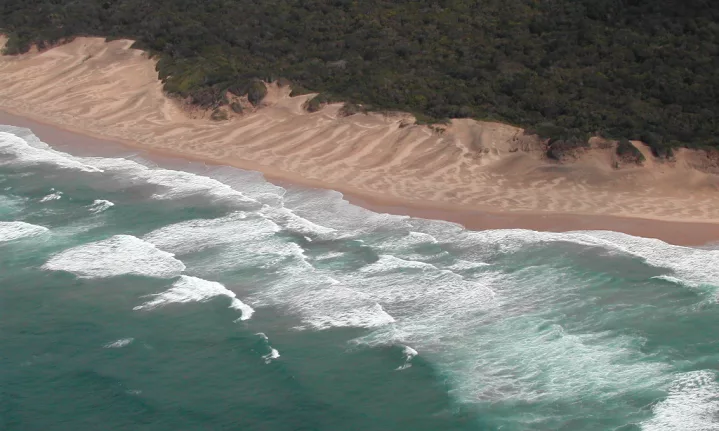
Northern KwaZulu-Natal is where South Africa’s coastline starts to feel almost tropical. The water is warmer, coral reefs flourish and the list of things that can turn up offshore is extraordinary.
The iSimangaliso Wetland Park‘s marine protected area is South Africa’s largest and forms part of the country’s first World Heritage Site, which was inscribed in 1999. Its marine protection was significantly expanded in 2019 following more than a decade of planning, creating a protected seascape that links with Mozambique’s protected waters.
The biodiversity here is the reason to make the journey. iSimangaliso’s protected waters include coral reefs, turtle nesting beaches and habitat for whales, dolphins, sharks and the ancient coelacanth. The Sodwana Bay section is internationally recognised as a major diving destination, with the park reporting around 1,200 fish species and 100 types of warm-water coral.
Sodwana Bay is the obvious base if you want to get underwater. Scuba diving and snorkelling reveal coral gardens and an impressive variety of marine life, while boat trips can bring encounters with dolphins and seasonal whales. Between November and April, turtle tours offer the chance to witness loggerhead and leatherback turtles nesting along the coastline.
But you do not have to be a diver. iSimangaliso’s beaches, coastal forests, lakes and wetlands make it a destination in its own right. Boat cruises, birding, wildlife experiences and turtle watching mean you can build an entire trip around the park without ever putting on a wetsuit.
Why go: For the closest thing South Africa has to a tropical marine adventure, with coral reefs, turtles and whales sharing the same protected coastline.
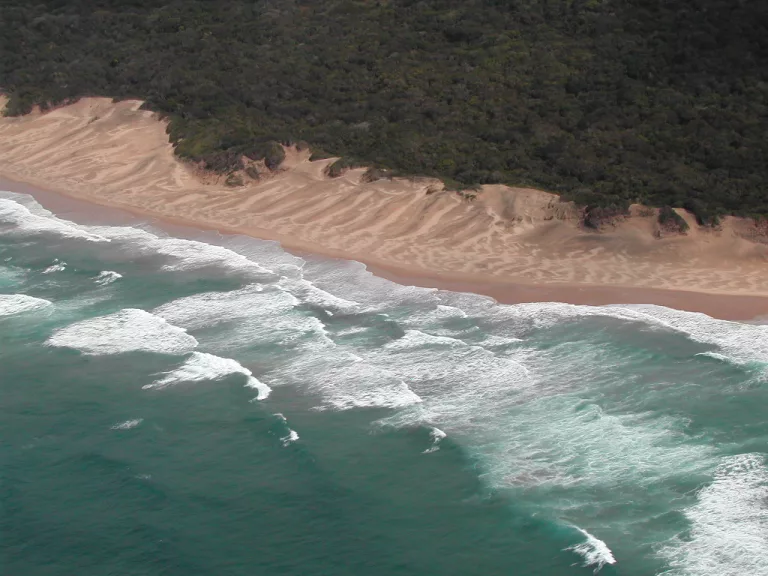
Photo by UNESCO / Wikimedia Commons
Aliwal Shoal Marine Protected Area, KwaZulu-Natal
Just off the KwaZulu-Natal South Coast, the Aliwal Shoal is the place to go when your idea of a marine experience involves getting properly underwater.
The shoal was formally declared a Marine Protected Area in 2004. Its regulations were designed to protect the marine environment and biodiversity of the shoal, conserve associated fish stocks and promote regulated ecotourism and research.
Today, Aliwal Shoal is best known among divers for its spectacular underwater habitats and large marine animals. Ragged-tooth sharks are one of its signature encounters, while the wider area is also known for encounters with other shark species, rays, turtles and seasonal marine life.
You can explore the shoal through guided scuba-diving trips, with permits required for recreational scuba diving in the MPA. For experienced divers, it is the kind of place where the anticipation begins long before you get into the water. For newcomers, local dive operators can provide introductory experiences and training.
The South Coast also gives you plenty to do above water. Build a diving trip around the beaches and small coastal towns, or use it as a base for exploring the KwaZulu-Natal coastline.
Why go: For a close-up encounter with South Africa’s bigger marine predators and one of the country’s most celebrated dive sites.
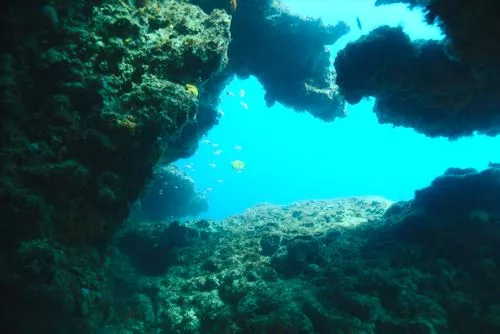
Photo by Willemferguson3 / Wikimedia Commons
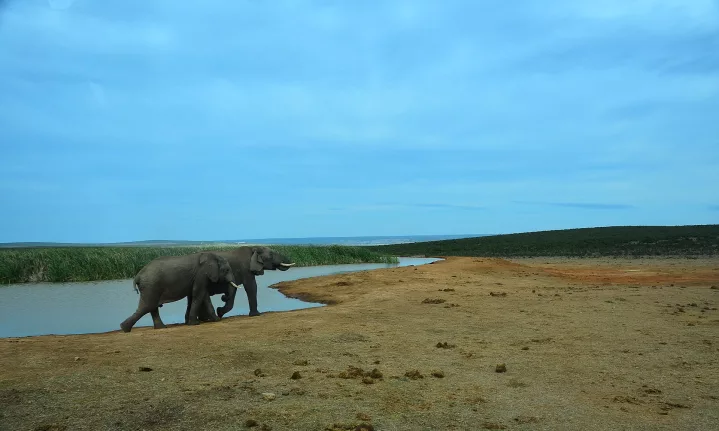
Addo Elephant National Park Marine Protected Area, Eastern Cape
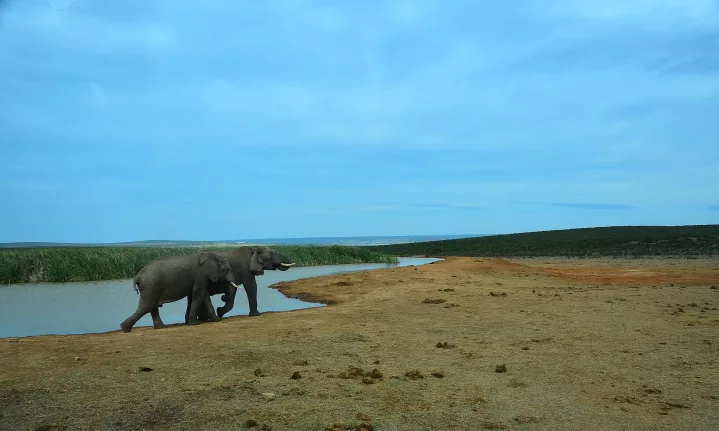
Yes, Addo. The park best known for elephants also extends into the ocean.
The Addo Elephant National Park Marine Protected Area was proclaimed in 2019 after years of planning and negotiation. Covering approximately 1,127km² at proclamation, it protects a remarkable mixture of sandy beaches, rocky shores, reefs, an estuary and islands in Algoa Bay.
Its conservation story is particularly important because of the seabirds that depend on the waters around the islands. The MPA protects feeding grounds for endangered African penguins and Cape gannets, while its reefs and estuary are important for marine species and the recovery of valuable fish stocks.
For visitors, the appeal is that you can combine two very different kinds of safari in a single trip. Spend a morning watching elephants, lions or rhinos in Addo’s terrestrial sections, then head towards Algoa Bay and the coast.
Marine wildlife can be encountered from the water, while the wider Algoa Bay area offers opportunities for birding and coastal exploration. Boat trips to the islands have historically provided opportunities to see penguins, gannets, seals, dolphins and whales, although access to protected islands is regulated and visitors should check current arrangements before planning a trip.
Why go: Because few places make the connection between South Africa’s land and sea conservation quite as clearly as Addo.
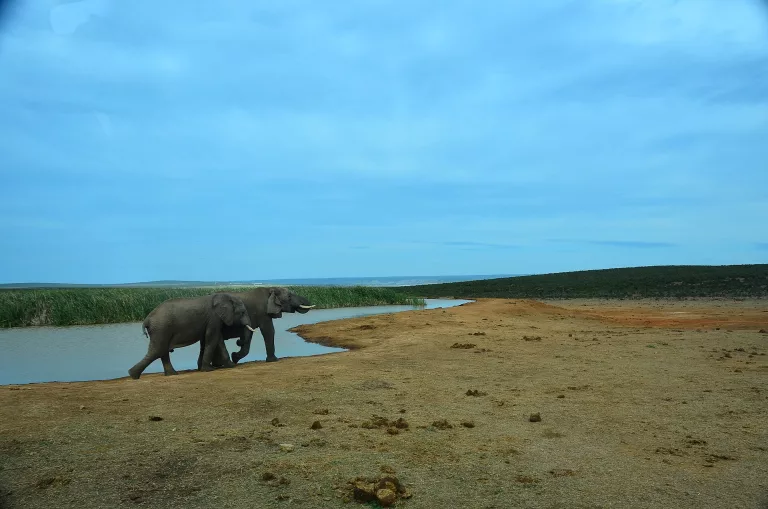
Photo by Dariusz Jemielniak (“Pundit”) / Wikimedia Commons
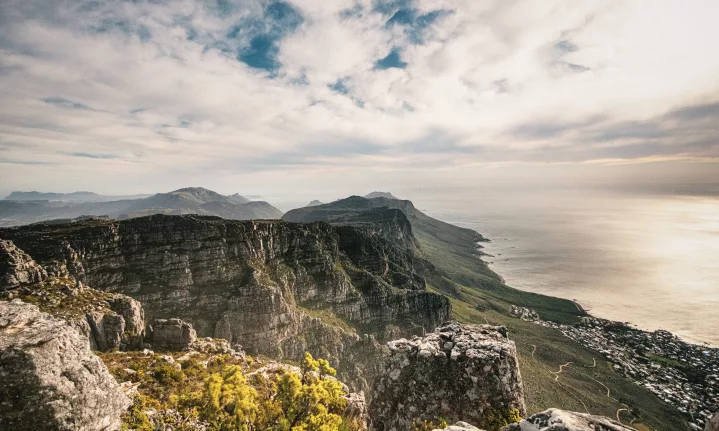
Table Mountain National Park Marine Protected Area, Western Cape
You probably know Table Mountain. You might even know Boulders. But the marine protected area that stretches around the Cape Peninsula is a different story.
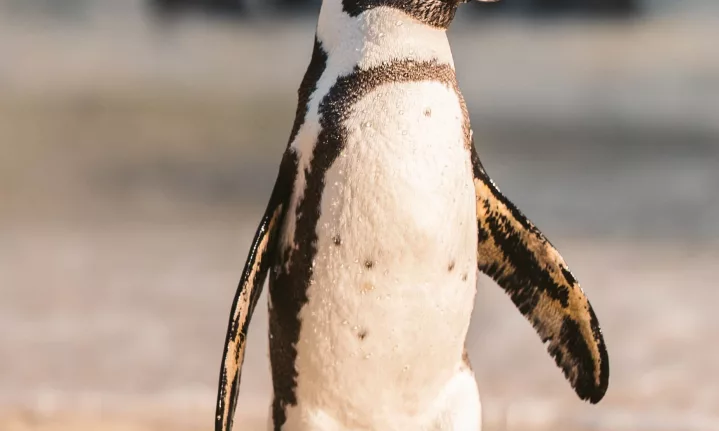
Declared in 2004, the Table Mountain National Park Marine Protected Area protects an extraordinary stretch of coastline and ocean around the peninsula. Its waters support dolphins, several whale species, Cape fur seals and an array of seabirds, while Boulders forms an important habitat for African penguins. It is also one of the easiest marine protected areas in the country to experience without planning an expedition.
Start at Boulders, where boardwalks allow visitors to see African penguins without entering their breeding habitat. Then continue towards Cape Point for cliffs, beaches, hiking trails and dramatic views over the Atlantic and Indian oceans. The park also offers opportunities for diving, snorkelling, fishing, whale watching and other water-based activities, subject to the relevant rules and permits.
The penguin colony itself has a fascinating conservation history. Boulders became home to a breeding colony in 1983, but African penguins have since experienced a dramatic population decline. The species is now classified as endangered, making responsible viewing particularly important.
This is perhaps the easiest MPA on the list to overlook precisely because it is so familiar. But that is also the reason to go back. The next time you drive around the Cape Peninsula, look beyond the mountain. There is an entire protected ecosystem beneath the waves.
Why go: For a reminder that you do not have to travel across the country to experience extraordinary marine conservation.
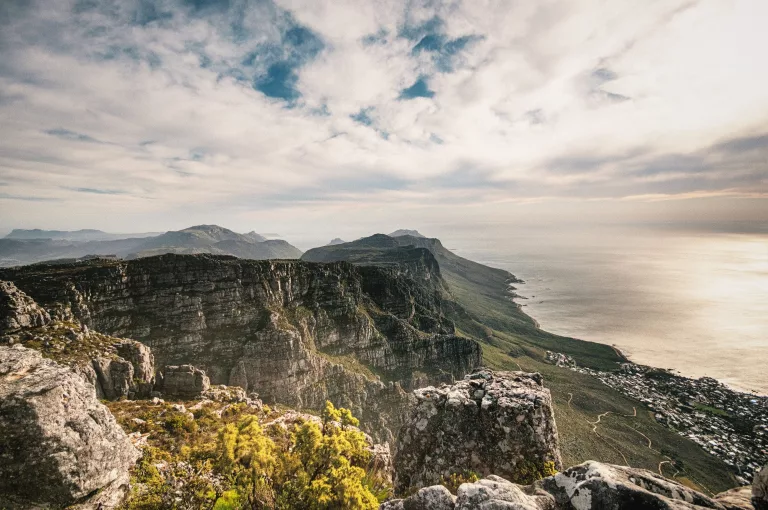
Photo by Scott Webb / Pexels
Why these places matter
A marine protected area is not simply a section of ocean where nobody is allowed to go. Different MPAs have different zones and regulations, with some areas completely protected from extraction and others allowing carefully controlled activities. Their broader purpose is to conserve ecosystems, protect marine species and help rebuild fish populations while supporting appropriate recreation, tourism and coastal livelihoods.
That distinction matters when visiting. The best experience is not necessarily the one where you see the most animals. It is the one where you understand that the animals are there because a place has been given room to function.
That might mean watching a whale and her calf from a cliff at De Hoop. It might mean spotting a penguin from behind a boardwalk at Boulders or seeing a dolphin cut through the breakers at Tsitsikamma. And sometimes, it simply means standing on the beach and looking out at an ocean that is doing what it has done for thousands of years.
The coast is worth slowing down for
South Africa’s marine protected areas are proof that some of the country’s best wildlife experiences do not require a game drive.
They are places where the landscape changes dramatically within a few kilometres, where forests meet the sea, whales pass cliffs, turtles return to beaches and coral reefs sit beneath warm Indian Ocean water. They also show just how much of our natural heritage exists beyond the boundary of the beach.
So pick a coastline and make a weekend of it. Take the long way to De Hoop. Stay a few nights in Sodwana. Stop at Storms River on the Garden Route. Dive Aliwal Shoal. Or simply spend a day exploring the Cape Peninsula with a little more attention to what lies beyond the shoreline. We spend a lot of time talking about protecting South Africa’s wild places. Visiting them responsibly is one of the simplest ways to understand why they are worth protecting in the first place.
Follow us on social media for more travel news, inspiration, and guides. You can also tag us to be featured.
Instagram | Facebook | Twitter | Spotify
ALSO READ: