
From South Africa’s oldest operational lighthouse to one that proved too high to do its job, the Western Cape’s lighthouses have been watching over the coastline for generations. Some were built after devastating shipwrecks. Others became symbols of hope for sailors rounding one of the world’s most dangerous stretches of ocean.
Powerful currents, hidden reefs, dense fog and sudden storms have claimed hundreds of vessels, giving parts of the Western Cape’s coastline the nickname “the graveyard of ships”. It’s no coincidence that South Africa’s oldest lighthouses were built here first.
Why the Western Cape needed so many lighthouses
For centuries, ships travelling between Europe and Asia rounded the southern tip of Africa. Before the opening of the Suez Canal in 1869, this was one of the busiest shipping routes in the world. But it was also one of the most unforgiving.
The meeting of the Atlantic and Indian Oceans creates unpredictable seas, while strong winds, dense winter fog and rocky coastlines made navigation especially hazardous. Throughout the 18th and 19th centuries, numerous ships were wrecked along the Cape coast, prompting the construction of increasingly sophisticated lighthouses.
Today, many of these historic structures remain operational under the management of the National Ports Authority, while also welcoming curious visitors keen to learn about South Africa’s maritime heritage.
1. Green Point Lighthouse (1824)
South Africa’s oldest operational lighthouse
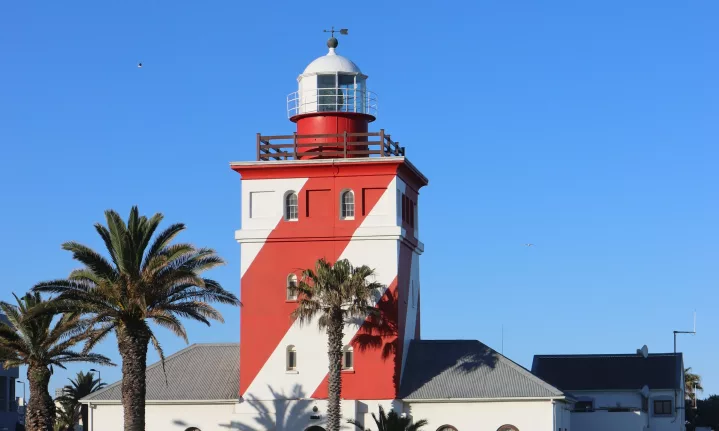
Standing proudly in Mouille Point, Green Point Lighthouse has been guiding ships into Table Bay since 1824, making it the oldest operational lighthouse in South Africa. It’s difficult to imagine today, surrounded by apartment blocks, joggers and the Sea Point Promenade, but when it was first lit, this was open coastline overlooking one of the busiest harbours in the southern hemisphere.
The original light burned whale oil before later switching to paraffin and eventually electricity. Over the years, advances in optics dramatically increased how far its beam could reach. Its distinctive red-and-white candy-striped tower wasn’t part of the original design either. The bold colours were added to improve visibility during daylight hours and have since become one of Cape Town’s most recognisable landmarks.
Inside the adjoining keeper’s cottage is a small lighthouse museum packed with old photographs, navigational instruments and fascinating glimpses into the lives of lighthouse keepers.
Don’t miss: A sunset stroll along the promenade before visiting the lighthouse.
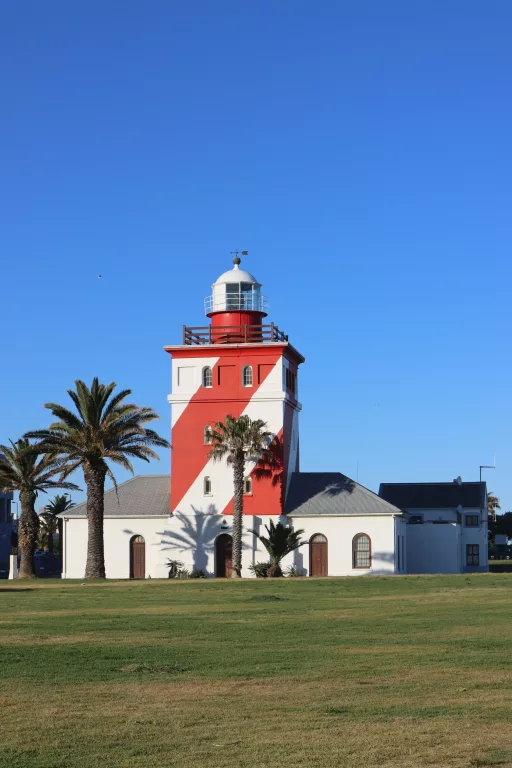
Photo: Unsplash
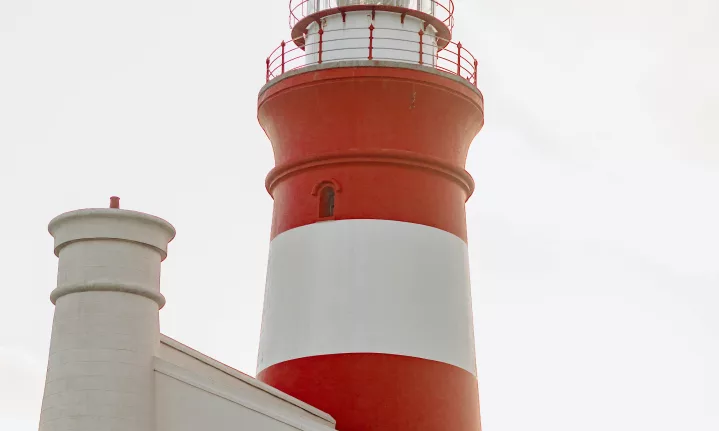
2. Cape Agulhas Lighthouse (1849)
The lighthouse built because of tragedy
If one lighthouse tells the story of why these structures matter, it’s Cape Agulhas. The devastating wreck of the Arniston in 1815 claimed more than 370 lives after the British troopship struck the coast near Agulhas. Only a handful of people survived.
The disaster highlighted just how dangerous this stretch of coastline had become, eventually leading to the construction of Cape Agulhas Lighthouse, which first shone its light in 1849. The building itself is unlike any other in South Africa. Rather than the typical cylindrical tower, it was designed to resemble the legendary Pharos of Alexandria, one of the Seven Wonders of the Ancient World.
Visitors can climb the spiral staircase to the lantern room, where sweeping views stretch across the coastline and the nearby southernmost tip of Africa. Unlike Cape Point, where tourists often confuse the famous viewpoint with the meeting of the oceans, Cape Agulhas marks the official southernmost point of the African continent.
Worth knowing: The lighthouse houses a small maritime museum detailing the region’s many shipwrecks.
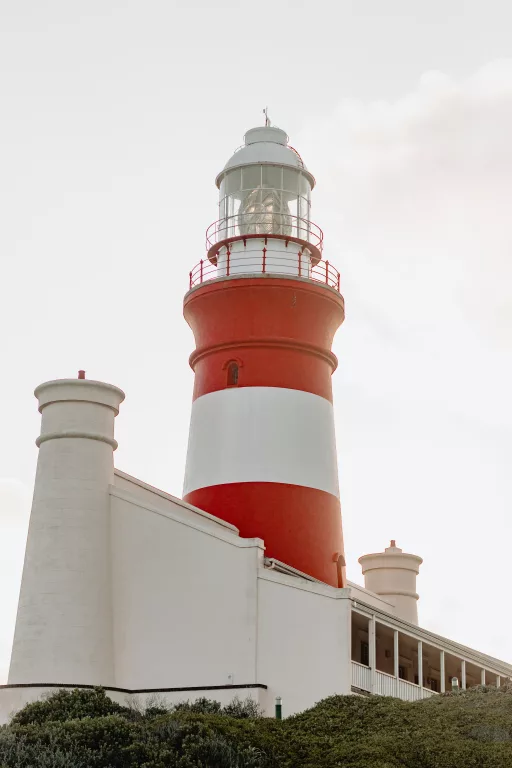
Photo: Unsplash
3. Cape Point Lighthouse (1859)
The lighthouse that couldn’t do its job
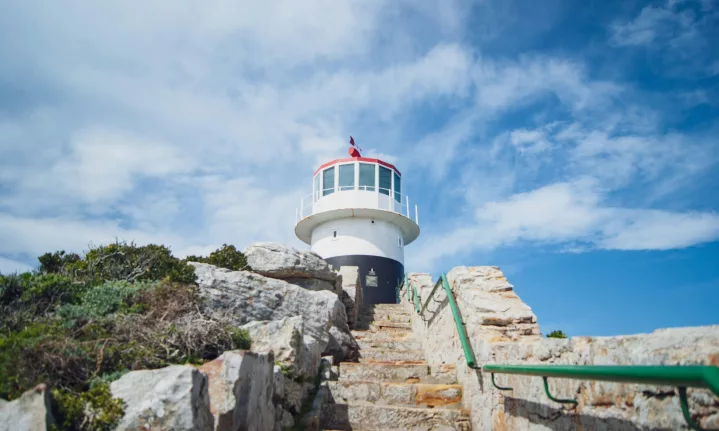
It may sound strange, but one of South Africa’s most famous lighthouses turned out to be in the wrong place. The original Cape Point Lighthouse was built high above sea level in 1859. The logic seemed sound: higher meant farther visibility. But nature had other ideas.
Cape Point is frequently blanketed in thick cloud and sea fog. Instead of helping ships, the lighthouse often disappeared inside the mist, making its powerful beam almost useless. Following several maritime accidents, including the wreck of the Portuguese liner Lusitania in 1911, authorities built a second lighthouse much lower down the cliffs in 1919, where its light could shine beneath the fog.
Today, visitors ride the Flying Dutchman Funicular (or tackle the steep walk) to the original lighthouse, while the newer lighthouse continues to guide ships below. It’s one of the few places where the “wrong” lighthouse has become the main tourist attraction.
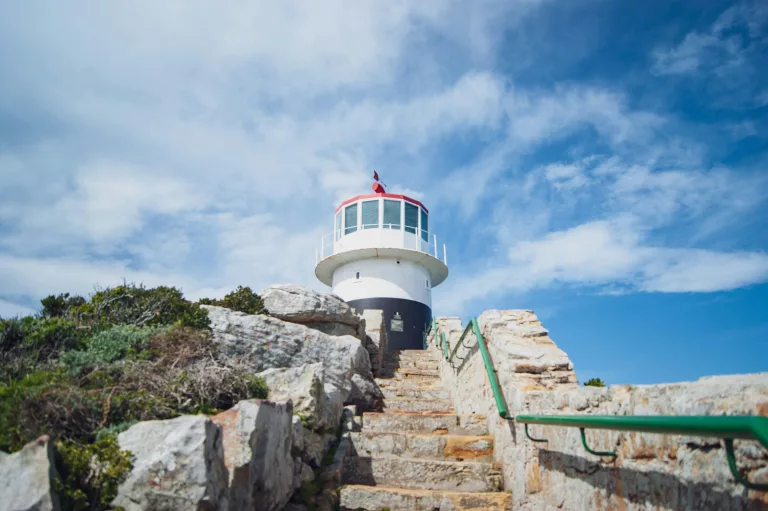
Photo: Unsplash
4. Danger Point Lighthouse (1895)
A beacon born from one of history’s most famous shipwrecks
Perched near Gansbaai, Danger Point Lighthouse owes its existence to the tragic sinking of HMS Birkenhead in 1852. When the British troopship struck submerged rocks, more than 440 people lost their lives.
What followed became one of history’s most remarkable acts of discipline. Rather than rushing the lifeboats, soldiers stood fast while women and children escaped first. Their sacrifice gave rise to the expression “women and children first”, often referred to as the Birkenhead Drill.
More than 40 years later, Danger Point Lighthouse was finally completed to help prevent similar disasters. Today, its striking white tower stands among fynbos-covered dunes overlooking a coastline still respected by mariners. During whale season, southern right whales are frequently spotted offshore, making this one of the Western Cape’s lesser-known but rewarding lighthouse stops.
View this post on Instagram
5. Slangkop Lighthouse (1919)
South Africa’s tallest cast-iron lighthouse
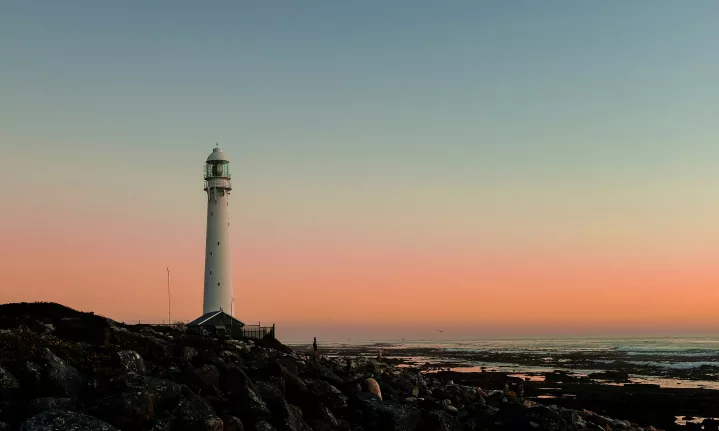
Just outside Kommetjie stands a lighthouse that’s impossible to miss. At 33 metres tall, Slangkop Lighthouse is the tallest cast-iron lighthouse in South Africa. Completed in 1919, its bright white tower has become one of the most photographed landmarks along the Cape Peninsula.
Unlike many older masonry lighthouses, Slangkop’s prefabricated cast-iron sections were manufactured before being assembled on site.
Its location also makes it especially rewarding to visit. Long Beach stretches out below, surfers catch waves nearby, and Chapman’s Peak Drive is only a short detour away. If you’re lucky, you may even spot dolphins or migrating whales from the surrounding viewpoints.
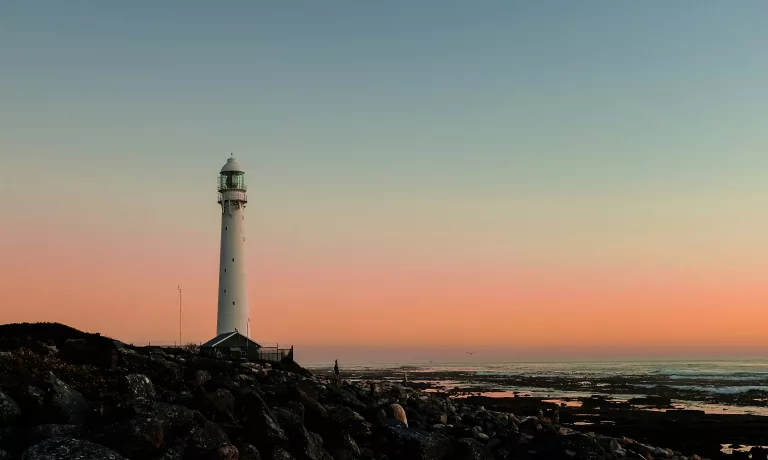
Photo: Unsplash
6. Roman Rock Lighthouse (1919)
South Africa’s lighthouse at sea
Unlike every other lighthouse on this list, Roman Rock doesn’t sit on land. Built on a rocky outcrop in False Bay in 1919, it remains South Africa’s only lighthouse constructed entirely offshore. The isolated location meant construction was exceptionally difficult. Workers battled rough seas, unpredictable weather and limited access while transporting materials by boat.
Today, the lighthouse remains inaccessible to the public, but it can easily be spotted during boat trips from Simon’s Town or from several viewpoints around False Bay.
Follow us on social media for more travel news, inspiration, and guides. You can also tag us to be featured.
Instagram | Facebook | Twitter | Spotify
ALSO SEE: South Africa’s most spectacular mountain passes to add to your road trip bucket list
South Africa’s most spectacular mountain passes to add to your road trip bucket list
Feature image: Unsplash