





From enormous appetites to surprisingly little sleep, these fascinating elephant facts shed light on one of Africa’s most iconic animals.
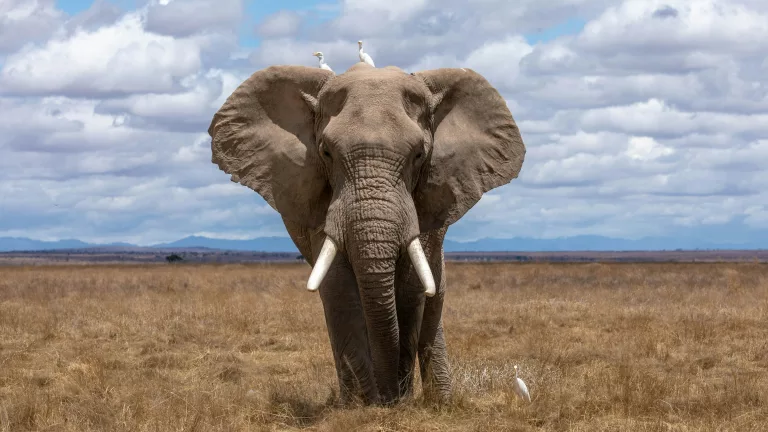
Photo: Unsplash
Few animals are as instantly recognisable as the African elephant. From their impressive size and unmistakable trunks to their complex family groups, these giants have fascinated people for generations. But there is much more to elephants than what can be seen on a safari drive.
In celebration of World Elephant Day 2026, here are 10 fascinating facts about African elephants, with insights supplied by the Botswana Elephant Centre.
Botswana is home to the world’s largest elephant population
Botswana is one of the most important countries in the world for African elephant conservation and is home to an estimated 131,909 African elephants.
Northern Botswana, in particular, is renowned for its large elephant populations, with areas around Chobe National Park offering some of the best opportunities to see these animals in the wild.
Elephants don’t recognise international borders
For elephants, a country’s borders mean very little. Many move across the Kavango Zambezi Transfrontier Conservation Area (KAZA), a vast conservation landscape spanning Angola, Botswana, Namibia, Zambia and Zimbabwe.
Their movements are influenced by factors such as the availability of water and food, seasonal conditions and human activity. This means that protecting elephant populations requires cooperation across national boundaries, rather than looking at individual countries in isolation.
They are nature’s ecosystem engineers
Elephants don’t simply live in an environment – they help shape it. As they move through the landscape and feed, elephants can open up dense vegetation, break branches and fell trees, creating pathways and changing the structure of habitats. They also disperse seeds through their dung, helping plants spread to new areas.
In particularly dry areas, elephants have also been known to dig into riverbeds or enlarge existing water sources in search of water. These changes can benefit other wildlife that shares the same landscape.
Their role as so-called ‘ecosystem engineers’ means their presence can have a ripple effect throughout an entire ecosystem.
Elephant dung is surprisingly useful
There is more to elephant dung than meets the eye. An adult elephant can produce dung numerous times a day, helping to return nutrients to the soil and disperse seeds as it moves through the landscape.
For plants and the many smaller organisms that make use of it, what an elephant leaves behind can be almost as important as what it eats.
Elephants have enormous appetites
It takes a lot of food to fuel an animal weighing several tonnes. An adult African elephant can consume roughly 150 to 200kg of grasses, leaves, bark and other vegetation in a day.
Their feeding habits also contribute to their role as ecosystem engineers. As elephants browse, strip bark, break branches and sometimes push over trees, they can alter the vegetation around them and create opportunities for other species.
They can drink hundreds of litres of water
Elephants are also big drinkers. An adult elephant can consume up to around 150 to 200 litres of water in a day, although the amount varies according to conditions, food availability and the animal’s needs.
Water is an important factor in determining where elephants move, particularly in the dry landscapes of northern Botswana. During periods of limited rainfall, access to reliable water sources can become particularly important.
Elephant pregnancies last almost two years
Elephant mothers have one of the longest pregnancies of any land mammal. African elephant gestation lasts for around 22 months before a calf is born.
Newborn calves are already impressively large, weighing roughly 90 to 120kg. Despite their size, they still have plenty to learn, and elephant calves remain closely connected to their family groups as they grow.
Elephant families help raise their young
Elephant calves aren’t raised by their mothers alone. Other females in the family group can also help care for and protect young calves, a behaviour known as allomothering.
This means that young females may gain experience caring for calves before they have offspring of their own. Elephant families are highly social, and these relationships play an important role in raising the next generation.
Wild elephants get surprisingly little sleep
Think elephants spend most of their time sleeping? Think again.
Research on wild African savanna elephants in Botswana found that the two elephants studied slept for an average of just two hours a day. They often slept standing up, with sleep occurring in short periods rather than one long stretch.
The study, conducted in Chobe National Park, found that the elephants sometimes went for extended periods without identifiable sleep. Their sleep patterns also appeared to be influenced by environmental conditions such as temperature and humidity.
Elephants can communicate across long distances
An elephant’s communication is far more sophisticated than the familiar trumpeting sound suggests.
Elephants use a variety of vocalisations, including very low-frequency sounds known as infrasound. These calls can travel long distances through the landscape and may allow elephants to communicate with others beyond the range of human hearing.
They also communicate through touch, body language and other vocalisations, giving these highly social animals a surprisingly complex way of keeping in contact with one another.
More than an animal on safari
For communities living alongside elephants in northern Botswana, these animals are much more than a safari attraction. They are part of the landscape and part of everyday life.
Understanding elephants therefore also means understanding the people, ecosystems and conservation challenges connected to them. The Botswana Elephant Centre in Kasane aims to bring together scientific research, education, conservation and community perspectives to help tell this wider story.
The centre is based at The Chobe Safari Lodge in Kasane and forms part of an initiative focused on making elephant research and conservation knowledge more accessible to visitors and local communities.
For travellers visiting northern Botswana, it offers another way to learn about the country’s elephants beyond seeing them from a safari vehicle or boat.
ALSO SEE: South Africa’s first electric safari vehicle could change the future of game drives
South Africa’s first electric safari vehicle could change the future of game drives
Information supplied by the Botswana Elephant Centre.