


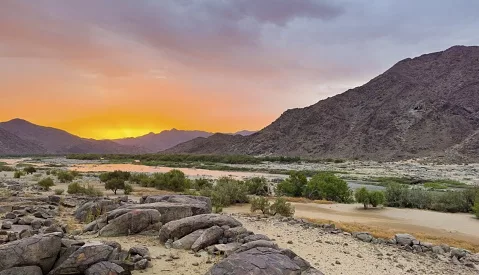
Some towns are memorable for their architecture, food or history but these ones owe their identity to something far older and far more powerful: a natural wonder that dominates the landscape.
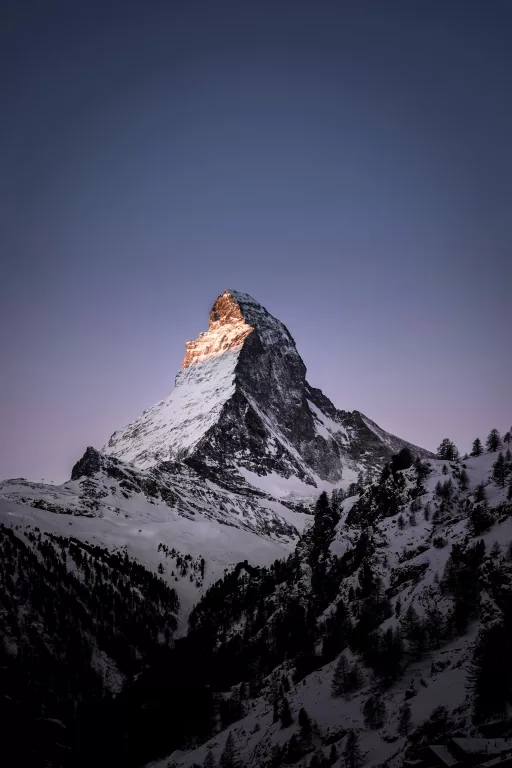
Zermatt, Switzerland/Fabrice Villard/Unsplash
1. Zermatt, Switzerland: The Matterhorn
Few mountains are as instantly recognisable as the Matterhorn, the dramatic pyramid-shaped peak rising above the Swiss village of Zermatt. At 4 478 metres, it has become one of the defining symbols of the Swiss Alps.
Zermatt developed from a farming village into an international mountain resort, with the Matterhorn playing a central role in its transformation. Today, visitors can explore extensive hiking and skiing terrain, ride mountain railways and cable cars, or simply admire the peak from the village.
The Gornergrat railway is one of the best ways to experience the surrounding landscape, while numerous trails provide different perspectives of the mountain.
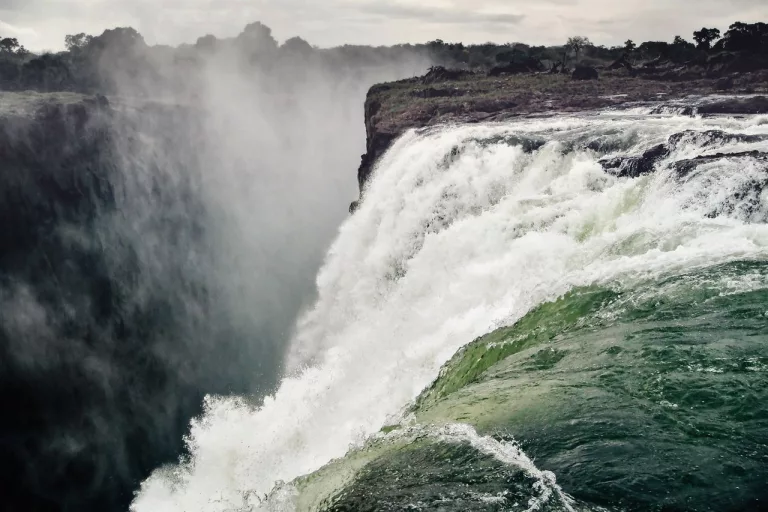
2. Victoria Falls, Zimbabwe: Mosi-oa-Tunya
On the Zambezi River, the town of Victoria Falls exists largely because of one extraordinary spectacle. Known locally as Mosi-oa-Tunya, meaning “The Smoke That Thunders”, Victoria Falls is one of the world’s largest waterfalls by combined width and height.
The waterfall plunges into a series of gorges along the border between Zimbabwe and Zambia, creating enormous spray clouds that can be seen from kilometres away.
Victoria Falls town is the main gateway to the Zimbabwean side of the falls, with walking trails, viewpoints and rainforest surrounding the waterfall. The town has also become a hub for adventure activities, including river excursions and scenic flights.
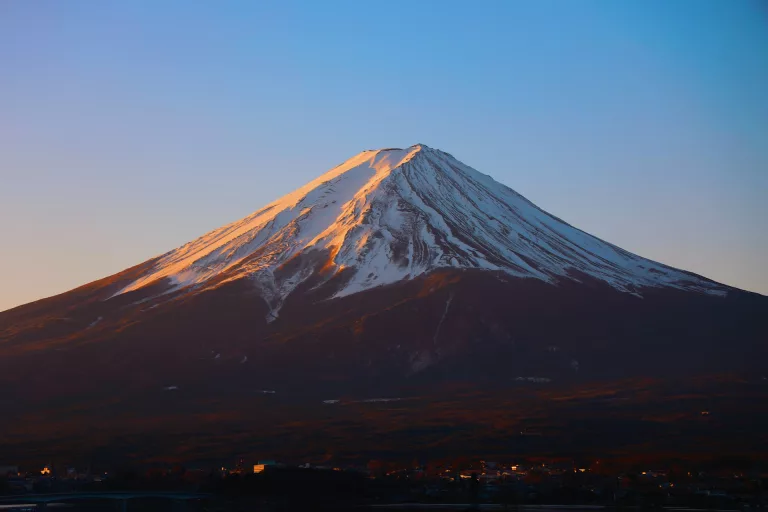
Mount Fuji/Aditya Anjagi/Unsplash
3. Fujikawaguchiko, Japan: Mount Fuji
Few landscapes are more closely associated with a single mountain than Fujikawaguchiko and Mount Fuji. The town sits beside Lake Kawaguchi in the Fuji Five Lakes region, offering some of the most accessible views of Japan’s iconic 3 776-metre peak.
Mount Fuji is both a geological landmark and a deeply significant cultural symbol. Its near-symmetrical volcanic cone has inspired artists, poets and pilgrims for centuries.
Fujikawaguchiko provides a particularly scenic base for exploring the region, with lakeside walks, hot springs and viewpoints. The area is especially popular during cherry-blossom season and autumn, when the mountain is framed by changing foliage.
Chris Czermak/Unsplash
4. Banff, Canada: The Canadian Rockies
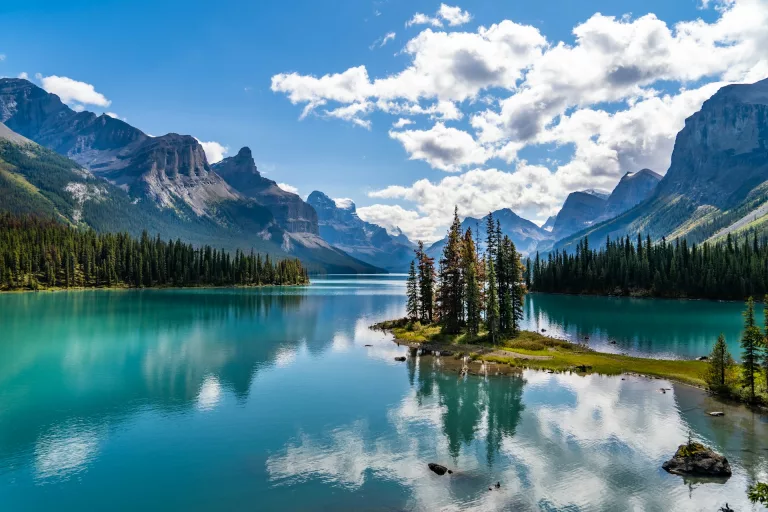
The town of Banff is surrounded by some of the most spectacular mountain scenery in the Canadian Rockies. Although the destination is associated with an entire mountain landscape rather than one individual peak, Banff’s existence and identity are inseparable from the surrounding wilderness.
Located within Banff National Park, Canada’s oldest national park, the town provides access to turquoise lakes, glaciers, forests and towering peaks.
Lake Louise, Moraine Lake and the Bow Valley are among the region’s major attractions, while hiking trails and scenic drives reveal the geological forces that shaped the Rockies.
Paul Lequay/Unsplash
5. Huaraz, Peru: The Cordillera Blanca
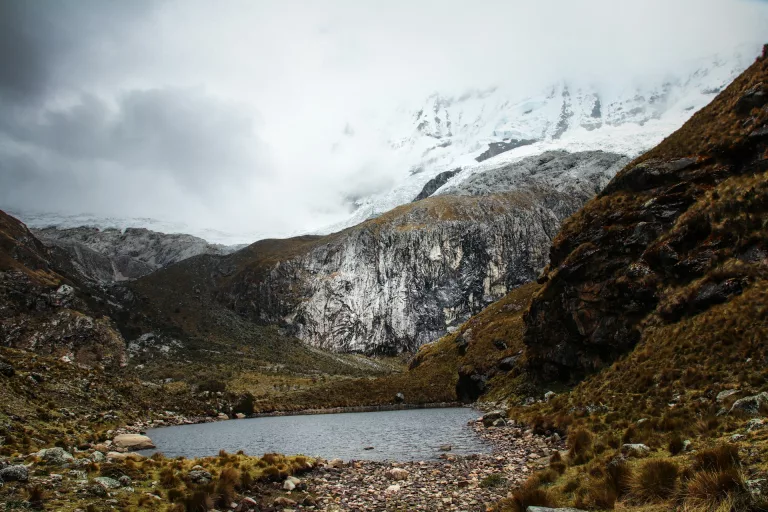
High in the Peruvian Andes, Huaraz is the gateway to the Cordillera Blanca, one of the world’s most spectacular high-altitude mountain ranges. The range contains dozens of peaks above 5 000 metres, including Huascarán, Peru’s highest mountain.
Huaraz itself sits at around 3 000 metres above sea level and has developed into a centre for trekking, mountaineering and outdoor adventure.
One of the region’s most famous sights is Laguna 69, a brilliant blue glacial lake surrounded by dramatic peaks. The nearby Huascarán National Park protects much of this extraordinary alpine environment.
Amy Harrison/Unsplash
6. Springbok, South Africa: The Namaqualand Wildflowers
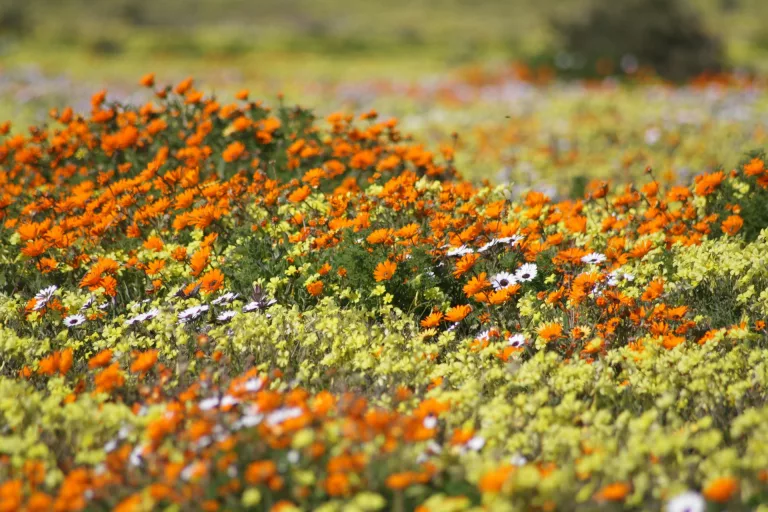
In South Africa’s Northern Cape, Springbok is closely tied to one of the country’s most remarkable seasonal natural spectacles: the Namaqualand flower bloom.
For a few weeks after good winter rains, normally dry landscapes can transform into carpets of orange, yellow, purple and white flowers. Springbok serves as an important base for exploring the region’s floral displays, particularly around the Namaqua National Park and Richtersveld.
The spectacle is fleeting, making timing essential. Flower season generally occurs between August and September, although the exact timing depends on rainfall and temperatures.
Antelope Canyon/Fudo Jahic/Unsplash
7. Page, USA: Antelope Canyon and Glen Canyon
The desert town of Page in Arizona was established in the 1950s during the construction of Glen Canyon Dam, but its modern tourism identity is built around the extraordinary landscapes of the Colorado Plateau.
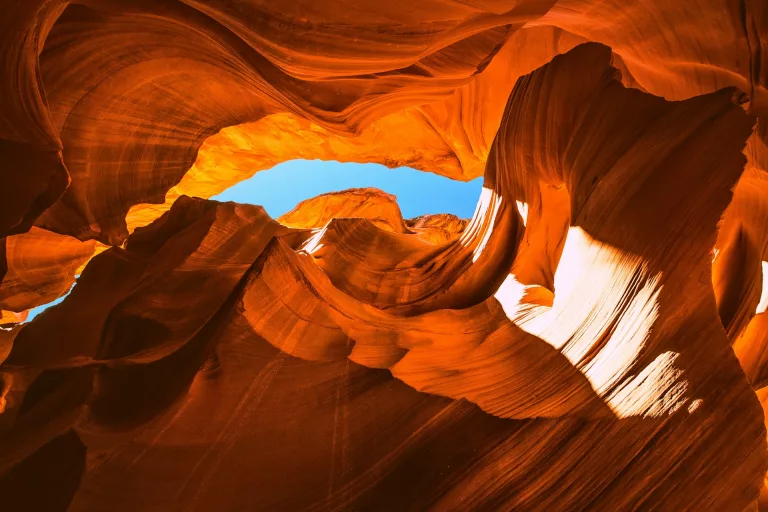
Nearby Lake Powell, Glen Canyon and Antelope Canyon draw visitors into a landscape sculpted by water, wind and time. Antelope Canyon’s narrow sandstone corridors are particularly famous for their flowing shapes and dramatic light.
Page demonstrates how even a relatively young town can become a gateway to geological wonders that took millions of years to form.
Follow us on social media for more travel news, inspiration, and guides. You can also tag us to be featured.
Instagram | Facebook | Twitter | Spotify
ALSO READ:
South Africa’s oldest living places, from historic towns to ancient cultural landscapes