

Heritage sites in South Africa tell stories that stretch far beyond grand monuments, famous battlefields and museums. Some are ancient landscapes, others preserve the history of communities, while a few reveal just how far back the story of this country really goes.

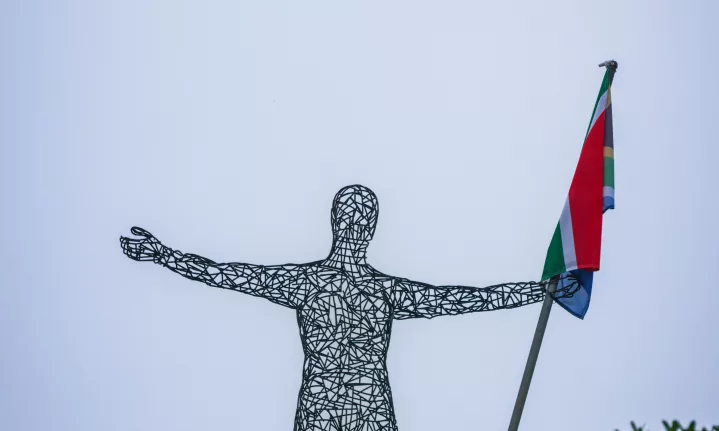
South African National Flag / Kathrine Heigan / Unsplash
These places may not always make the first page of a travel itinerary, but they reward those willing to take a closer look. From ancient kingdoms and geological wonders to living cultural landscapes, these heritage sites offer a different way of understanding South Africa.
Mapungubwe, Limpopo
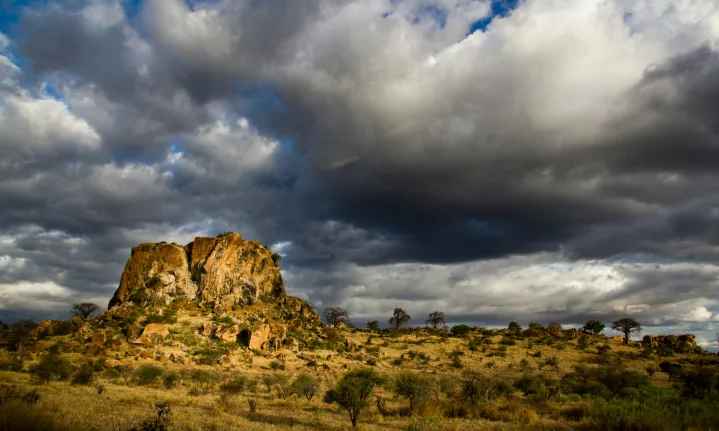
At first glance, Mapungubwe can feel like another beautiful corner of Limpopo. There are baobabs, sandstone formations, wildlife and sweeping views towards the Limpopo River. Look a little closer and the landscape tells a much bigger story.
The Mapungubwe Cultural Landscape was once home to one of the most powerful indigenous kingdoms in southern Africa. Between about AD 900 and 1300, Mapungubwe developed into the largest kingdom on the subcontinent, with its wealth linked in part to long-distance trade reaching the Indian Ocean and as far as India and China.
The remains of its settlements, including the royal centre on Mapungubwe Hill, provide evidence of a sophisticated society with a clear social hierarchy. Archaeological discoveries have included gold, ivory, glass beads and imported ceramics, revealing just how connected this part of southern Africa was to wider trading networks. UNESCO inscribed the cultural landscape as a World Heritage Site in 2003.
What makes Mapungubwe particularly fascinating is the way history and landscape exist side by side. The ruins are not isolated behind museum glass. They sit within a vast landscape where wildlife still moves through the same broad terrain.
Spend time exploring the archaeological sites and Mapungubwe Hill, visit the interpretation centre and allow time for the surrounding national park. Game viewing, birding and dramatic sunsets add another layer to the experience. This is a place worth visiting if you want to understand that South Africa’s history did not begin with colonial settlement. Long before European arrival, complex societies were trading, building and shaping the region.
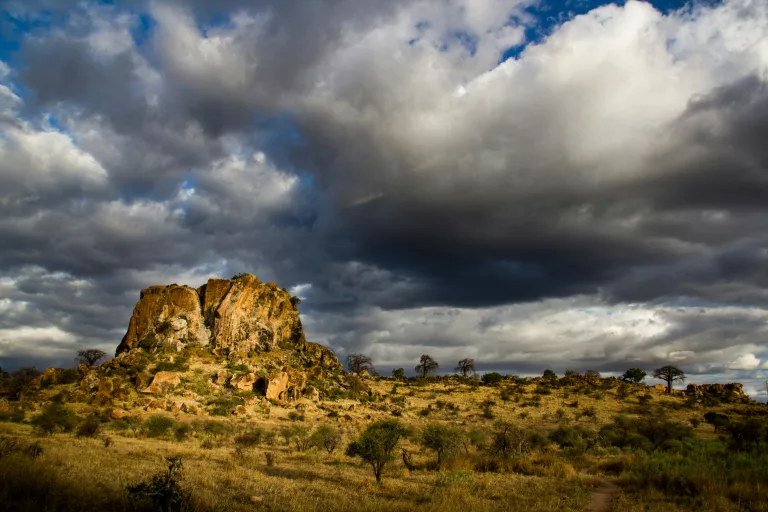
View from the base of Mpungubwe hill, South Africa / Gregory Fullard / Unsplash
Richtersveld Cultural and Botanical Landscape, Northern Cape
The Richtersveld is the sort of place that makes you question what a heritage site is supposed to look like. There are no grand buildings or imposing monuments. Instead, there are rugged mountains, vast desert plains, hardy succulents and traditional Nama settlements scattered across an extraordinary landscape.
The Richtersveld Cultural and Botanical Landscape is a 160,000-hectare World Heritage Site in the north-western corner of South Africa. It is communally owned and managed and preserves a semi-nomadic pastoral way of life practised by the Nama for as much as 2,000 years.
The landscape is particularly significant because the Nama continue to practise seasonal migration between grazing areas and stock posts. Traditional portable rush-mat houses, known as haru oms, remain part of this way of life. UNESCO describes the Richtersveld as one of the few places in southern Africa where this form of transhumant pastoralism continues.
For travellers, the appeal is as much about the journey as the destination. Explore the mountainous desert, experience the extraordinary succulent Karoo vegetation and, where possible, travel with local guides who can help interpret the landscape and its cultural significance.
The Richtersveld Cultural and Botanical Landscape asks you to slow down. Here, the landscape itself is part of the history.
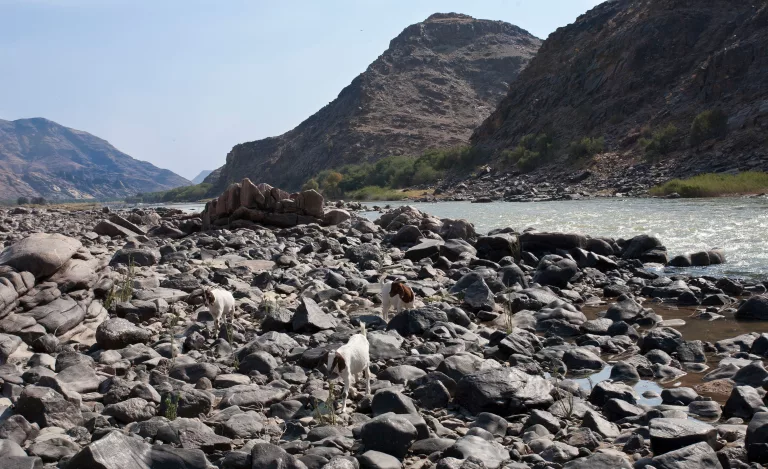
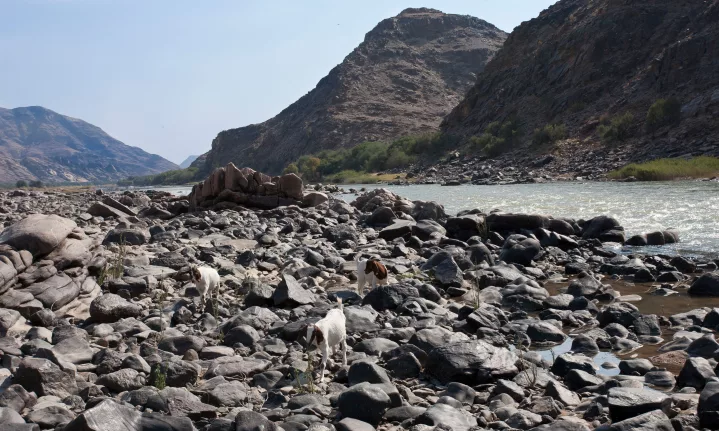
Goats roam over a rocky riverbed in the mountainous terrain of Richtersveld, South Africa / Charl Durand / Pexels
Barberton Makhonjwa Mountains, Mpumalanga
You might expect a heritage site to tell you something about people. The Barberton Makhonjwa Mountains tell you something much older.
Much, much older.
The mountains contain some of the best-preserved volcanic and sedimentary rocks on Earth, dating back between 3.6 and 3.25 billion years. The area forms part of the Barberton Greenstone Belt and preserves evidence of conditions on the early Earth, including ancient oceans, volcanic activity, meteorite impacts and the formation of continents. UNESCO declared the Barberton Makhonjwa Mountains a World Heritage Site in 2018.
That age is difficult to comprehend. Standing among the rocks, you are looking at a landscape that existed billions of years before humans appeared.
The area is also surprisingly accessible. Scenic routes around Barberton provide opportunities to see geological features and viewpoints, while the town itself makes a useful base for exploring the surrounding mountains.
This is heritage for travellers who like their road trips with a little perspective. You leave thinking less about what happened a few hundred years ago and more about how impossibly old the ground beneath your feet really is.
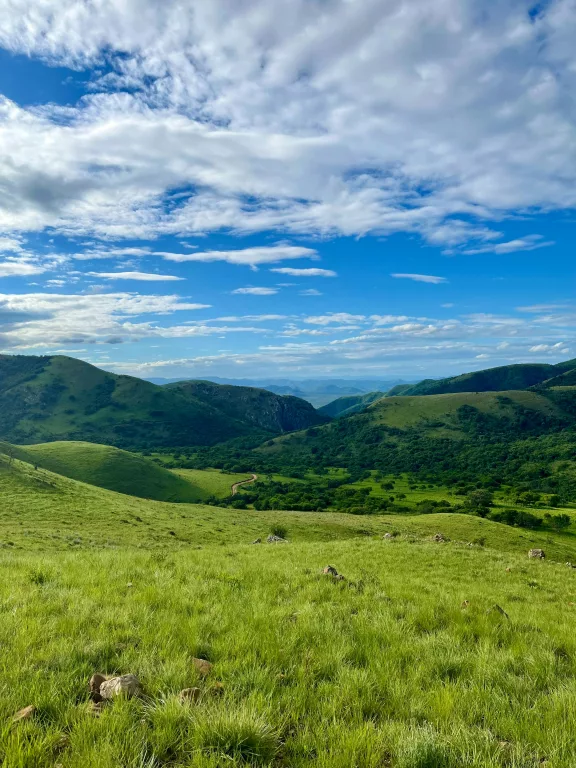
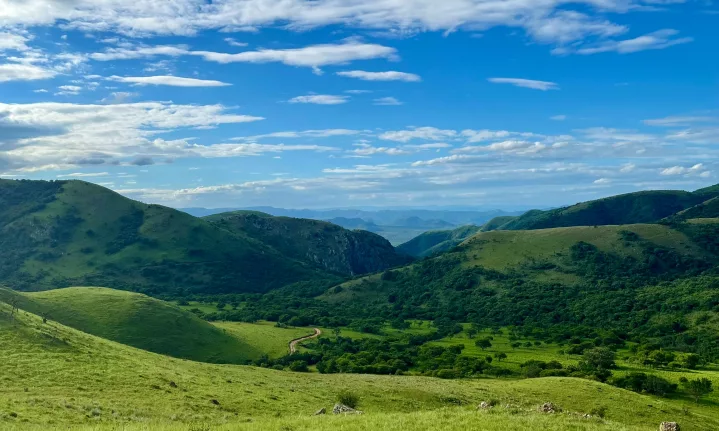
Mountainlands, Barberton, South Africa / Vian de Blanche’ / Unsplash
The Owl House, Nieu-Bethesda, Eastern Cape
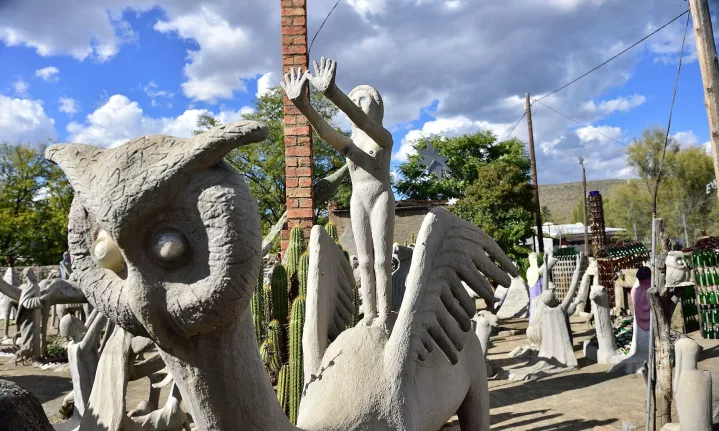
Not every heritage site needs to be solemn. In the tiny Karoo village of Nieu-Bethesda, the Owl House is one of the country’s most unusual examples of outsider art.
Helen Martins spent the latter part of her life transforming her home and garden into a strange, colourful world of sculptures made from cement, glass and other materials. The result includes the famous Camel Yard and an interior filled with reflective surfaces, coloured glass and unusual figures.
The Owl House has become closely associated with South African outsider art and inspired Athol Fugard’s play The Road to Mecca, which brought Martins’ story to a much wider audience. It is difficult to know quite what to expect before walking through the house. That is part of the appeal.
Visit the museum and Camel Yard, then give yourself time to explore Nieu-Bethesda itself. The village has galleries, museums, hiking opportunities, Karoo food and a famously slow pace of life. The Owl House website recommends staying overnight rather than treating the village as a quick stop.
The best part may be that you do not need to be an art expert to appreciate it. You simply need to be curious.
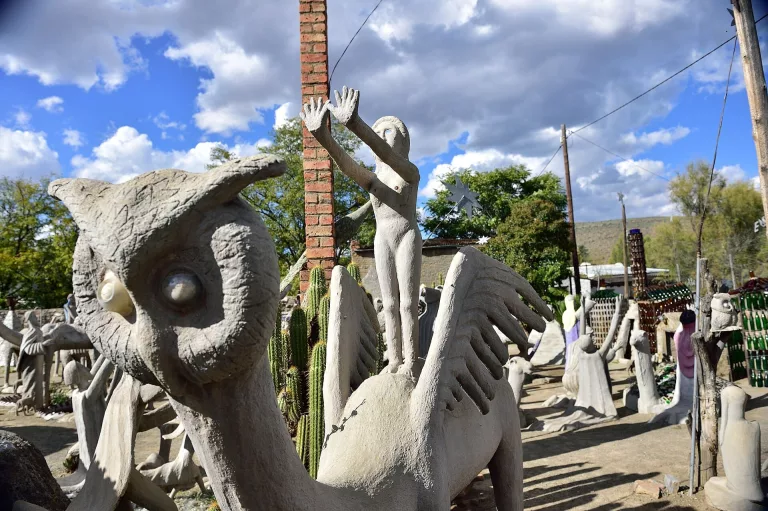
Owl House, Nieu-Bethesda, Eastern Cape, South Africa / South African Tourism / Wikimedia Commons
ǂKhomani Cultural Landscape, Northern Cape
In the Kalahari, heritage is written into the landscape itself. The ǂKhomani Cultural Landscape lies around the Kalahari Gemsbok National Park and forms part of the wider Kgalagadi landscape. It contains evidence of human occupation stretching from the Stone Age to the present and is closely associated with the history, knowledge and cultural practices of the ǂKhomani San.
The significance of the landscape goes beyond its archaeology. It reflects the relationship between the ǂKhomani San and the Kalahari, including knowledge of plants, animals, water and survival in an exceptionally dry environment.
That relationship was severely disrupted when the ǂKhomani San were forcibly removed from the land following the creation of the national park in 1930. The World Heritage recognition is therefore also connected to efforts to restore cultural connections between people and place.
Travellers to the Kgalagadi can visit the ǂKhomani San Cultural Landscape Centre at Twee Rivieren and, where available, join guided experiences led by ǂKhomani San guides. These experiences provide an opportunity to learn about local customs, knowledge and stories rather than simply observing the landscape from a vehicle.
It is a reminder that heritage does not always belong to the past. Sometimes, it is something communities are actively keeping alive.
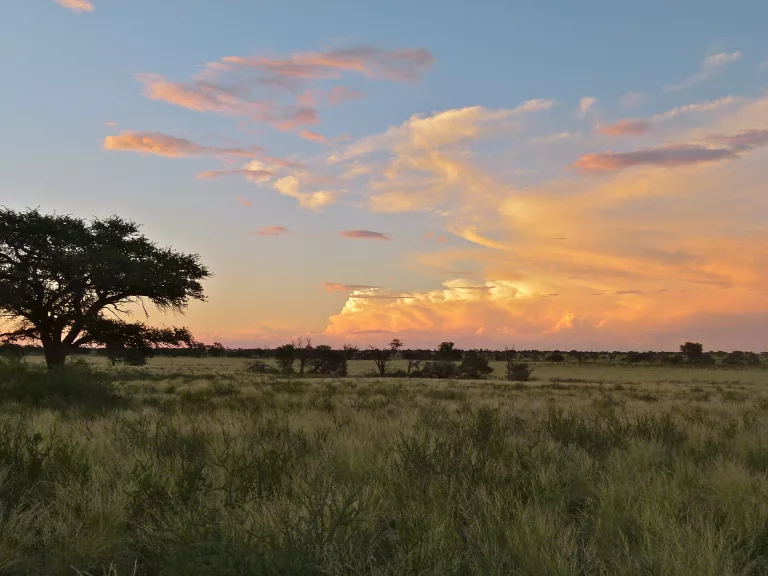
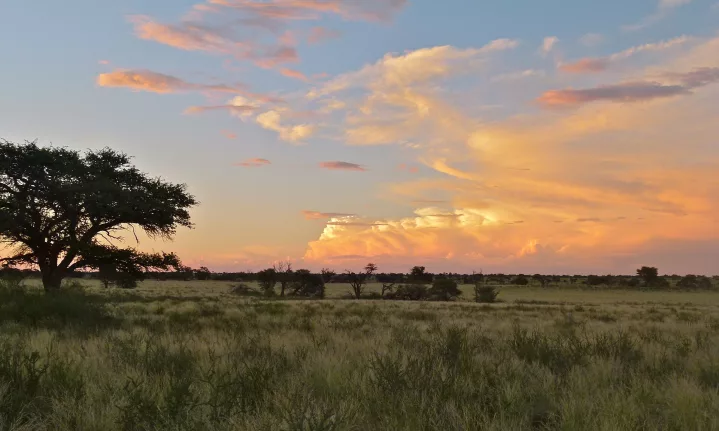
Kgalagadi Transfrontier Park, Northern Cape, SOUTH AFRICA / Bernard DUPONT / Wikimedia Commons
Look beyond the obvious
South Africa has eight UNESCO-designated World Heritage Sites, including Mapungubwe, the Richtersveld, the Cradle of Humankind, Robben Island and iSimangaliso Wetland Park. Yet even within that list, some places receive far less attention from travellers than their significance deserves.
Perhaps that is the point.
The most rewarding heritage experiences are not always the ones you have already seen a hundred times on postcards. They are the places that make you stop, ask questions and reconsider the story you thought you knew.
So, the next time you plan a South African road trip, leave some space for the detour. Follow the road into the Karoo, north towards the Limpopo, into the mountains of Mpumalanga or across the dry landscapes of the Northern Cape. Because sometimes heritage is not something you tick off a list. Sometimes, you have to look twice.
Follow us on social media for more travel news, inspiration, and guides. You can also tag us to be featured.
Instagram | Facebook | Twitter | Spotify
ALSO READ: