





There’s some good news for wildlife this week.
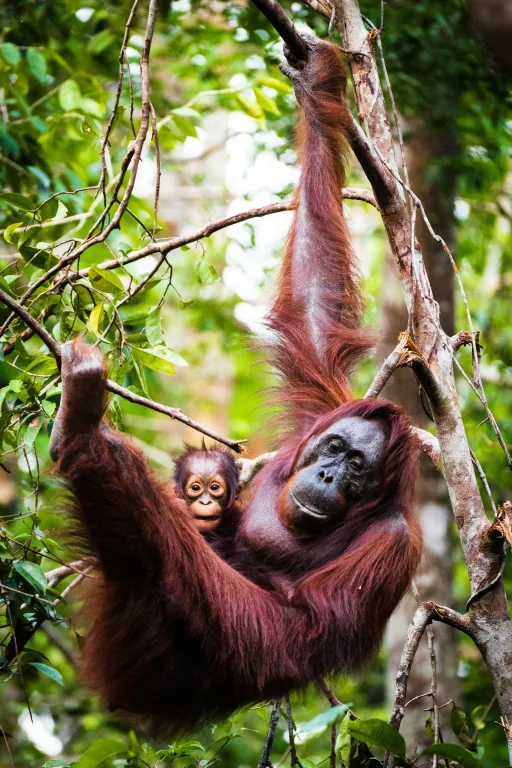
Image used for illustrative purposes/Dimitry B/Unsplash
In Borneo, conservationists have moved orangutans out of fire-damaged forests, while researchers are finding new ways to protect birds from wind turbines. Here’s what’s happening in wildlife conservation around the world.
Eight orangutans rescued from Borneo’s wildfires
Eight orangutans have been moved to safety after wildfires damaged parts of their habitat in Indonesian Borneo. The group included three mothers with their young and two adolescent males. Conservationists relocated the animals to Batu Nyambu protected forest, where they have a chance to return to life in the wild. The rescue involved a lengthy journey by car, boat and on foot. Before the move, specialists examined the orangutans to check their health and ensure they were fit for relocation.
According to Reuters, rescuers have helped 46 orangutans affected by fires in West Kalimantan since August. The rescue offers a welcome reprieve for these critically endangered great apes, which live only on the islands of Borneo and Sumatra. However, rescuing individual animals can only do so much. Protecting their forest habitat and preventing further destruction remain essential to their survival.
Southern African elephants show signs of recovery
A new global assessment has highlighted encouraging signs for several wildlife populations, including elephants in Southern Africa. The WWF Living Planet Report 2026, published on 7 October, points to recovering Southern African elephant populations, alongside improvements among green sea turtles, tigers and bluefin tuna. These gains show what sustained conservation work can achieve. Habitat protection, anti-poaching initiatives, wildlife monitoring and coordinated management all help vulnerable populations recover.
There is an important caveat, though. The report records an average 73% decline in the size of monitored wildlife populations globally since 1970. Encouraging progress among elephants and other species does not mean the wider biodiversity crisis has disappeared. Instead, these recoveries give conservationists something to build on. They also show why long-term funding and habitat protection remain so important.
Kenya steps up efforts to save the mountain bongo
Kenya has launched a new recovery plan for the mountain bongo, a critically endangered forest antelope native to the country’s mountain forests. The International Union for Conservation of Nature (IUCN) reported the launch of Kenya’s National Recovery and Action Plan for 2026 to 2030 on 28 September. The plan aims to increase the national mountain bongo population by 50% by 2030. Its longer-term goal is to build a self-sustaining wild population of 750 animals by 2075.
Reaching these targets will take more than breeding animals in managed facilities. Conservationists must protect suitable forest habitat, maintain genetic diversity, monitor populations and prepare for the animals to return to the wild. The mountain bongo’s survival also matters to the wider ecosystem. Its forest habitat helps regulate water supplies, stores carbon and supports other wildlife. Protecting these forests can benefit nearby communities, too.
Could painting wind turbines save birds?
A surprisingly simple idea could help reduce bird deaths at wind farms: painting one of a turbine’s three blades black. Researchers at Spain’s El Ruedo wind farm compared four turbines with one black blade against 16 turbines with their usual white blades. They wanted to find out whether making the rotating blades more visible would help birds avoid collisions. According to Mongabay, the researchers found that annual bird fatalities were nearly 74% lower at the turbines with painted blades.
The idea is that rotating white blades can blur together, making them harder for birds to see. A contrasting blade may help birds recognise the moving structure and avoid it. The findings are promising, although researchers still need to establish how well the technique works across different landscapes and bird species. Results have varied between studies, so painting turbine blades is not a universal solution just yet. Renewable energy plays an important role in tackling climate change, but wind farms can pose risks to wildlife. Simple design changes could help reduce those risks while allowing clean energy projects to grow.
South Africa plants more than seven million trees
South Africa has recorded a milestone in its Presidential One Billion Trees Programme, with more than seven million trees planted since the beginning of the 2026/27 financial year, according to the Department of Forestry, Fisheries and the Environment. The programme brings together government, businesses, community organisations and individuals to support greener communities and environmental sustainability. Planting activities have taken place across all nine provinces. Trees can restore degraded land, provide wildlife habitat and help communities adapt to climate change. However, planting the right trees in the right places matters. Indigenous species and carefully planned restoration are particularly important when the aim is to rebuild natural ecosystems. The next challenge is ensuring that these trees survive and grow. Their long-term contribution to healthy landscapes will matter far more than the initial planting numbers.
Follow us on social media for more travel news, inspiration, and guides. You can also tag us to be featured.
Instagram | Facebook | Twitter | Spotify
ALSO READ:
The ancient Seven Wonders of the world: What happened to them?