

South Africans like to think we know a thing or two about mountains. (We do!)
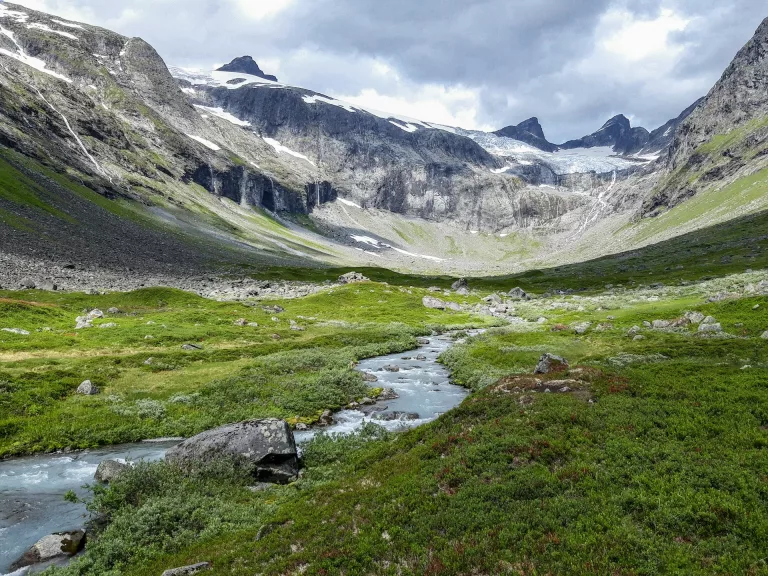
Stolsmaradalen, Jotunheimen/Matej Drha/Unsplash
We have the Drakensberg, the Cederberg, the Cape Fold Mountains and enough gravel roads to make a road trip feel incomplete without a little dust on the vehicle. We know how quickly the weather can change, how much water to carry and that a hike that looks easy on paper can have you questioning your life choices halfway up.
Then you go hiking in Norway.
Suddenly, there are fjords below you and mountain roads that seem to have been designed specifically to make you stop the car every five minutes.
For those who love hiking, driving and getting properly outdoors, western Norway is a particularly good fit. You can spend the morning navigating a mountain road, the afternoon hiking into the hills and the evening in a cabin beside a fjord. It is essentially the ultimate outdoor road trip, just with considerably more waterfalls.
DRIVE: Start in Ålesund
Ålesund is a good place to begin because you are quickly out of the city and into the mountains.
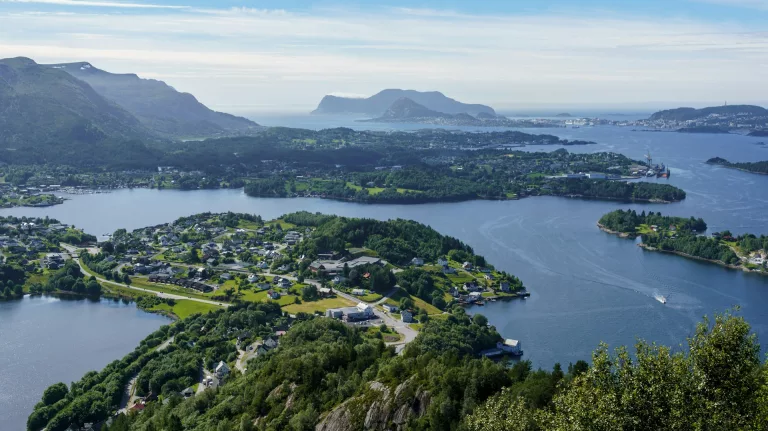
Ålesund/Hendrik Cornelissen/Unsplash
The Sunnmøre Alps rise dramatically around the fjords and the Hjørundfjord offers the sort of scenery that makes you wonder why you haven’t heard more about it. It has the classic Norwegian combination of deep blue water, steep green mountains and little settlements tucked into the landscape.
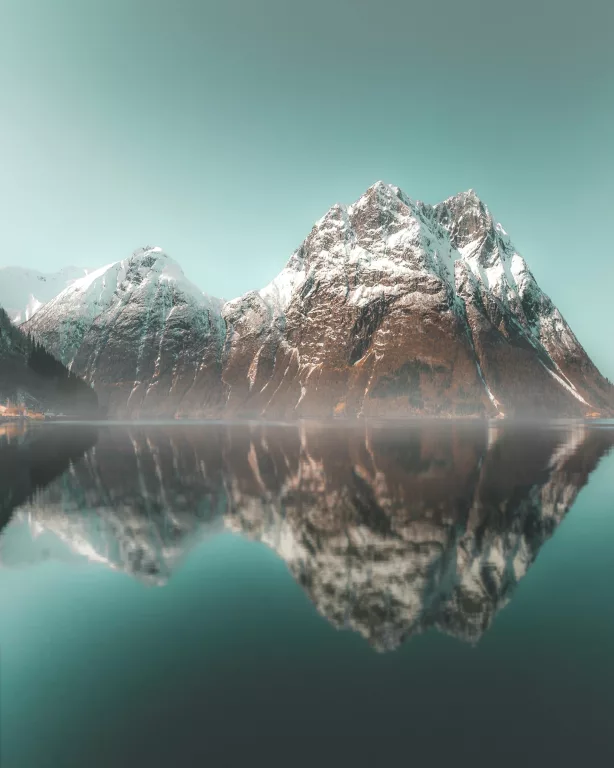
Reflections in The Sunnmøre Alps, Bjørke/Herman Bjørheim/Unsplash
This is also where the road trip starts getting interesting. Driving in Norway might start to feel strangely familiar. There are winding mountain roads, gravel sections and plenty of opportunities to take the scenic route. But there is one important difference if you’re arriving with your 4×4 mindset: Norway isn’t a place where you can simply leave the road and head into the wilderness. Driving off-road in nature is restricted, so the adventure is about exploring the roads that are open to vehicles and then getting out and hiking.
And, frankly, you won’t be short of places to explore once you park.
HIKE: The Sunnmøre Alps
If you’ve spent time hiking in the Drakensberg, you’ll recognise the appeal of the Sunnmøre Alps immediately. There is that same feeling of being surrounded by big mountains, only here the mountains plunge dramatically towards fjords.
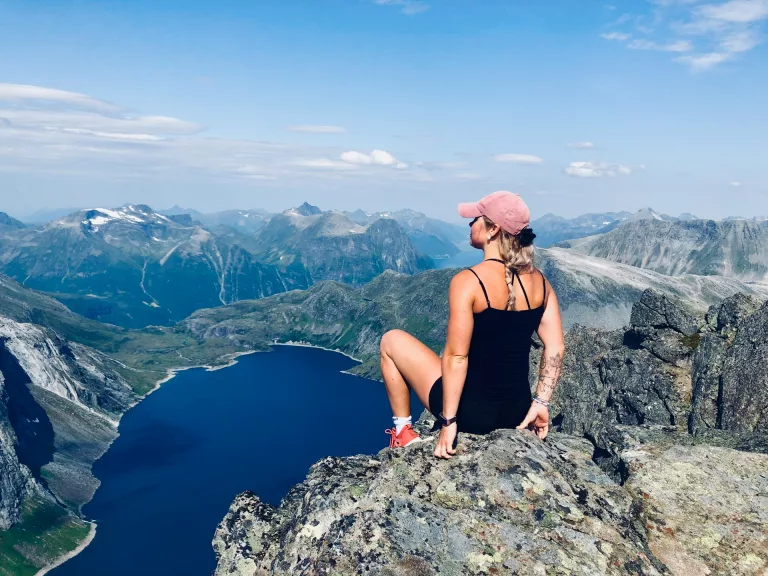
Hornindalsrokken/Charlotte Karlsen/Unsplash
Norway is also wonderfully set up for hikers. Trails are often marked and signposted, and the Norwegian Trekking Association’s red T markings are used extensively on hiking routes. The country’s right-to-roam tradition also gives people broad access to uncultivated land, although there are rules and local restrictions to keep in mind.
But don’t make the mistake of thinking that a well-marked trail is automatically an easy one. Norwegian mountain weather can change quickly, even in summer. A sunny morning can become cold, wet and windy surprisingly fast, particularly at higher elevations. If you’re used to checking the forecast before heading into the Cederberg or Drakensberg, keep doing exactly that here.
The golden rule is simple: know your route, know the weather and don’t be too proud to turn around.
DRIVE: Hjørundfjord to Geiranger
From Hjørundfjord, make your way towards Geiranger.
Yes, Geiranger is one of Norway’s best-known destinations, and yes, it gets busy. But once you’re behind the wheel, you can quickly understand why it has become famous. The roads climb through the mountains, the scenery changes constantly and there are viewpoints where you will definitely find yourself reaching for your camera.
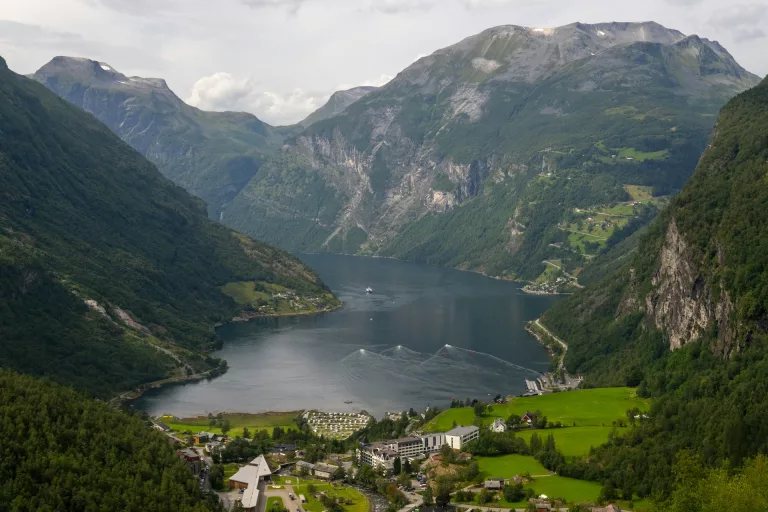
Geiranger/Cayial De Jesus Pennings/Unsplash
The trick is not to rush. One of the best things about doing Norway by road is that you can make the journey part of the adventure. Stop for a short walk. Find a viewpoint. Have lunch beside the fjord. Take the slower road when you have the option.
HIKE: Trollstigen and Romsdalen
Trollstigen is probably one of those roads you’ve already seen on Instagram. The famous hairpin bends climb dramatically through the mountains, surrounded by waterfalls and enormous rock faces.
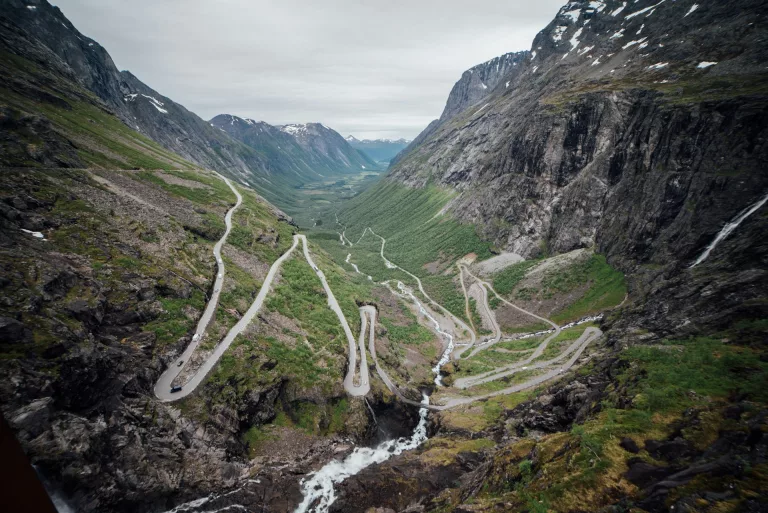
Trollstigen/Ivars Utināns/Unsplash
Use it as a gateway into the Romsdalen region and Åndalsnes, one of Norway’s best bases for mountain adventures. This is where you can turn the hiking dial up a notch.
Routes such as Romsdalseggen offer a serious day in the mountains, with huge views across the valley and surrounding peaks. The important thing to remember is that distance doesn’t tell you everything. A 10km hike in Norway isn’t necessarily comparable to a 10km hike in the Cape. Elevation gain, rocky terrain, exposure and weather all matter. The same goes for a route that looks perfectly manageable on a map. In other words, don’t leave your common sense at the trailhead.
SLEEP: Embrace the cabin life
One of the things I particularly like about hiking in Norway is that you don’t necessarily have to finish your hike and immediately get back into the car.
Norway has a long-established cabin culture, with mountain huts and lodges allowing hikers to spend several days travelling through the mountains. For South Africans, this is a different way of thinking about a hiking trip. We tend to plan around a particular trail, summit or overnight campsite.
Camping is another option. Norway’s right-to-roam rules allow tent camping in much uncultivated land under certain conditions, although restrictions vary and responsible camping is expected.
DRIVE: Strynefjell to Jotunheimen
Continue towards Strynefjell and you’ll notice another change in the landscape.
The valleys and fjords give way to a much more exposed high-mountain environment. There are broad plateaus, rocky peaks and snowfields, with roads winding through landscapes that feel otherworldly.
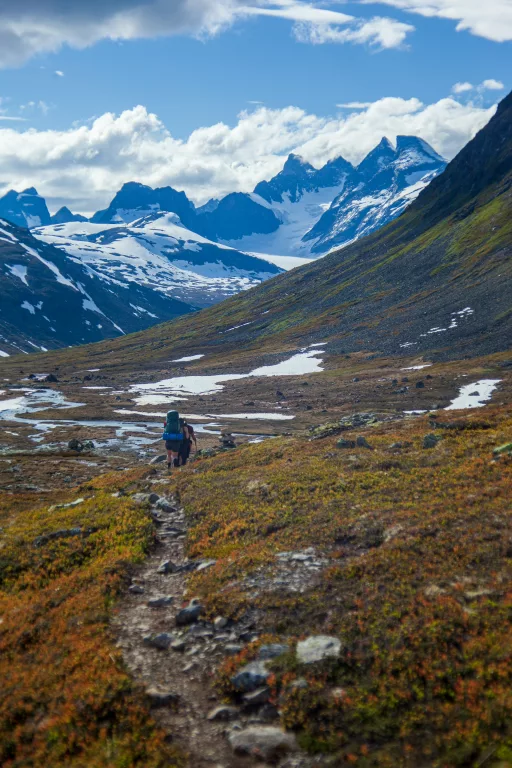
Jotunheimen National Park/Y. Kvam/Unsplash
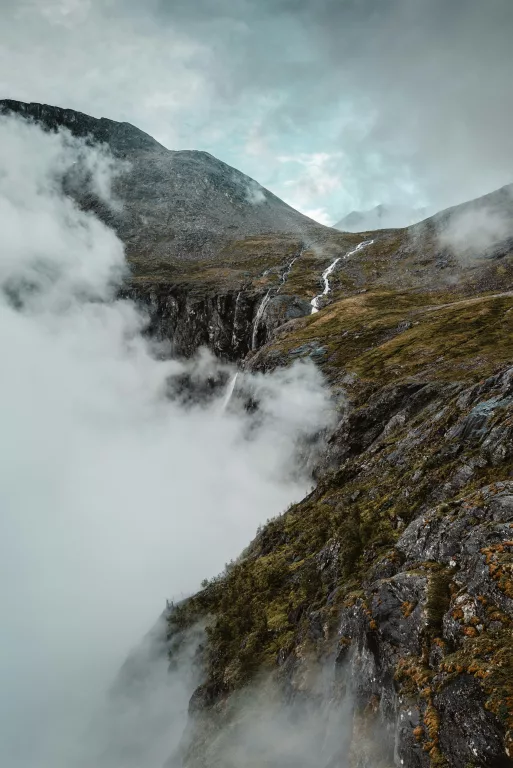
Jotunheimen National Park/Lukas Zischke/Unsplash
Eventually, you can continue towards Jotunheimen, home to some of Norway’s highest mountains.
If the first part of the trip was about combining sightseeing with hiking, this is where you can make the hiking the main event. Jotunheimen is the kind of place where you could happily leave the vehicle parked for several days and just walk.
Why you should go
Norway isn’t necessarily better than South Africa for hiking. It is just completely different.
We have our own spectacular mountain landscapes, from the Drakensberg to the Cederberg and the high peaks of the Cape. But Norway adds another dimension: fjords, glaciers, snowfields and an outdoor culture that makes it remarkably easy to build an entire holiday around being outside. It also changes what an adventure road trip can look like.
You don’t need to spend days bouncing along remote 4×4 tracks. Sometimes the adventure is simply a winding mountain road. Sometimes it’s a gravel pass, a ferry across a fjord or a trail disappearing into the mountains. And that’s what makes western Norway such a good match for South African outdoor travellers.
The formula is simple: drive somewhere beautiful, put on your hiking boots, explore until you’re tired, find somewhere to sleep and do it all again tomorrow. Only this time, there will probably be a waterfall involved. And if there isn’t, drive another 10 minutes. There probably will be.
Follow us on social media for more travel news, inspiration, and guides. You can also tag us to be featured.
Instagram | Facebook | Twitter
ALSO READ:
Inside ‘Lion’: The new National Geographic series following a Maasai Mara cub