

There are places you visit for the scenery, and then there are places where the history is practically tangible that simply walking down the road feels like stepping into another era. Thomas River is one of those places.
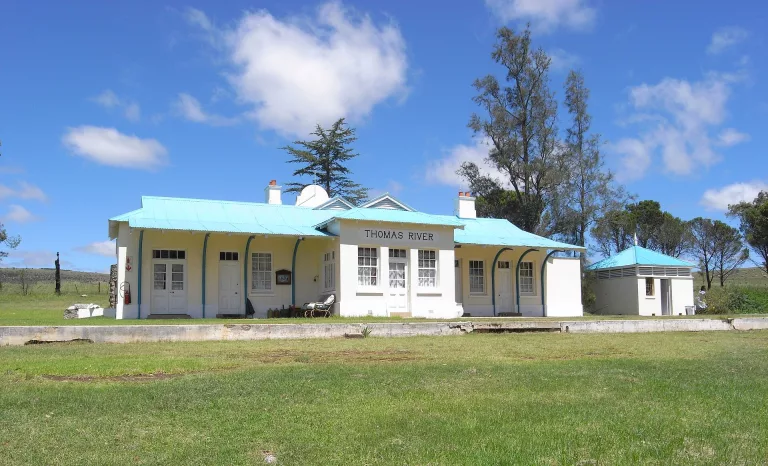
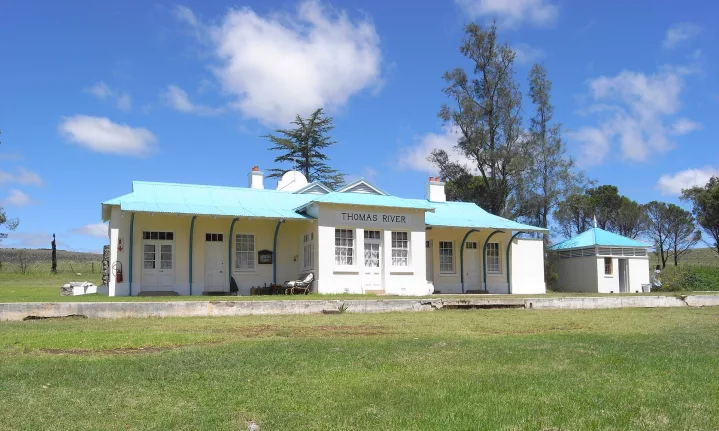
Thomas River Village, former railway station (Eastern Cape, South Africa) / Lysippos / Wikimedia Commons
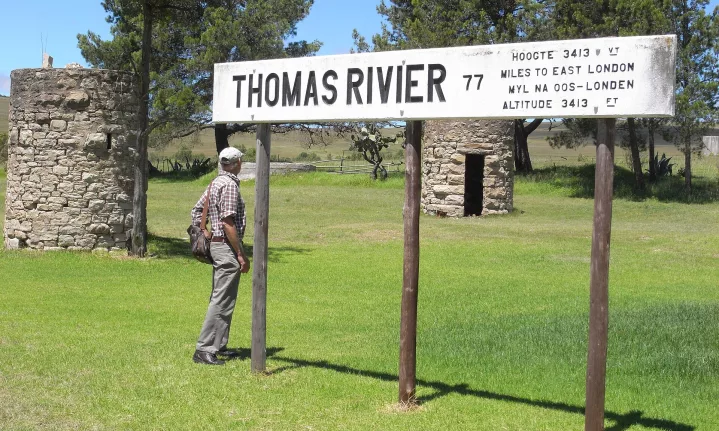
Situated between Stutterheim and Cathcart in the Eastern Cape, just off the N6, this tiny village is easy to miss if you’re simply passing through and unaware of its history. There are no grand city landmarks or bustling tourist attractions proclaiming its arrival. Instead, you’ll find an old railway station, stone watchtowers, a little church and a collection of buildings that softly tell the story of a rural community shaped by the railway.
In modern day, Old Thomas River Historical Village is kept alive as a heritage and tourism destination, but its story began long before curious travelers arrived with cameras and time to spare.
Where the story begins
The story of the river’s name is not a pleasant one. Back in 1801, missionary Jan van der Kemp was travelling through the area when Thomas Bentley, an English deserter associated with the mission, was killed by a poisoned arrow while crossing the river. The river was subsequently named after him.
Prior to Thomas River becoming a railway settlement, it served as an outspan point for wagons travelling between the coast. Merchandise moved along challenging routes towards the diamond fields of Kimberley and, later, the goldfields of the Witwatersrand. For travellers traversing these long journeys by ox wagon, Thomas River meant more than dots on a map. It represented a space to stop, rest, trade and then continue.
The arrival of the railway changed the village once again.
When the railway arrived
During the late 1870s, Thomas River had acquired a railway station on the route between East London and the interior. The station became the heart of the settlement, connecting the otherwise remote farming community to a much larger network of people, goods and ideas.
It’s difficult to imagine today just how deeply significant that would have been. The original station stood between four stone military watchtowers, built to protect it during the frontier conflicts of that period. Three of these towers still remain, complete with gun slits and heavy wooden doors. The fourth was demolished to make way for the newer station, which was built in 1926.
The railway brought much more than just passengers. The station transformed Thomas River into a place where agricultural produce could be transported and necessary supplies could arrive. A small, self-contained community developed around it, including a post office, hotel, school, church and farmers’ hall. For a village this small, the railway established its connection to the wider world. And then the railway moved on.
The end of an era
In 1926, a new station was built as the railway infrastructure changed. The original station remained part of the village, but its days as a functioning railway hub were numbered. In 1948, the new line opened and the final train passed through Thomas River.
Thomas River gradually became quieter without the railway at its centre. The local trading store eventually closed, followed by the post office. The school also disappeared, and the village that had once served a busy rural community was left with buildings but fewer reasons for people to pass through them. The trading store itself remained in operation until 1991.
That could have been the end of the story. Thankfully, it wasn’t.
Bringing an old village back
In 2002, Jeff and Ann Sansom came across Thomas River and saw something worth saving in what had become a largely disused village. They acquired several of the properties and began the painstaking process of restoring them. The restoration project formally took shape from 2003, with the intention of preserving the buildings and collections while giving the village a new start.
What makes Thomas River particularly interesting is that the buildings themselves have become museums of ordinary life. The former blacksmith’s workshop now houses vintage and classic cars. The old trading store has become the Ramble Restaurant and Museum Pub, with collections of memorabilia displayed throughout. The former government school has become a library filled with old books, typewriters and other objects from another era. The old wagon store now houses carts and wagons, while another building has been given over to rock art and San history.
It’s the kind of place where you can spend more time looking at the objects than you intended to. An old telephone, a typewriter, a railway signal or a wagon. None of these things are remarkable on their own right? But together, they give perspective as to how much life has changed and time has passed.
More than railway history
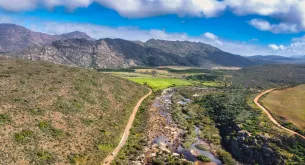
The Thomas River Conservancy, of which the village form’s part of, incorporates a much larger landscape where conservation, outdoor recreation and heritage overlap.
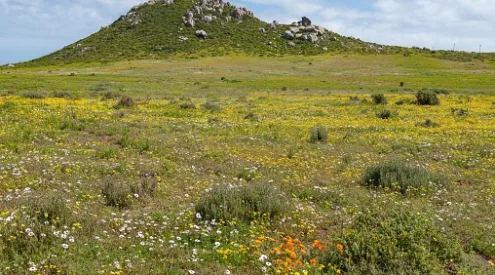
The conservancy covers roughly 31 000 hectares and is managed collectively with neighbouring farmers for conservation and recreation. Visitors can explore the surrounding landscape through activities including hiking, mountain biking, birding, fishing and rock art experiences. According to the Amahlathi Municipality, more than 150 bird species have been recorded in the area.
This means Thomas River works really well as a slower kind of getaway.
Stay in the old railway village
The most appealing thing about Thomas River is that it offers you an opportunity to actually stay within the buildings you’ve come to explore. The Station Master’s House and Station Foreman’s House have been converted into self-catering accommodations overlooking the village. There is also accommodation in the renovated former cowshed, while the old post office has been adjusted to suit rustic backpacker-style stays.
Instead of arriving, walking around and then leaving again, you could wake up in the middle of history. There is something remarkably simple about that. The village is small enough to explore on foot, while the surrounding conservancy gives you ample space to disappear into the landscape.
A story that refused to disappear
Thomas River is not a preserved railway town in the conventional sense, and that’s precisely what makes it so intriguing. The railway is gone, but its remnants remain in the village that grew around it and then had to find another reason to continue when that line moved away.
Thomas River’s revival is not about recreating the past exactly as it was, but about refusing to let the past disappear completely. And perhaps that is the most compelling reason to make the detour.
Follow us on social media for more travel news, inspiration, and guides. You can also tag us to be featured.
Instagram | Facebook | Twitter | Spotify
ALSO READ: