


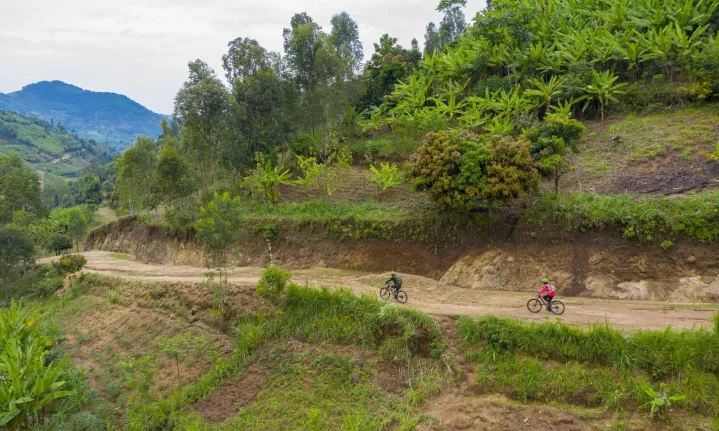
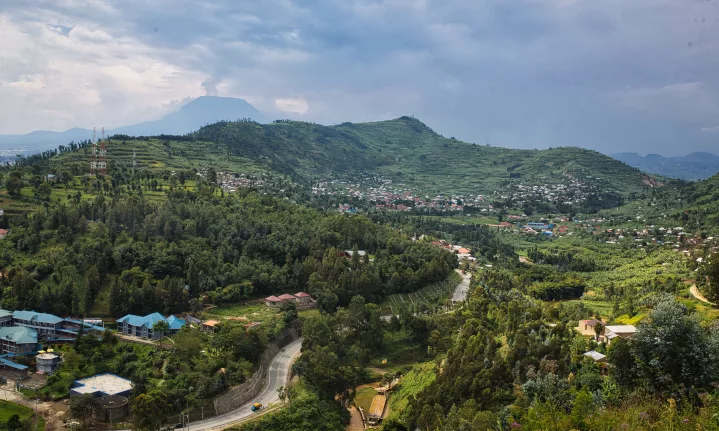
Rwanda is often associated with mountain gorillas, misty forests and the neatly ordered streets of Kigali. But in the country’s west, life moves at a different pace.
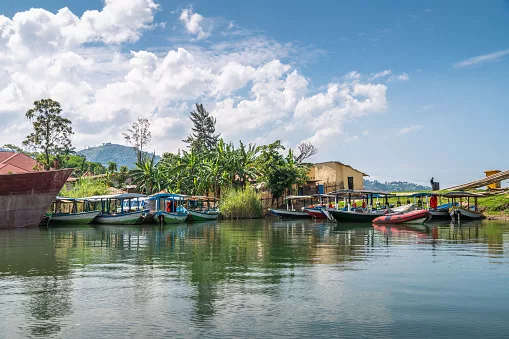
A fishing village on Lake Kivu, Rwanda/By: George Pachantouris/Getty Images
The hills here roll down towards Lake Kivu, one of Africa’s major Rift Valley lakes, where small fishing boats navigate the deep green waters, and villages cling to the slopes. The lake extends along Rwanda’s western border, featuring well-known destinations such as Rubavu (formerly Gisenyi) and Karongi (commonly known as Kibuye).
With 48 hours on your side, use Kibuye as your base and focus on Karongi and the central section of the lake; this will give you enough time to experience the scenery without rushing the trip to see other attractions.
Day one: Discover Kibuye and Lake Kivu
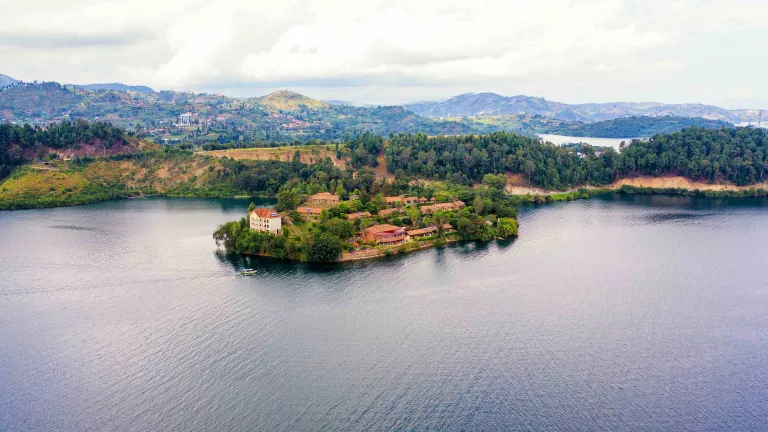
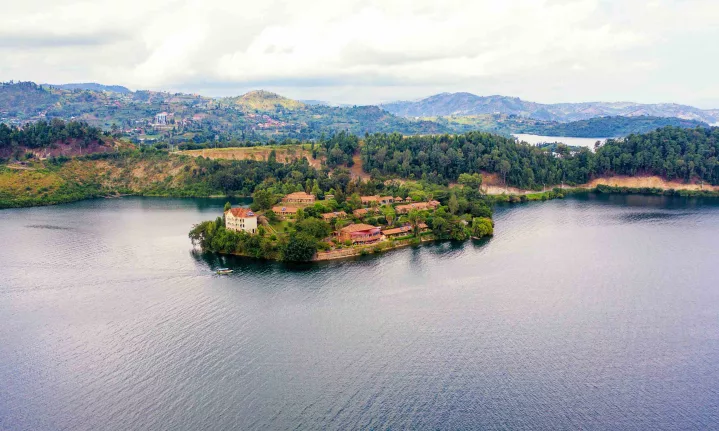
Aerial view of Bethany Hotel in Karongi/Rasse2/Wikimedia Commons
Arrive in Karongi
Known locally as Kibuye, Karongi sits roughly halfway along Rwanda’s Lake Kivu shoreline. The town is surrounded by green hills and scattered bays, giving it a distinctly quieter character than Rubavu at the northern end of the lake.
The first impression is all about the landscape. Hills covered with eucalyptus, banana plantations and other vegetation rise behind the water, while the lake opens out towards a collection of islands and distant shorelines.
Karongi has developed into one of Rwanda’s lakeside tourism centres, with accommodation such as Bethany Hotel and activities ranging from boat trips and kayaking to hiking and community experiences.
After checking in, resist the urge to immediately fill the afternoon with activities. Find somewhere overlooking the lake, order lunch and settle into the slower rhythm of Kivu.
Take to the water
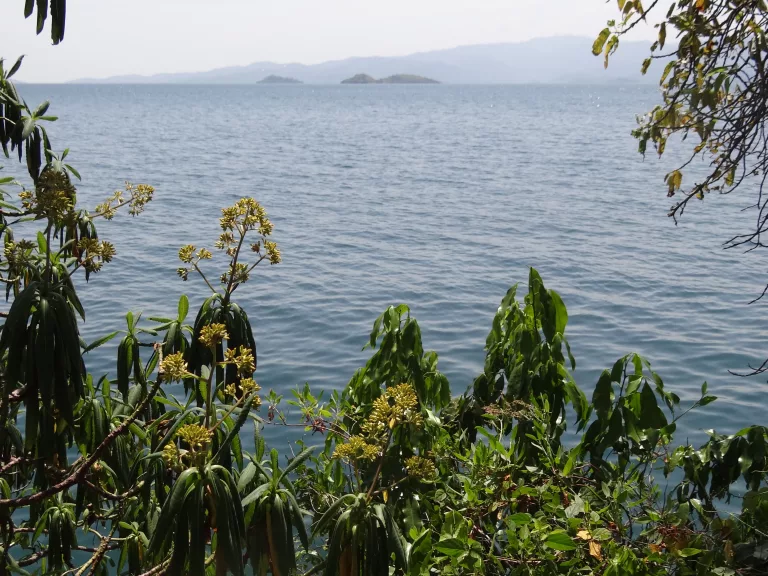
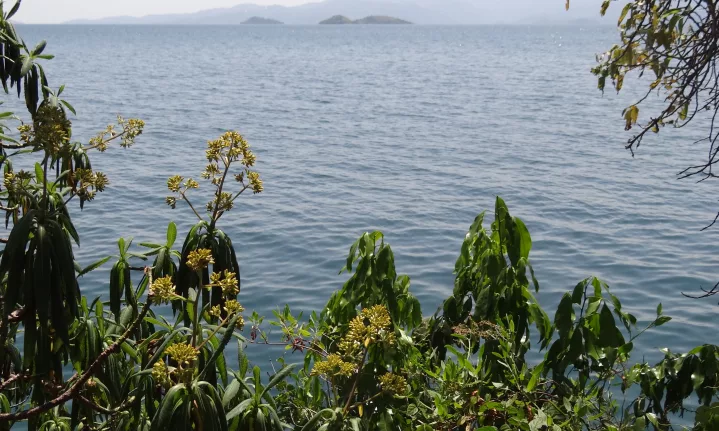
Scenery on Napoleon Island, Lake Kivu near Kibuye (Karongi)/Adam Jones from Kelowna, BC, Canada/Wikimedia Commons
The best way to understand Lake Kivu is from the lake itself.
Join a boat trip into the islands and sheltered bays around Karongi. A half-day excursion can include islands such as Napoleon and Amahoro, depending on the route and conditions. Napoleon Island (locally known as Nyamunini Island) is particularly known for its colony of fruit bats, while Amahoro offers a quieter stop on the water.
The journey is as much part of the experience as the destinations. From the boat, the steep green hills appear to rise directly from the lake, while small communities and cultivated slopes reveal how closely everyday life is tied to the water.
Keep an eye out for the traditional fishing boats, too. At dawn and dusk, the sound of fishermen singing as they paddle across the lake has become one of the distinctive sounds of Karongi.
Stay for sunset
Return to shore before sunset and find a lakeside viewpoint.
This is one of those destinations where the simplest moments can be the most memorable. As the light softens over the hills, boats begin making their way home, and the surface of the lake changes colour.
If you’re travelling with a guide or local operator, ask about a fishing experience. Community-based tourism initiatives around Lake Kivu offer opportunities to experience local fishing traditions, including evening outings with fishermen.
Spend the night in Kibuye and let the lake set the pace.
ALSO READ:
Day two: Coffee, hiking and lakeside communities
View this post on Instagram
Start with Rwandan coffee
Rwanda’s coffee-growing story is deeply connected to the hills around Lake Kivu.
Coffee was introduced to Rwanda in 1904 and has since become one of the country’s major cash crops. Around 450,000 small-scale growers produce coffee across the country, with many of the most accessible tourism experiences concentrated around the Lake Kivu region.
One of the most atmospheric places to experience this is Kinunu Washing Station, on the shores of Lake Kivu. The station works with hundreds of nearby farmers and can be reached by boat or bicycle, making it possible to combine a coffee visit with other activities around the lake.
Follow coffee from farm to cup
View this post on Instagram
A coffee experience here is about more than tasting a good cup.
Depending on the season and tour, you can see coffee growing on the hillsides, learn how cherries are harvested and visit a washing station where the beans are sorted, pulped, fermented, graded and dried.
Some Lake Kivu coffee experiences combine a boat trip to Kinunu with a farm visit, processing demonstration, roasting and tasting.
The harvest generally takes place between February and May, when ripe cherries turn a deep red. But the coffee-growing landscape remains worth visiting outside the harvest period, particularly for travellers interested in agriculture, food and the communities behind Rwanda’s speciality coffee.
From the plantation, look back towards the lake, and the reason this region works so well for a slower itinerary becomes obvious: the scenery and the experiences are intertwined.
Walk a section of the Congo Nile Trail
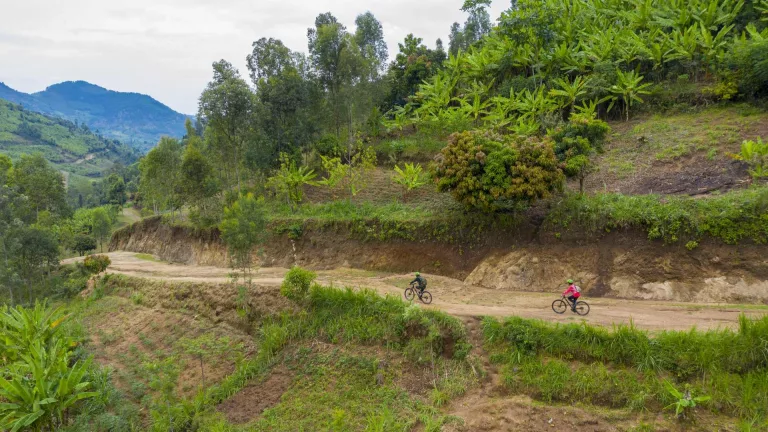
Biking the Congo Nile Trail/Rasse2/Wikimedia Commons
After your delicious cuppa, get out on foot.
The Congo Nile Trail follows the western side of Lake Kivu, connecting Rwanda’s lakeside towns and rural communities. The route runs for roughly 227km and passes through hills, plantations, villages and areas of striking lake scenery.
You don’t need to tackle the entire route to experience it.
Choose a manageable section for a hike, or arrange a shorter guided walk through the surrounding countryside. The trail can also be explored by bicycle, with shorter sections making it possible to experience the landscape without committing to a multi-day adventure.
This is where the Lake Kivu experience shifts from scenic to immersive. Rather than looking at Rwanda’s famous green hills from a vehicle, you’re walking through them, passing cultivated slopes and rural homes and seeing the everyday landscape at a slower pace.
Leave time for the lake
By the afternoon, return to the water.
Depending on your energy levels, this could mean kayaking, canoeing, or simply finding a quiet stretch of shoreline. Lake Kivu is one of Rwanda’s major destinations for water-based activities, with kayaking, boating and swimming among the options available to visitors.
Or do very little.
After two days of boats, coffee farms and hills, a lakeside lunch followed by an hour watching the water can feel like the most appropriate way to end the trip.
If you have extra time
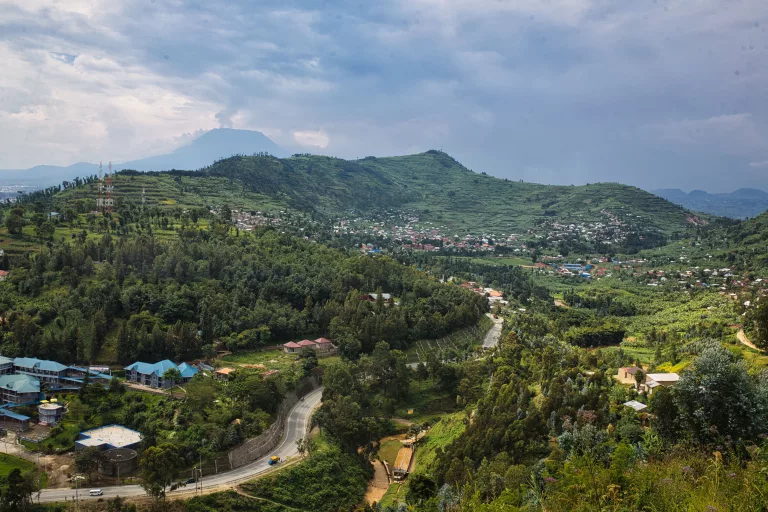
Hills of Rubavu and Mount Nyiragongo/Ericnkurunziza/Wikimedia Commons
Spend longer in Rubavu
If your itinerary allows another day, continue north to Rubavu, formerly known as Gisenyi.
The town sits at the northern end of Lake Kivu and has a livelier atmosphere than Kibuye, with a waterfront lined with hotels, restaurants and bars. Its location also makes it a useful base for combining Lake Kivu with a visit to Volcanoes National Park.
Rubavu is also an important starting point for the Congo Nile Trail and provides access to coffee-growing areas around the northern part of the lake.
Go beyond the usual Rwanda itinerary
Lake Kivu works particularly well as an extension to a wider Rwanda trip.
Travellers who have spent time trekking in the country’s forests or exploring Kigali can use the lake as a change of pace. Instead of another packed itinerary, the reward here is space: boat rides, long views, rural walks, coffee grown on the surrounding hills and evenings spent beside the water.
That is perhaps Lake Kivu’s greatest appeal.
It offers a different picture of Rwanda — one where the journey is as important as the destination and where two days can feel surprisingly far removed from the usual safari and trekking circuit.
Getting around Lake Kivu
The Lake Kivu region is best explored with a combination of road travel, boats and guided activities.
Karongi is a natural base for a 48-hour itinerary, while Rubavu works well if you’re entering or leaving the region from the north. Boats can connect visitors with islands and some lakeside experiences, while sections of the Congo Nile Trail can be explored on foot or by bicycle.
For coffee-farm and washing-station visits, arrange your experience in advance. Rwanda’s tourism information recommends setting up plantation visits through a tour operator or the Rwanda Development Board rather than approaching farms directly.
When to go
Lake Kivu can be visited throughout the year, but your experience will vary depending on what you want to do.
Coffee lovers may want to time their visit around the main harvest, generally between February and May, when the coffee cherries are being picked and processed.
For hiking, cycling and boating, conditions on the day matter more than chasing a single ‘best’ season. Check local conditions and arrange activities with experienced guides, particularly when heading onto the lake or into rural areas.
Whatever the season, pack light layers, comfortable walking shoes, sun protection and something suitable for rain. Rwanda’s hills can bring changing conditions, and the weather is part of what keeps the landscape so green.
Why Lake Kivu deserves to be on your Rwanda itinerary
Rwanda is famous for its mountains, forests and wildlife, but Lake Kivu reveals another side of the country.
Here, the attractions aren’t confined to a national park or a single landmark. They’re spread across the landscape: coffee plants growing on steep hillsides, fishermen crossing the lake, boats heading towards small islands, footpaths winding through villages and sunsets reflected across the water.
Give yourself 48 hours, and there is enough time to experience all of it without rushing.
Come for the lake, stay for the coffee and hills, and leave with a slower picture of Rwanda than the one you arrived with.
Follow us on social media for more travel news, inspiration, and guides. You can also tag us to be featured.
Instagram | Facebook | Twitter
ALSO READ:



_-_Rwanda_-_02_(8978727261).jpg)

