


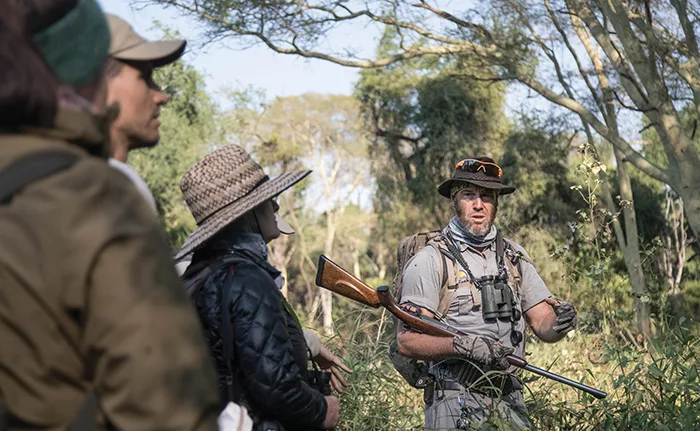
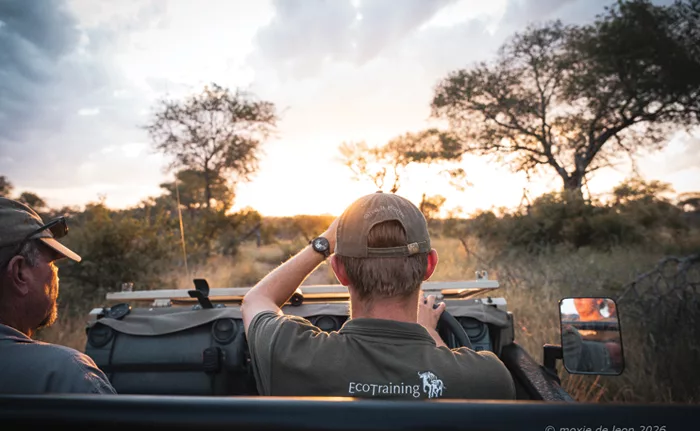
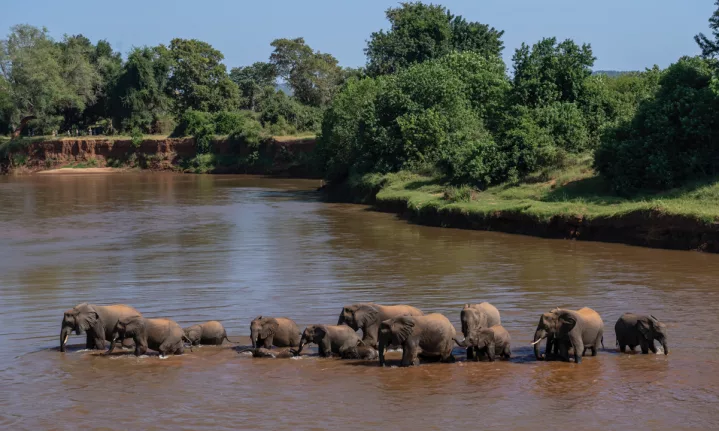
The vehicle stops. For a moment, nothing seems to happen. Then the guide points to a line of scuffed sand, a single alarm call from a francolin, and suddenly the bush is full of stories.
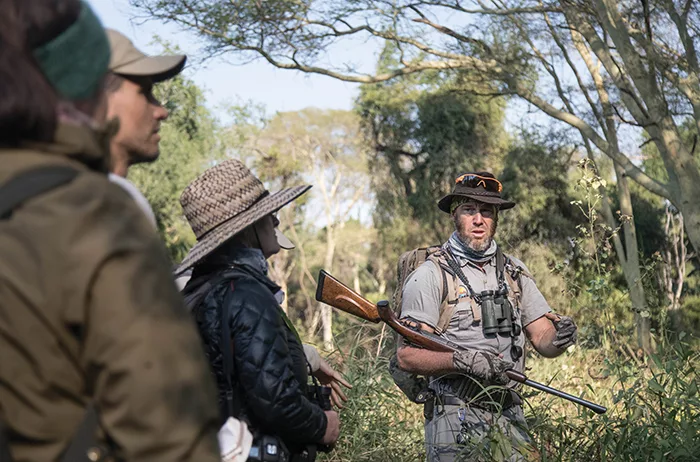
Image: Supplied
Ask anyone who has been on safari, and most will tell you the same thing: the lodge, the food and the view from the deck matter, but the guide is what they remember.
More than a driver
On a typical safari, a guide often spends somewhere between nine and 12 hours a day with guests. They lead the dawn and dusk drives, walk with them through the bush, and, often, share stories around the fire at night.
When the wildlife is plentiful, almost anyone can look good. The real test comes in the quieter hours. A skilled guide can make a dung beetle just as fascinating as a leopard. More importantly, they can illustrate how it all connects.
Then there is safety. Reading animal behaviour and staying calm under pressure are not skills you pick up on a weekend. They are learned over years, often starting in a classroom with no walls.
Where great guides come from
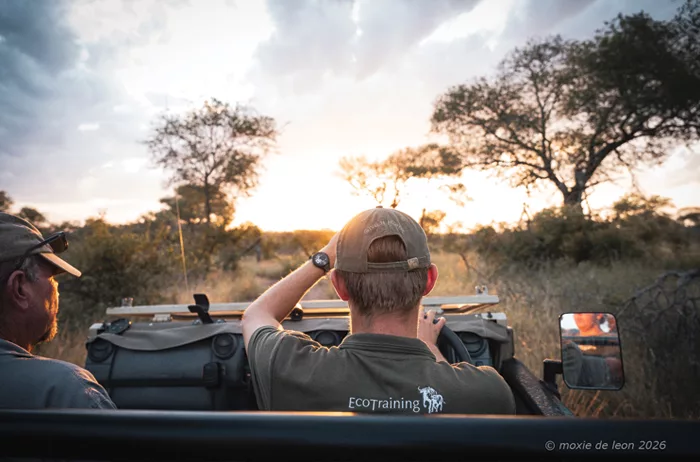
Image: Supplied
Behind many of the region’s best guides is a thorough training process. EcoTraining, founded in 1993 and regarded as the original guide training school in South Africa, has been one of the key places where that process begins.
Its students live and learn in wilderness camps in big game areas across South Africa, Botswana and Kenya. Its Makuleke camp is the only private training school inside the Kruger National Park.
The training is thorough. For example, the 55-day Field Guide Course covers navigation, ecology, animal behaviour and tracking, while the 1-year Professional Field Guide Course adds wilderness medicine, advanced rifle handling, trailing and advanced birding.
At the top of the ladder sits the Higher Certificate in Ecotourism Guiding. Accredited by the Council on Higher Education, the year-long, 120-credit NQF5 qualification is the highest achievable in South Africa’s guiding sector, and EcoTraining is currently the only guide training provider in the country offering it.
In other words, the guide who positions your vehicle so the light falls just right on a pride of lions has probably spent months learning to identify tracks in the sand.
For Anton Lategan, managing director of EcoTraining, it goes deeper than species lists. “We train guides with an ecological mindset,” he says. “When a guide is out with guests, they’re part of a symbiotic relationship between the land, the community, the lodge operator and the guest. Understanding how all of it connects is what turns a game drive into something guests remember.”
Finding the right match
Image: Supplied
For travellers and the travel advisors who book on their behalf, the question is how to make sure they end up with a guide who suits them. A few principles help.
- The lodge sets the standard. Established lodges tend to have strict vetting and ongoing training for their guiding teams. Asking a lodge how its guides are qualified is a reasonable place to start.
- Share more than you think you need to. Head guides often assign guests based on what they know about them. Even small details can lead to a better pairing, and sometimes to experiences that aren’t on any itinerary.
- Consider a private guide. A private guide and vehicle mean guests set the pace. It also means getting to know one guide well, which almost always deepens what guests learn.
When the guest becomes the student
A great guide leaves guests wanting more. That is where EcoTraining’s shorter courses come in. They range from 7- and 14-day EcoQuest programmes to birding, photography and tracking courses, and the Family EcoQuest for those travelling with children.
And for those who find they can’t stop, the 55-day and 1-year courses, and the Higher Certificate, offer a route into the profession itself.
The difference a guide makes
A safari is not only about what you see. It is about what you hear, smell and feel. The best guides make that possible, and then know when to step aside. So the next time the engine goes quiet and nobody speaks, pay attention to the person in the driver’s seat. That silence was their doing.