




Astronomers have confirmed the youngest planet ever found, and it’s still in the very early stages of becoming a world.
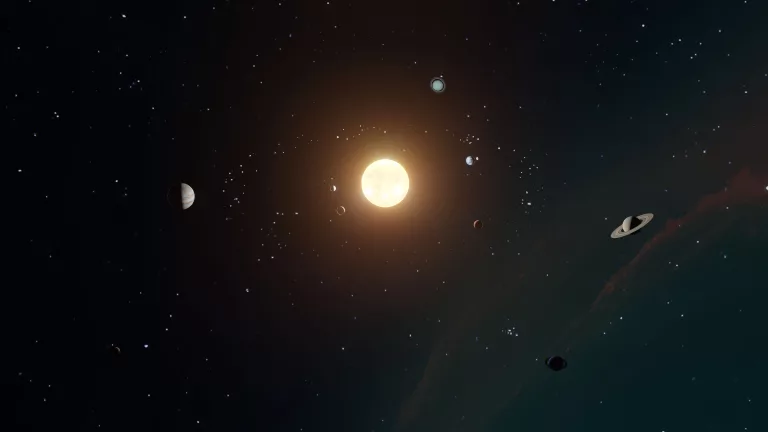
Zelch Csaba / Pexels / Illustrative purposes only
Known as Elias 2-24 b, the exoplanet is less than one million years old and sits around 450 light-years from Earth. By comparison, our own planet is about 4.6 billion years old.
The discovery gives scientists an unusually rare glimpse into the earliest stages of planetary formation.
A planet still finding its place
Elias 2-24 b orbits a young star surrounded by a disc of gas and dust left over from the star’s formation. Astronomers first spotted a gap in that disc nearly a decade ago, suggesting that a young planet could be carving a path through the material.
The challenge was confirming it.
Researchers returned to observations made by the W.M. Keck Observatory in Hawaii in 2018 and 2020. By comparing the faint object across the two sets of observations, they were able to confirm that it was moving with its host star rather than simply being a distant background object.
It was a planet and a surprisingly large one.
Elias 2-24 b is estimated to have between 1.9 and four times the mass of Jupiter, despite being only a fraction of a percent of Earth’s age. It orbits its star at roughly 55 times the distance between Earth and the Sun.
That’s where things get particularly interesting.
Rethinking how planets are born
Giant planets are thought to form by gathering material from the discs surrounding young stars. But conventional models suggest that building a Jupiter-sized planet can take several million years.
Elias 2-24 b appears to have done it much faster.
It’s existence suggests that giant planets may be able to form and grow far more rapidly than scientists once thought, particularly at large distances from their stars.
More young worlds could soon come into view. NASA’s Nancy Grace Roman Space Telescope is designed to help astronomers study faint objects around stars, potentially revealing more planets hidden within the dusty environments where planetary systems are born.
For now, Elias 2-24 b offers something extraordinary: a chance to see a planet not long after its own beginning.
It’s a reminder that when we look into space, we’re not always looking at finished worlds. Sometimes, we catch them in the middle of becoming.
Source (Wired)
Follow us on social media for more travel news, inspiration, and guides. You can also tag us to be featured.
Instagram | Facebook | Twitter | Spotify
ALSO READ:
Border authority steps up anti-corruption crackdown at South African airports