

Rare wildlife from the Amazon is increasingly turning up for sale in Bangkok, with marmosets, capuchin monkeys, tamarins, capybaras, matamata turtles and rare Amazonian fish among the species reportedly appearing in Thailand’s exotic pet markets.
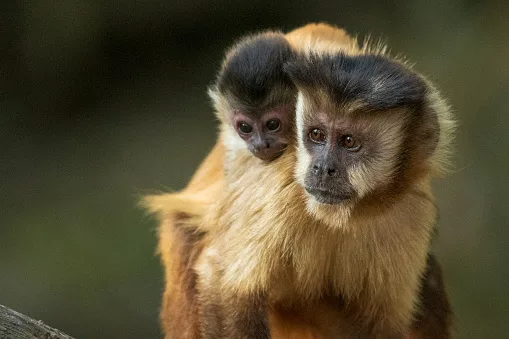
A mother hooded capuchin monkey carries her baby on her back along the banks of the Rio Formoso, in Mato Grosso do Sul, Brazil/By: Julian Gunther/Getty Images
According to Mongabay, the number and diversity of Latin American species being sold in Bangkok has increased significantly over the past two years.
Scott Roberton, who leads the countertrafficking programme for the Wildlife Conservation Society, told Mongabay that new species appear in the markets almost every time he visits.
“The volume is greater. The diversity of species is great,” Roberton said.
From the Amazon to Southeast Asia
The supply chain can begin thousands of kilometres away in the Amazon rainforest.
Mongabay reports that wildlife poached in countries including Colombia and Brazil can be transported along Amazonian rivers to hubs such as Iquitos in Peru. From there, animals can enter international trafficking networks, with fraudulent paperwork sometimes used to pass wild-caught animals off as captive-bred specimens.
Renata Cao, Latin America project lead at wildlife trade monitoring network TRAFFIC, described Iquitos as a major hub for illegal commodities moving through the Amazon.
Once in the international trade network, animals can face journeys lasting more than 25 hours, often involving several flights and stopovers, before reaching markets in Southeast Asia.
ALSO READ:
Japan’s new 320km trail links six towns, mountains and the coast
A global trade with a digital side
The trade is no longer limited to physical markets. Social media platforms have made it easier for buyers and sellers in different parts of the world to connect, according to wildlife researcher Neil D’Cruze.
“The market stall is really just the visible part of a much longer supply chain,” D’Cruze told Mongabay.
The combination of established trafficking routes and online marketplaces means animals can move from remote parts of South America to collectors thousands of kilometres away.
High risks for animals
The journeys can be particularly dangerous for wild animals, which may be confined in small spaces and subjected to long periods of transport, heat and stress.
Roberto Vieto, an animal welfare adviser with World Animal Protection, told Mongabay that the lack of direct flights between South America and Southeast Asia means animals can face lengthy journeys with multiple stops.
The exact number of animals that die during trafficking is difficult to establish. However, a European Union report on wildlife trafficking cited by Mongabay found that 70% of wild animals die within six weeks of capture.
Concerns beyond animal welfare
The conditions in wildlife markets can also create biosecurity concerns.
Bangkok’s Chatuchak Market, one of the locations where exotic animals have been documented, has faced criticism over overcrowding and animal welfare. High temperatures and the proximity of animals, people and food businesses can also increase concerns around the spread of zoonotic diseases.
The market’s wildlife trade has continued despite international criticism and a 2024 fire that killed more than 1,000 animals.
The growing presence of Amazonian species in Bangkok highlights how the illegal wildlife trade can stretch across continents, linking remote rainforest communities and international trafficking routes with demand from consumers thousands of kilometres away.
Source: Mongabay, reporting by Gloria Dickie. Read the full Mongabay report
Follow us on social media for more travel news, inspiration, and guides. You can also tag us to be featured.
Instagram | Facebook | Twitter | Spotify
ALSO READ:
The Western Cape’s fire paradox: why some of its landscapes need to burn to survive