

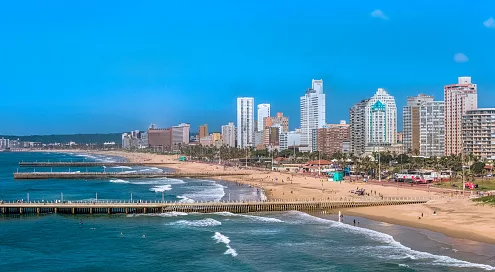

The sea is not always the familiar shade of blue we expect to see along the South African coast. Sometimes, the water turns rusty brown, muddy red or even pink, leaving beachgoers wondering what has happened to their favourite stretch of shoreline.
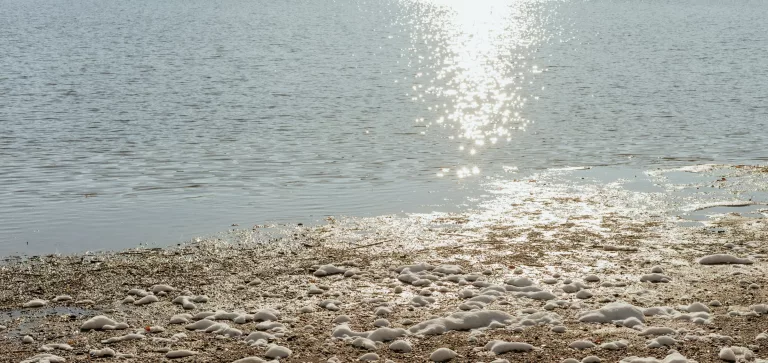
Photo: Unsplash
While the colour change can look alarming, it is not necessarily a sign of pollution. One possible explanation is an algal bloom, a natural phenomenon that occurs when microscopic organisms multiply rapidly in the water. Some blooms are harmless, while others can affect marine life, cause unpleasant smells and, in certain cases, pose risks to people and animals.
Understanding what causes these changes can help you make sense of what you are seeing on your next coastal outing, and know when it is best to keep your distance.
What causes the sea to turn red or brown?
The colour of seawater depends on several factors, including the organisms living in it, the particles suspended in the water and the way sunlight interacts with them. When the sea suddenly takes on a reddish or brownish hue, an algal bloom may be responsible.
Algae are a diverse group of organisms that live in water and use sunlight to produce energy. Many are microscopic and form an essential part of the marine food web, providing food for tiny animals that are, in turn, eaten by fish and other marine creatures.
Under the right conditions, however, certain types of algae can multiply quickly, creating a dense concentration of cells in the water. This is known as an algal bloom.
The colour depends on the species involved, the pigments in their cells and how densely they accumulate. Some blooms make the water appear red or orange, while others produce shades of brown, green or yellow. The sea may even look pink in places.
Not all colour changes are caused by algae, though. Sediment stirred up by strong waves, river runoff after heavy rain and decaying organic matter can also turn coastal water brown or discoloured.
What is a red tide?
You may have heard the term red tide used to describe reddish water along the coast. It refers to certain algal blooms that discolour seawater, although the name can be misleading.
Not every red tide is toxic, and not every harmful algal bloom turns the water red. Some blooms are brown or green, while others are virtually invisible. Their appearance alone cannot tell you whether the water is safe.
South Africa’s West Coast is particularly familiar with these events. The nutrient-rich waters of the Benguela Current system support abundant microscopic marine life, including algae that can occasionally accumulate in large numbers.
When a bloom reaches the shoreline, the water may change colour dramatically. In some cases, the event is accompanied by unpleasant smells, foam or marine animals washing ashore. However, the absence of these signs does not necessarily mean a bloom is harmless.
Why do algal blooms happen?
Algal blooms develop when conditions allow certain microscopic organisms to reproduce rapidly or accumulate in one area.
Several factors can contribute to this, including:
-
Nutrients in the water: Nitrogen and phosphorus can help algae grow. These nutrients occur naturally in marine environments but can also enter coastal waters through agricultural runoff, sewage and other sources.
-
Sunlight and temperature: Many algae thrive when there is sufficient light and the water conditions suit their particular species.
-
Ocean currents and wind: Water movement can concentrate algae near the shoreline or transport a bloom into a bay.
-
Changing environmental conditions: Shifts in water circulation, weather patterns and nutrient availability can influence when and where blooms occur.
There is no single explanation for every bloom. Different species respond to different conditions, and scientists continue to study why some events become particularly extensive or harmful.
Are all algal blooms dangerous?
Fortunately, no. Algae are a natural and essential part of marine ecosystems, and most species are not harmful. Microscopic algae form the foundation of much of the ocean’s food web, supporting the tiny animals and other organisms that larger marine creatures depend on.
Some blooms are simply a visible sign of this productivity. For example, certain diatoms can turn the surf zone brown without necessarily making the water unsafe for swimming. The City of Cape Town notes that these blooms occur in False Bay.
However, other species can produce toxins that affect people, fish, shellfish, seabirds and marine mammals. Even non-toxic blooms can cause problems if large quantities of algae die and decompose, reducing the oxygen available to marine life.
The important distinction is that a change in water colour is a warning sign to investigate, not proof that the water is either safe or dangerous.
How can algal blooms affect people and marine life?
The effects depend on the species involved and the size of the bloom.
Some harmful algal blooms release toxins that can accumulate in shellfish, making them dangerous to eat. Other blooms may irritate the skin or eyes, or cause respiratory symptoms when toxins become airborne near the shoreline.
Marine animals can also be affected. Toxins may harm fish and other wildlife directly, while dense blooms and decaying algae can interfere with oxygen levels in the water. This can sometimes lead to fish deaths or large numbers of marine animals washing ashore.
South Africa has experienced the serious consequences of these events. In December 2025, the Department of Forestry, Fisheries and the Environment warned the public against eating white mussels and other shellfish washed ashore around St Helena Bay and Elandsbaai following suspected harmful algal bloom activity.
The department cautioned that shellfish could carry dangerous toxins, even when the bloom itself was not visible in the water.
This is a useful reminder that the risks are not always obvious from the beach.
What should you do if the sea turns red or brown?
A discoloured sea might be a fascinating natural spectacle, but it is worth taking precautions before heading into the water.
If you notice an unusual change in colour, a strong unpleasant smell, surface scum, foam or dead fish and other marine animals, avoid swimming or paddling in the affected water until you have checked the latest local advice.
A few sensible precautions can help keep your coastal outing safe:
-
Check local beach warnings. Look for updates from your municipality, environmental authorities or the Department of Forestry, Fisheries and the Environment before swimming.
-
Do not collect shellfish for eating without checking official advisories. Toxins can accumulate in shellfish even when the water looks clear. Cooking does not reliably make all marine biotoxins safe.
-
Keep children and pets away from suspicious water and washed-up marine life. Do not allow them to handle or eat dead fish, shellfish or other animals.
-
Pay attention to symptoms. If you develop irritation, breathing difficulties or other symptoms after contact with a suspected harmful bloom, move away from the affected area and seek appropriate medical advice. Severe breathing difficulties require urgent medical attention.
-
Follow official closures. If authorities have issued a warning or restricted access, do not assume that a nearby stretch of beach is safe simply because it looks unaffected.
Remember that not all harmful blooms are visible, and not every unusual colour change is caused by algae. Local monitoring and official advice are more reliable than appearance alone.
For Cape Town beaches, the City provides current beach water-quality information through its Beach Alerts website. Elsewhere in South Africa, check the relevant municipality and national environmental authorities for local updates.
ALSO SEE: Woman killed in shark attack at Eastern Cape beach