




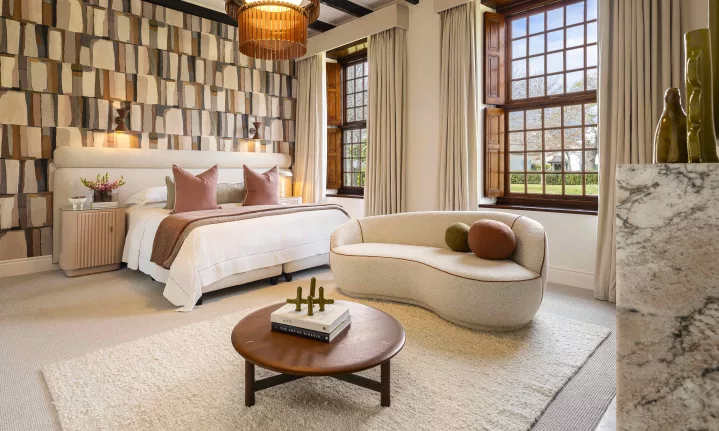
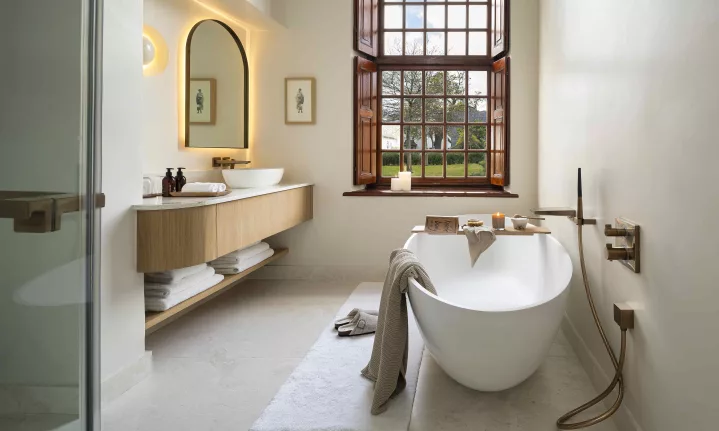
A historic building can tell the story of a place long before a guest arrives. At Steenberg Farm in Cape Town, the restored Manor House offers a fresh perspective on the estate’s heritage, bringing together historic architecture, contemporary interiors and South African craftsmanship.
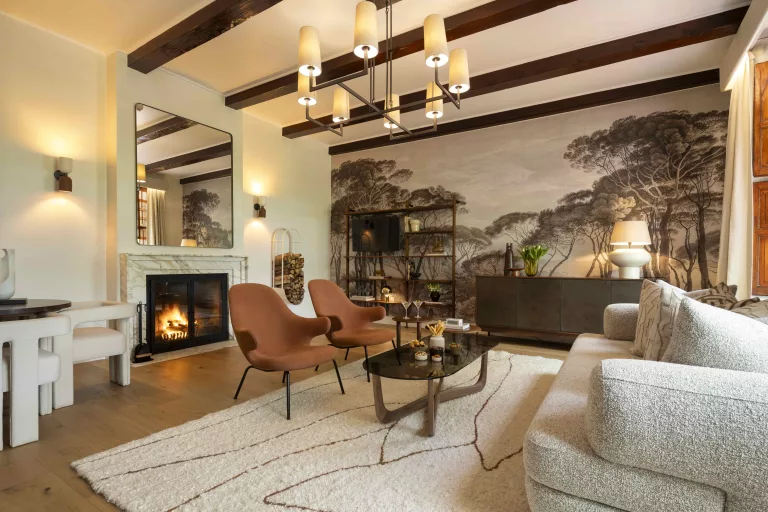
For Catherine Schulze, Managing Director of Steenberg Farm, the restoration was about more than updating an old building. It was an opportunity to preserve a significant part of the estate’s history while ensuring it remains relevant to visitors today.
Recognised as South Africa’s oldest registered farm, Steenberg has a long history, and the Manor House is one of its most significant buildings. Schulze recognised its potential when she joined the estate in 2007, but the vision for its restoration took time to develop.
“It was important that the Manor House retained its sense of place,” she explains. “We didn’t want to erase its history. We wanted to reveal it, celebrate it and allow guests to experience it in a way that feels contemporary and welcoming, creating a genuine sense of belonging for all who visit Steenberg.”
Preserving the past while welcoming the present
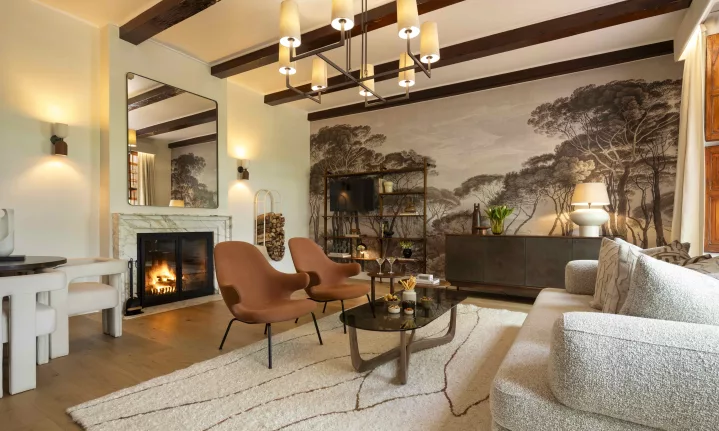
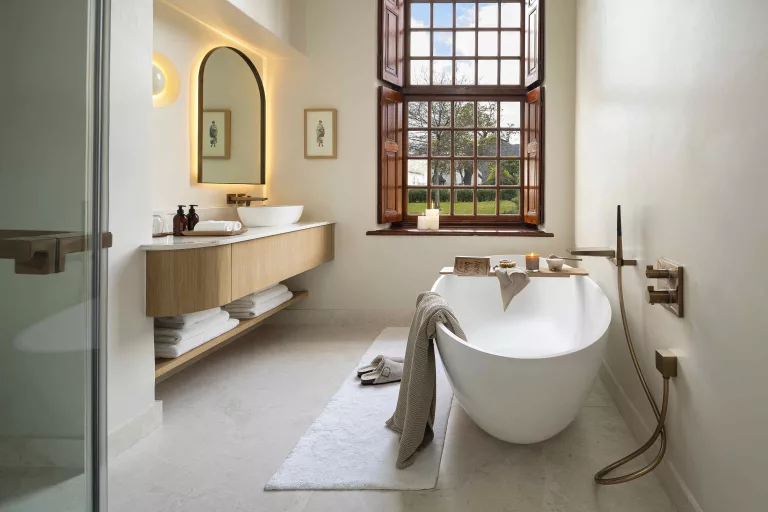
The restoration was guided by a desire to retain the building’s character rather than replace it with something entirely new. Historic architectural features have been preserved and highlighted, while carefully selected furnishings, textures and finishes introduce contemporary comfort.
The result balances the Manor House’s heritage with the expectations of modern travellers. Rather than treating the building’s age as something to overcome, the project makes its history part of the experience.
For Schulze, that experience is not defined by appearances alone. How visitors feel in a space matters just as much as the details they notice.
“Beautiful spaces are important, but they need to feel lived in and inviting,” she says. “Luxury isn’t about excess. It’s about creating an environment where guests can relax, connect and feel genuinely at home.”
This philosophy informed decisions throughout the refurbishment, from the materials and fabrics to the arrangement of individual spaces.
A distinctly South African story
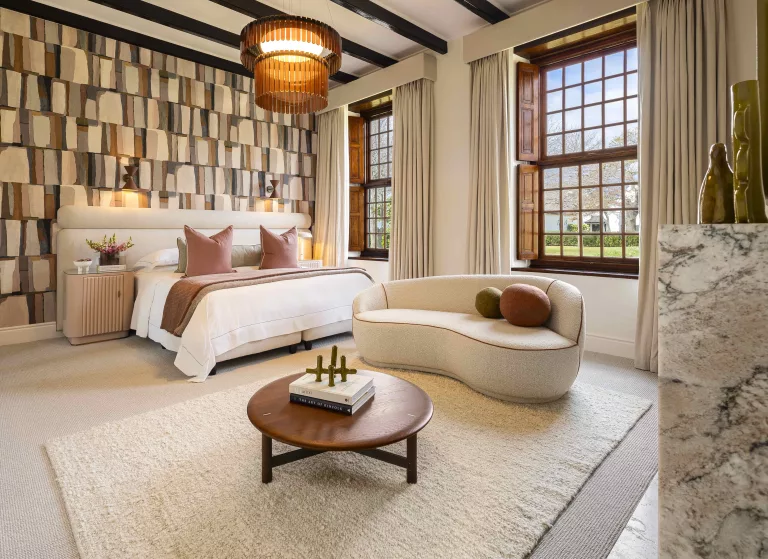
Local craftsmanship was another important consideration. South African artisans, furniture makers, ceramicists and designers were incorporated into the project wherever possible, bringing their skills and creativity into the Manor House’s renewed interiors.
“We have such extraordinary talent in South Africa,” says Schulze. “Incorporating local craftsmanship was important because it allows the Manor House to tell a uniquely South African story while creating something truly authentic.”
The approach also reflects a wider appreciation for the creative talent found across the country. By incorporating locally made pieces and the work of South African designers, the restoration connects the building’s historic character with contemporary local design.
Beyond the furnishings and finishes, however, Schulze believes it is the people who ultimately shape a guest’s experience.
Having started her career as a waitron, she has spent much of her working life in an industry where the smallest interactions can leave a lasting impression. After nearly two decades at Steenberg, she considers the development of the people around her among her greatest achievements.
“The building creates the setting, but it’s the people who bring it to life,” she says. “Hospitality has always been about making people feel welcome, cared for and creating a genuine sense of belonging, regardless of how long they stay.”
Looking after a piece of Cape Town’s heritage
Restoring a historic property comes with a responsibility to consider its future as well as its past. For Schulze, the Manor House represents a visible expression of Steenberg’s identity and the importance of caring for places that have endured across generations.
“Steenberg was here long before any of us, and it should be here long after us,” she says. “Our responsibility is to care for it, strengthen it and ensure that future generations can experience what makes it so special.”
The restored Manor House now enters its next chapter with its historic character intact and its interiors refreshed for contemporary hospitality. It is a reminder that preserving heritage does not necessarily mean leaving a place untouched. With careful decisions, historic buildings can continue to evolve while retaining the details that make them worth protecting.
ALSO SEE: Three quiet Sunday picnic spots in the Western and Eastern Cape
Three quiet Sunday picnic spots in the Western and Eastern Cape