
Across Africa, some natural wonders have become destinations in their own right. Waterfalls, mountains, wetlands, deserts and ancient trees draw travellers in, but the landscapes around them offer plenty more to discover.
From Victoria Falls and the Okavango Delta to Namibia’s towering dunes and Madagascar’s baobabs, these are seven African destinations where one extraordinary natural wonder shapes the experience.
Victoria Falls, Zimbabwe and Zambia
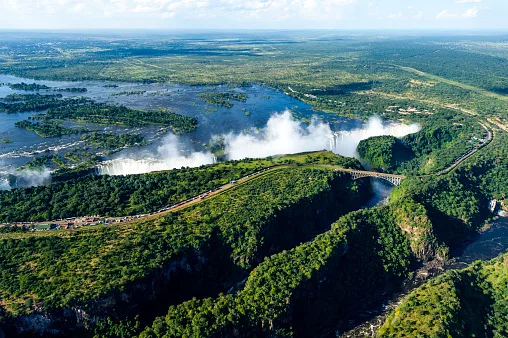
Zambezi River, Victoria Falls, Mosi-oa-Tunya National Park, Victoria Falls National Park, Zambia/By: Jason Edwards/The Image Bank/Getty Images
The natural wonder: Victoria Falls
Known locally as Mosi-oa-Tunya, or “The Smoke That Thunders”, Victoria Falls is where the Zambezi River plunges into a series of gorges along the border between Zimbabwe and Zambia.
The waterfall forms part of a transboundary UNESCO World Heritage Site and is recognised for its exceptional geological features, enormous sheet of falling water, spray and rainbows. At about 1,708m wide, it is one of Africa’s most spectacular natural sights.
The Falls are the obvious reason to visit, but the surrounding Zambezi landscape has turned Victoria Falls into one of Southern Africa’s great adventure destinations.
Things to do around Victoria Falls
See the Falls from both sides. Zimbabwe and Zambia offer different perspectives of the waterfall, so travellers with enough time can experience viewpoints in both countries.
Take to the Zambezi. Sunset cruises offer a gentler way to experience the river, while white-water rafting below the Falls brings a much more adventurous perspective. Zimbabwe’s tourism authorities also highlight rafting, bungee jumping and scenic hikes among the area’s adventure experiences.
Take a flight over the Falls. Helicopter and microlight flights provide a spectacular view of the waterfall, Zambezi channels and surrounding landscape from above.
Visit Livingstone Island. When conditions permit, guided excursions to the island provide an unusually close perspective of the Falls from the Zambian side.
Go on safari. The national parks surrounding Victoria Falls and Livingstone offer opportunities to see elephants, buffalo, hippos, and other wildlife, making the waterfall an easy addition to a traditional safari.
Explore the towns. Livingstone and Victoria Falls both have museums, markets, craft experiences and restaurants, giving visitors a chance to experience the region beyond the waterfall itself.
Okavango Delta, Botswana
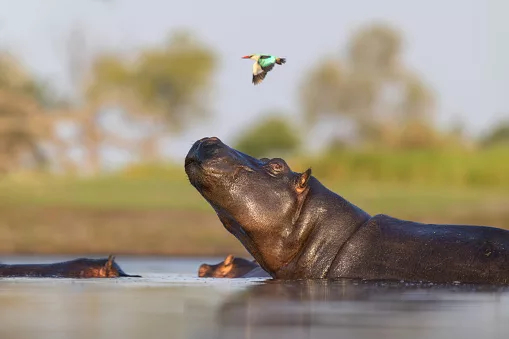
Hippopotamus with woodland kingfisher, Okavango Delta, Botswana/By: Krzysztof Baranowski/Getty Images
The natural wonder: an inland delta
The Okavango Delta is one of Africa’s most unusual natural landscapes. Instead of flowing towards the sea, the Okavango River spreads into the Kalahari Basin, creating a vast network of channels, floodplains, islands and wetlands.
The result is the world’s largest intact inland delta and a UNESCO World Heritage Site. Its seasonal waters transform an otherwise dry landscape and support an extraordinary concentration of wildlife.
Here, the natural wonder doesn’t just provide the backdrop for a holiday — it determines how you move through the wilderness.
ALSO READ:
Wake up early: South Africa’s best sunrise hikes without the technical climb
Things to do around the Okavango Delta
Explore by mokoro. One of the most memorable ways to experience the Delta is from a traditional dugout canoe, gliding quietly through narrow waterways lined with reeds and papyrus.
Take a boat safari. Water-based excursions provide opportunities to see hippos, crocodiles and waterbirds from a completely different perspective.
Go on a game drive. Depending on where you stay, dry islands and surrounding floodplains can produce encounters with elephants, lions, leopards, buffalo, giraffes and antelope.
Try a walking safari. A guided walk shifts the focus from big game to tracks, plants, insects, birds and the smaller details of the ecosystem.
Go birdwatching. The Delta’s combination of permanent waterways and seasonal floodplains makes it an exceptional destination for birders.
Stay for a sundowner. Few African landscapes are better suited to watching the sky change colour over water, palms and wildlife.
Spend a night in the wilderness. Depending on the camp and experience, evenings can include outdoor dinners, stargazing and guided night activities.
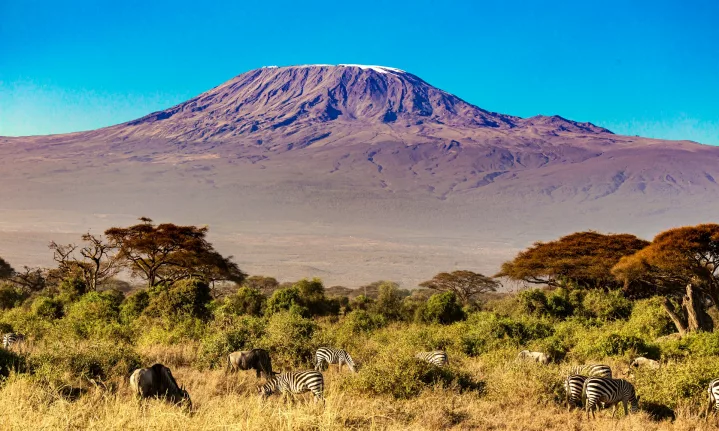
Mount Kilimanjaro, Tanzania
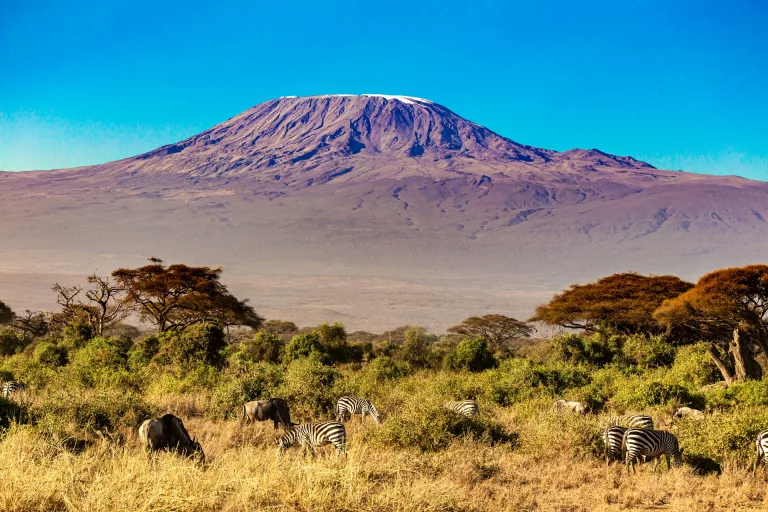
View of Mt Kilimanjaro from Amboseli National Park in Kenya/Stephan Bechert/Unsplash
The natural wonder: Africa’s highest mountain
Mount Kilimanjaro rises dramatically above northern Tanzania, its snow-capped summit contrasting with the plains below. Attracting trekkers from around the world, it has become one of Africa’s defining adventure destinations.
But you don’t have to climb all the way to Uhuru Peak to experience the mountain. Tanzania’s tourism board highlights both summit expeditions and guided day hikes through the foothills.
The surrounding region also provides a glimpse into the cultures, farms and landscapes that exist beneath Africa’s highest peak.
Things to do around Kilimanjaro
Trek the mountain. Multi-day routes take hikers through several ecological zones, from cultivated foothills and montane forest to high-altitude landscapes and the summit.
Take a shorter hike. Guided day hikes allow visitors to experience the lower slopes and forests without committing to a full summit expedition.
Visit a coffee farm. The fertile slopes around Kilimanjaro are associated with coffee cultivation, and farm visits can introduce travellers to local growing, harvesting and preparation traditions.
Discover Chagga culture. Cultural excursions around the mountain can include visits to communities, traditional food, farming areas and historic sites associated with the Chagga people.
Visit waterfalls. Several waterfalls in the foothills can be reached on guided excursions, providing an alternative to the high-altitude trekking experience.
Combine the mountain with safari. Kilimanjaro works particularly well as part of a northern Tanzania itinerary, allowing travellers to combine mountain scenery with destinations such as Tarangire, Serengeti and Ngorongoro.
Simien Mountains, Ethiopia
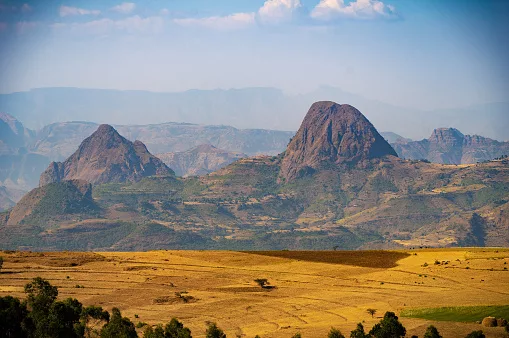
Breathtaking View Of Simien Mountains National Park, Ethiopia/By: Emad aljumah/Getty Images
The natural wonder: the Ethiopian highlands
In northern Ethiopia, millions of years of erosion have carved the Simien Mountains into a landscape of jagged peaks, deep valleys and sheer escarpments. Some cliffs plunge around 1,500m, creating a landscape that UNESCO describes as being of exceptional natural beauty.
The mountains are also a wildlife destination. The UNESCO-listed park protects species including the endemic Walia ibex and gelada, as well as the endangered Ethiopian wolf.
For travellers, this makes the Simiens one of Africa’s most distinctive combinations of dramatic scenery and high-altitude wildlife.
Things to do around the Simien Mountains
Go trekking. Multi-day hikes are the classic way to experience the mountains, taking visitors across plateaus, valleys and escarpments.
Look for geladas. Troops of these distinctive Ethiopian highland primates can often be encountered while trekking.
Search for Walia ibex. The rare mountain goat is endemic to the Simien Mountains, making a sighting particularly special.
Look for Ethiopian wolves. They are much more elusive, but the species is another of the park’s conservation highlights.
Visit dramatic viewpoints. The escarpments provide enormous views across the surrounding valleys and highlands.
Tackle Ras Dashen. Ethiopia’s highest mountain rises within the Simien massif, offering an ambitious objective for experienced trekkers.
Experience rural life. The mountains are not an untouched wilderness without people. Traditional agricultural and pastoral communities have lived in the wider landscape for generations, adding a cultural dimension to trekking.
Add Gondar to the itinerary. The historic city of Gondar is a natural companion to a Simien trip, providing an opportunity to explore Ethiopia’s castles, churches and royal history.
The Namib Desert, Namibia
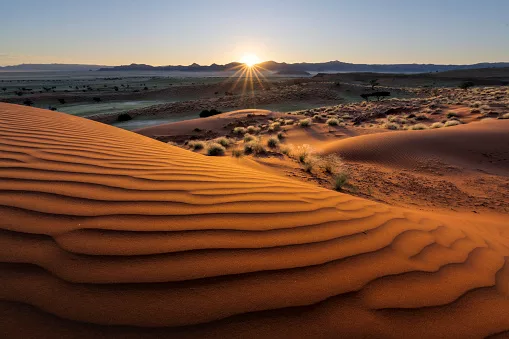
Namib desert at sunrise, Namibia/By: © Marco Bottigelli/Getty Images
The natural wonder: the Namib
The Namib is one of the world’s oldest deserts, stretching along Namibia’s Atlantic coast. For many travellers, its most famous landscape is around Sossusvlei, where enormous red dunes rise around white clay pans and the skeletal trees of Deadvlei.
Namibia’s tourism board describes the Sossusvlei and Namib-Naukluft area as a place of towering dunes, ancient camelthorn trees and surreal desert scenery.
The landscape is so dramatic that simply being there becomes an experience — but there is plenty to do beyond taking photographs.
Things to do around Sossusvlei
Climb a dune. Tackling the towering dunes around Sossusvlei is one of Namibia’s signature adventures. Big Daddy is the best-known challenge, while other dunes offer shorter climbs.
Visit Deadvlei. The stark white pan, red dunes and ancient dead camelthorn trees create one of Africa’s most recognisable landscapes.
Explore Sesriem Canyon. The narrow canyon offers a striking change from the vast open dunes and can be explored on foot.
Watch the desert from above. Hot-air ballooning is available through selected operators, offering an aerial perspective over the dunes and surrounding desert.
Go on a desert excursion. Guided drives and walks reveal the plants, reptiles, insects and small animals adapted to the Namib’s extreme conditions.
Spend time under the stars. Away from major cities, the desert provides exceptional opportunities for stargazing.
Extend the journey. Namibia’s wider desert landscape can lead naturally into destinations such as Swakopmund, where visitors can try sandboarding, quad biking and kayaking, or into Damaraland and the Skeleton Coast.
Ngorongoro Crater, Tanzania
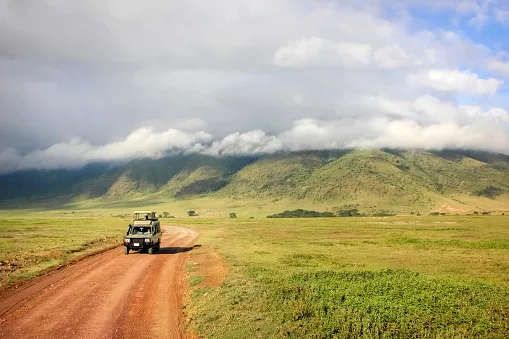
Safari in Ngorongoro Crater National Park, Tanzania/By: Delbars
iStock
The natural wonder: a volcanic caldera
The Ngorongoro Crater is the defining feature of the Ngorongoro Conservation Area, a vast volcanic caldera surrounded by steep walls and containing grasslands, woodland and wetlands.
The crater is the world’s largest intact and unfilled volcanic caldera and has become one of Tanzania’s most famous wildlife destinations.
Yet the crater is only part of the wider conservation area, where wildlife, dramatic volcanic landscapes, archaeology and Maasai culture overlap.
Things to do around Ngorongoro
Take a crater game drive. This is the headline experience, with the crater floor supporting large numbers of herbivores and predators. The descent through the surrounding highland forest is part of the experience.
Look for black rhino. The crater is one of the places where visitors may encounter this endangered species.
Explore the crater rim. The highlands surrounding the crater offer spectacular viewpoints and a very different perspective of the enormous caldera.
Visit Maasai communities. Cultural experiences in the wider conservation area can introduce visitors to local traditions, pastoralism and contemporary community life.
Explore other volcanic landscapes. The conservation area includes attractions such as Empakai and Olmoti craters, offering hiking and scenery away from the main crater.
Discover the area’s archaeology. The wider conservation area is significant for human history, adding another layer to a destination better known for wildlife.
Combine it with the Serengeti. Ngorongoro fits naturally into a northern Tanzania safari, allowing travellers to move from the volcanic highlands into the vast plains of the Serengeti.
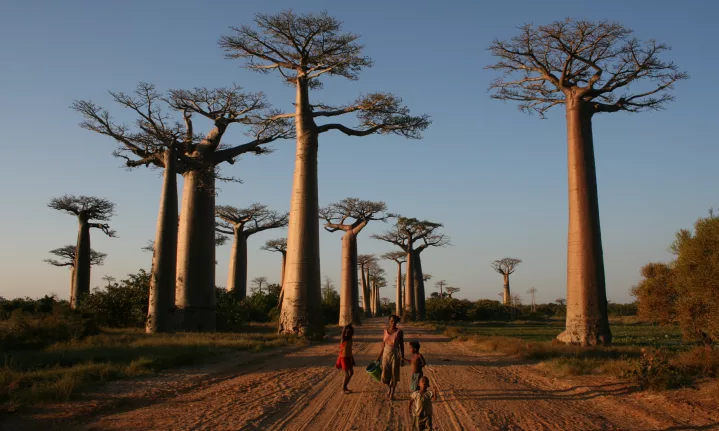
Avenue of the Baobabs, Madagascar
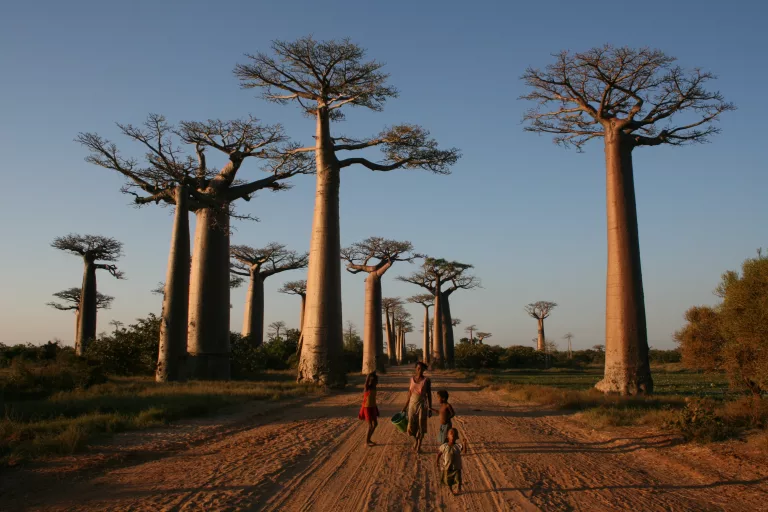
Walking the Avenue of the Baobabs/Gavinevans/Wikimedia Commons
The natural wonder: Madagascar’s ancient trees
Near Morondava in western Madagascar, a dusty road lined with enormous baobabs has become one of the country’s most recognisable landscapes.
The Avenue of the Baobabs is particularly striking at sunrise and sunset, when the silhouettes of the trees stand against the changing sky. The surrounding region also provides access to forests, wildlife and other extraordinary landscapes.
Rather than being a conventional national park or mountain destination, the Avenue is a reminder that sometimes a collection of trees can be enough to put an entire region on the map.
Things to do around the Avenue of the Baobabs
Visit at sunset. The late afternoon is the classic time to see the Avenue, when the baobabs become silhouettes against the sky.
Return at sunrise. An early-morning visit offers a quieter atmosphere and a completely different quality of light.
See the Lovers’ Baobabs. These two intertwined trees have become another memorable stop in the wider Morondava area.
Explore Morondava. Spend time in the coastal town rather than treating it purely as a gateway, with opportunities to experience local food, markets and Menabe culture.
Visit Kirindy Forest. The nearby forest provides a chance to see some of Madagascar’s unusual wildlife, including lemurs and the elusive fossa.
Extend the trip to Tsingy de Bemaraha. Travellers with more time can continue towards the extraordinary limestone pinnacles of Tsingy de Bemaraha, creating a wider western Madagascar adventure.
Explore the region by river. Longer itineraries can incorporate journeys along western Madagascar’s rivers, adding another perspective on the country’s remote landscapes.
One natural wonder, many ways to travel
What makes these destinations interesting is that the natural wonder is rarely the whole story.
Victoria Falls brings travellers to the Zambezi, but the river becomes an adventure playground. The Okavango’s seasonal waters determine how visitors explore the wilderness. Kilimanjaro attracts climbers, yet its foothills reveal coffee farms and communities. The Simien Mountains combine dramatic escarpments with rare wildlife, while the Namib turns dunes, silence and starlit skies into the attraction itself.
At Ngorongoro, a volcanic crater has created a natural wildlife sanctuary, while Madagascar’s Avenue of the Baobabs demonstrates how a landscape of ancient trees can become a destination in its own right.
Follow us on social media for more travel news, inspiration, and guides. You can also tag us to be featured.
Instagram | Facebook | Twitter | Spotify
ALSO READ: