

Africa’s great wildlife parks are often associated with dry savannah, dusty tracks and dramatic predator sightings. But in some protected areas, the real story begins with water.
In these parks, water isn’t simply something animals visit to quench their thirst. It shapes the landscape, wildlife movements and ways travellers experience the wilderness.
From Zambia’s vast wetlands to Tanzania’s Rufiji River and Uganda’s wildlife-filled Kazinga Channel, these are eight African national parks where water takes centre stage.
1. Nyerere National Park, Tanzania
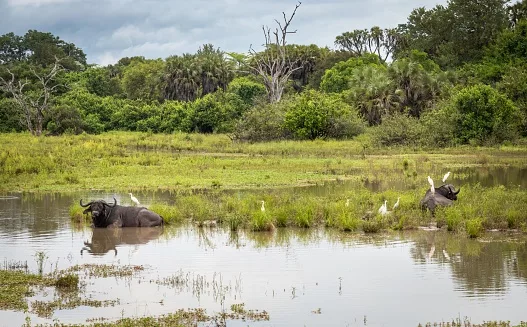
Cape buffalo with cattle egret in a lake in Nyerere National Park (Selous Game Reserve) in southern Tanzania/By: Andy Soloman/Getty Images
Follow the Rufiji River
The Rufiji River is the defining feature of Nyerere National Park, flowing through a vast landscape of floodplains, channels and oxbow lakes. The river system creates a constantly changing mosaic of water and woodland, with wildlife gathering along its banks and around its lakes.
A boat safari offers a different perspective from the traditional game drive. Travellers can drift past hippos and crocodiles, watch elephants and other animals coming to drink, and look for fish eagles, kingfishers and other water-associated birds.
The water also plays an important role in the park’s ecology. Seasonal changes in rainfall and river levels influence how wildlife moves between the floodplains, wetlands and surrounding woodlands.
2. Lower Zambezi National Park, Zambia
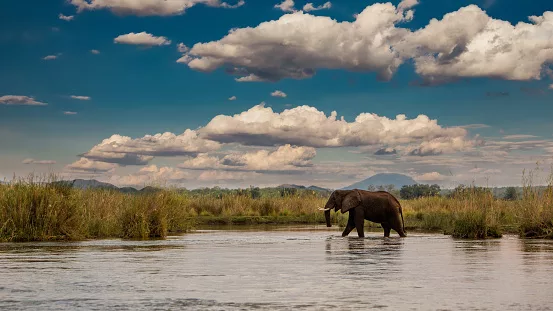
Elephant walking through Lower Zambezi National Park/By: Thomas Retterath/iStock
Safari along the Zambezi
The Zambezi River forms the northern boundary of Lower Zambezi National Park, creating a wildlife-rich corridor of channels, riverine woodland and floodplain. Much of the park’s wildlife is concentrated along this valley, where elephants, buffalo, waterbuck and other animals gather around the water.
The river also changes how visitors experience the park. Guided canoe trips follow channels and islands, bringing travellers close to wildlife from the water rather than from a safari vehicle. Hippos, elephants, buffalo and other animals can be seen along the banks, while fishing and boating are also popular activities.
That combination makes Lower Zambezi particularly interesting for travellers who want the river to be part of the safari itself, rather than simply a scenic backdrop.
3. Mana Pools National Park, Zimbabwe
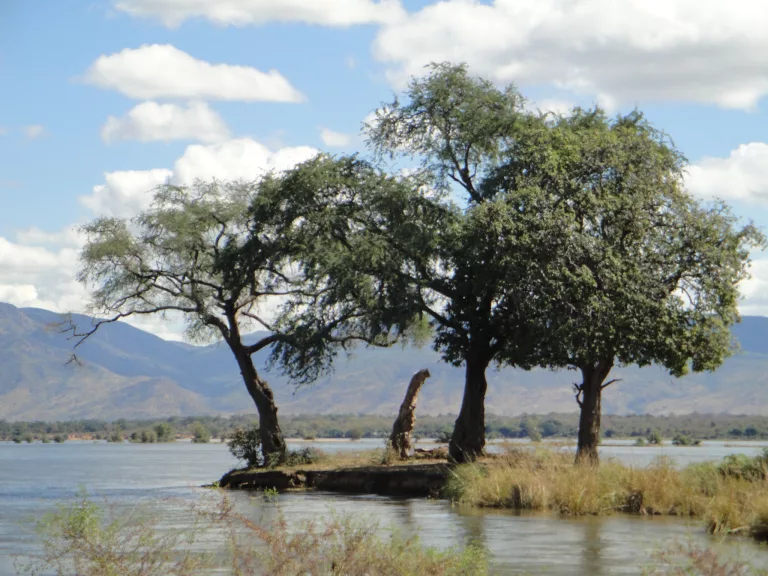
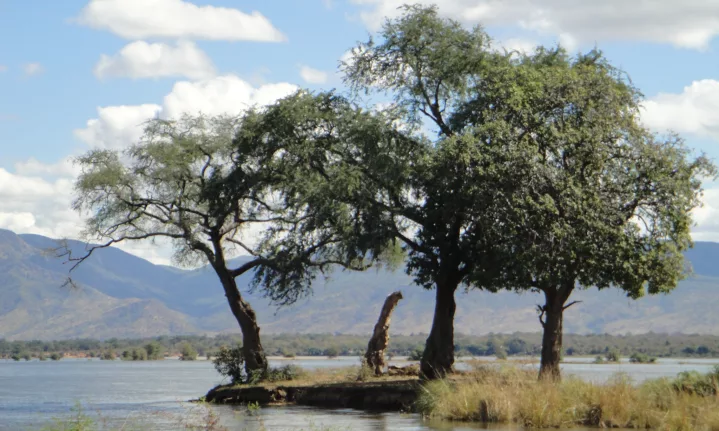
Island in the Zambezi River at Mana Pools National Park/Babakathy, CC0, via Wikimedia Commons
Where the Zambezi created the landscape
The name gives away the importance of water. Mana Pools’ famous pools are former channels of the Zambezi River, while the park’s floodplains are shaped by the seasonal movement of water and sediment.
The Zambezi and its floodplains support large concentrations of wildlife, particularly during the dry winter months. Elephants, buffalo, zebra, waterbuck and other herbivores gather in the valley, followed by predators such as lions and hyenas. Hippos and Nile crocodiles are closely associated with the river and pools.
More than 450 bird species have also been recorded in the wider World Heritage property, making the river and floodplain important not only for large mammals but for birdlife too.
Mana Pools shows how a river can do more than provide drinking water. Over thousands of years, the Zambezi has helped create the very landscape that visitors come to see.
4. Kafue National Park, Zambia
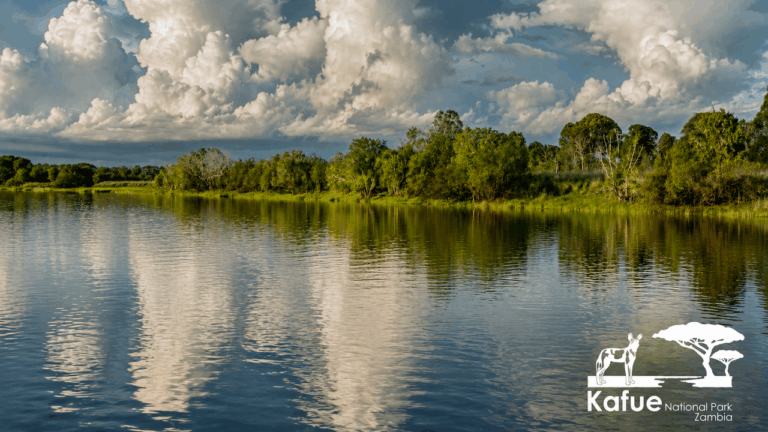
Image: Supplied
A landscape that changes with the water
Kafue is enormous, and its waterways help explain the extraordinary variety of habitats found within the park. The Kafue River cuts through the landscape, while tributaries, wetlands, floodplains and Lake Itezhi-Tezhi add further layers of water-dependent habitat.
The Busanga Plains in the north provide one of the clearest examples. During the rainy season, the plains become a vast seasonal wetland, with water covering large sections of the landscape. As the water recedes, rich grasslands emerge and attract large numbers of herbivores and their predators.
Red lechwe, sitatunga and other water-associated species are among the wildlife found around Kafue’s wetlands, while hippos and crocodiles inhabit its waterways. The park also offers boat excursions, giving visitors another way to explore its water-rich habitats.
Kafue is therefore a particularly good example of how the same landscape can look dramatically different depending on the season.
ALSO READ:
5. Lake Manyara National Park, Tanzania
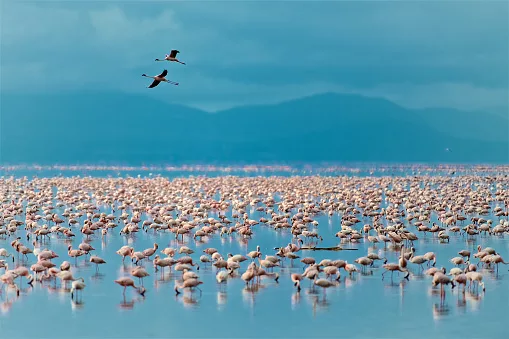
Flamingos in Lake Manyara In Tanzania/By: tonyzhao120/iStock
A lake surrounded by wildlife
Lake Manyara sits at the heart of this compact Tanzanian national park, creating a striking contrast with the surrounding Rift Valley landscape. The park combines the alkaline lake with wetlands, groundwater forests and other habitats.
The lake is especially important for birdlife. Lesser flamingos can gather in large numbers to feed in its waters, while the broader park supports hundreds of bird species. Hippos are also associated with the lake’s shoreline.
Water isn’t the only attraction here. Lake Manyara is also known for its tree-climbing lions, elephants and groundwater forest, making it possible to experience several distinct ecosystems within a relatively small area.
For travellers interested in the relationship between lakes, forests and wildlife, Lake Manyara offers a very different experience from the vast river systems of southern Africa.
6. Akagera National Park, Rwanda
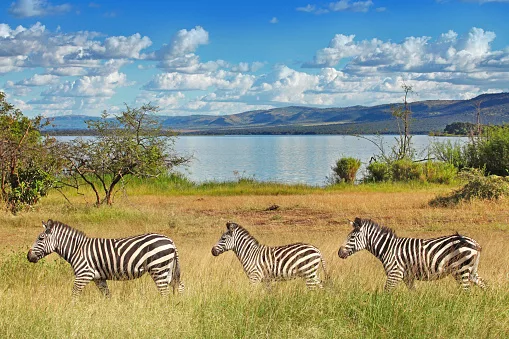
Three Zebras at Akagera National Park/By: narvikk/
iStock
Lakes, wetlands and papyrus swamps
Akagera is one of Rwanda’s most water-rich wildlife destinations, with savannah, woodland, wetlands and a network of lakes. The Akagera River runs along the park’s eastern boundary and feeds into a chain of lakes, including Lake Ihema.
Lake Ihema is particularly well suited to experiencing wildlife from the water. Boat trips bring visitors close to hippos and Nile crocodiles, while waterbirds gather around the lake and its islands.
The wetlands are also important habitat for birdlife, including the rare shoebill, while papyrus swamps form another distinctive part of Akagera’s landscape.
A boat trip here adds a different dimension to a traditional safari, with the scenery and wildlife unfolding from the lake rather than a game-drive vehicle.
7. Bwabwata National Park, Namibia
Two rivers shape one park
Bwabwata is an unusual Namibian national park because water defines both its western and eastern edges. The Okavango River lies to the west, while the Kwando River forms the eastern boundary. Between them are woodlands, floodplains and old drainage lines.
The rivers support a different suite of wildlife from the dry landscapes more commonly associated with Namibia. Hippos, red lechwe, sitatunga and common reedbuck occur along the waterways, while elephants and buffalo can gather in large numbers. The park is also an important refuge for African wild dogs.
Its floodplains are lined with reeds and papyrus, creating habitat for species such as wattled cranes and Pel’s fishing owl. Tourism facilities on or near the Kwando and Okavango rivers also make it possible to experience these waterways as part of a stay.
Bwabwata is a reminder that even one of Africa’s driest countries has landscapes where rivers completely transform the wildlife experience.
8. Queen Elizabeth National Park, Uganda
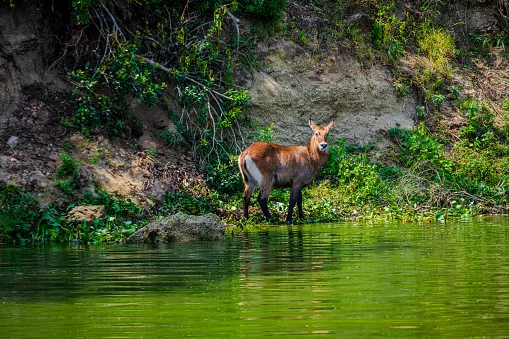
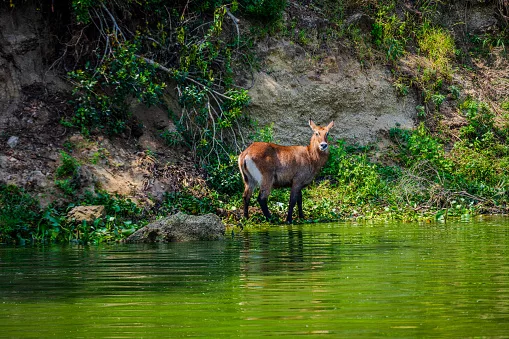
A waterbuck at Queen Elizabeth National Park/By: Emad aljumah/Getty Images
Cruise through the Kazinga Channel
The Kazinga Channel is one of Queen Elizabeth National Park’s defining features. The natural waterway links Lake George with Lake Edward and creates a major wildlife corridor through the park.
Its shores attract hippos, elephants, buffaloes and crocodiles, while the surrounding wetlands support a remarkable variety of waterbirds. A boat cruise provides an opportunity to see these animals from the channel itself, often with wildlife concentrated along the shoreline.
The channel is part of a much larger water-rich landscape that includes the two lakes, wetlands and other aquatic habitats. These environments sit alongside Queen Elizabeth’s savannahs and forests, creating the variety of ecosystems for which the park is known.
For visitors, the boat experience turns the waterway into more than scenery. It becomes the route through which the park is explored.
When water becomes the safari
These parks show that African wildlife experiences don’t always have to revolve around dusty game-drive tracks.
In Nyerere, the Rufiji River creates a network of channels and floodplains. In Mana Pools and Lower Zambezi, the Zambezi shapes both the landscape and the safari experience. Kafue changes dramatically as seasonal wetlands fill and empty, while Lake Manyara and Akagera demonstrate how lakes can become wildlife magnets.
Further south, Bwabwata’s rivers bring water-dependent species into Namibia’s dry landscape, while Uganda’s Kazinga Channel offers one of Africa’s most distinctive wildlife cruises.
Follow us on social media for more travel news, inspiration, and guides. You can also tag us to be featured.
Instagram | Facebook | Twitter | Spotify
ALSO READ:
Luna Namib Collection: The luxury desert escape designed around the moon