





From freshly roasted beans to three carefully prepared servings, Ethiopia’s traditional coffee ceremony transforms an everyday drink into a celebration of hospitality, community and cultural heritage.
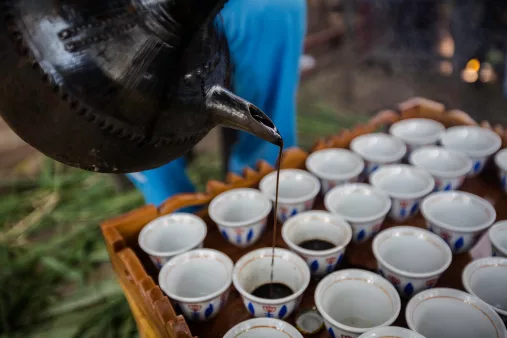
The traditional coffee in Ethiopia/By: Anthony Pappone/Getty Images
In a world of takeaway cups and hurried mornings, Ethiopia offers a different way to enjoy coffee. Here, preparing and sharing a cup can become a meaningful ritual, bringing family, friends and neighbours together.
Known as buna in Amharic, coffee holds a special place in Ethiopian culture. The traditional ceremony celebrates not only the drink itself but also the values of welcome, respect and connection. From roasting the beans to serving the final cup, every stage invites people to slow down and enjoy the moment.
Where coffee becomes a ceremony
Ethiopia is widely recognised as the birthplace of Arabica coffee, which grows naturally in its southwestern highlands. Coffee has long been part of the country’s cultural and social life, becoming an important feature of gatherings and hospitality.
The familiar story of Kaldi, a goatherd who supposedly discovered coffee after noticing his animals’ energetic behaviour, remains popular folklore rather than proven history.
An invitation to slow down
The ceremony offers a welcome contrast to modern coffee culture. Instead of preparing a drink in seconds, the host takes time to roast, grind and brew the beans while guests gather and talk.
The ritual can take place in everyday homes or during special occasions. Although customs vary between communities and households, its central purpose remains the same: bringing people together.
From green beans to fragrant brew
The ceremony begins with raw green coffee beans, which are prepared in front of the guests. This makes the process itself part of the experience.
Roasting and grinding
The beans are roasted in a shallow pan over a heat source until they darken and release their rich aroma. The host may bring the pan closer to guests so they can appreciate the fragrance.
Incense is often burned alongside the roasting coffee, filling the room with a distinctive blend of scents. Fresh grass or flowers may also be arranged on the floor to create a welcoming setting.
Once roasted, the beans are ground, traditionally using a mortar and pestle, before being brewed in a jebena, a distinctive clay coffee pot.
Brewing the traditional way
The coffee is heated in the jebena before being poured into small, handleless cups. Skilled hosts often lift the pot high above the cups, creating a steady stream without spilling.
The result is more than a freshly brewed drink. The preparation, aromas and careful serving make coffee a shared experience in which guests participate simply by being present.
Three rounds, one shared experience
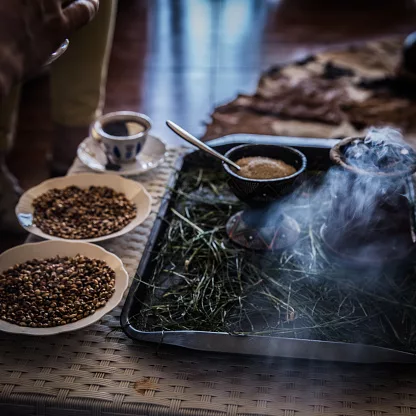
Traditional coffee ceremony in Ethiopia/By: janiecbros/Getty Images
A traditional Ethiopian coffee ceremony commonly includes three servings known as abol, tona and baraka. Each round is prepared using the remaining coffee grounds, with additional water added for subsequent brews.
Abol, tona and baraka
The first serving, abol, is generally the strongest. It begins the gathering and introduces guests to the freshly prepared coffee.
The second round, tona, is lighter, allowing conversation to continue as the gathering settles into a comfortable rhythm.
The final serving, baraka, is associated with blessing. It brings the ceremony to a close and reflects the goodwill shared between host and guests.
Together, the three rounds turn coffee drinking into an occasion that encourages people to stay, talk and enjoy one another’s company rather than rushing away after a single cup.
ALSO READ:
The language of Ethiopian hospitality
The ceremony’s importance extends beyond the coffee itself. Offering a visitor a place in the gathering is a gesture of welcome, while preparing and serving the drink demonstrates care and generosity.
More than a beverage
Family members exchange news, neighbours discuss everyday matters, and friends spend time together. Younger generations also learn by watching the preparation and participating in the customs.
Coffee is often accompanied by incense and snacks such as popcorn or kolo, a traditional roasted-grain snack. These small details add to the welcoming atmosphere.
Practices vary across Ethiopia’s diverse communities, and the ceremony may carry additional spiritual significance in particular settings. Its enduring social role, however, is widely recognised.
A living tradition in a changing world
Modern cafés and coffee machines have transformed how people enjoy coffee around the world, but Ethiopia’s traditional ceremony continues to connect everyday life with cultural heritage.
For travellers, experiencing a ceremony offers a more intimate glimpse of Ethiopian life than simply ordering a drink in a café. It reveals the care behind the preparation and the importance of sharing time with others.
Visitors invited to participate can follow their host’s lead, accept refreshments graciously and allow the gathering to unfold at its own pace.
The ceremony has also attracted international cultural heritage attention. In February 2025, UNESCO reported that Ethiopia was preparing a nomination for the traditional coffee ceremony for its Representative List of the Intangible Cultural Heritage of Humanity. The report concerned the nomination process, not a confirmed inscription.
The lasting meaning of a cup of coffee
Coffee has travelled far beyond Ethiopia, becoming one of the world’s most popular drinks. Yet the traditional ceremony shows how a familiar beverage can carry a much deeper meaning.
Roasting becomes a moment of anticipation, brewing becomes an act of care, and serving becomes an expression of hospitality. The experience is shaped as much by the people gathered around the cups as by the coffee itself.
In Ethiopia, the most memorable part of the ceremony may not be the first sip, but the conversations, connections and traditions shared before the final cup is served.
Follow us on social media for more travel news, inspiration, and guides. You can also tag us to be featured.
Instagram | Facebook | Twitter | Spotify
ALSO READ:
Muddy boots and masterclasses are the new mark of luxury travel