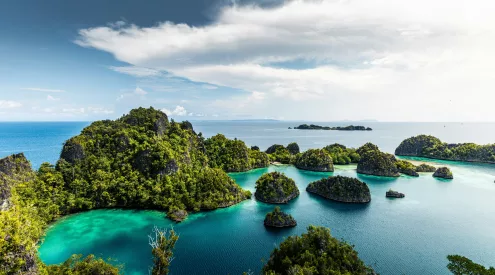


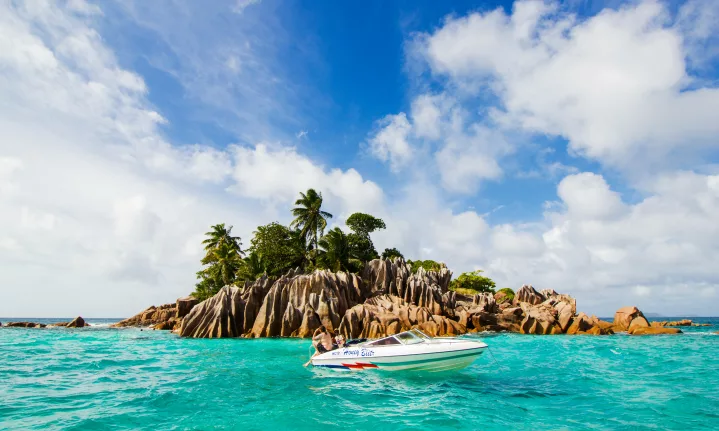
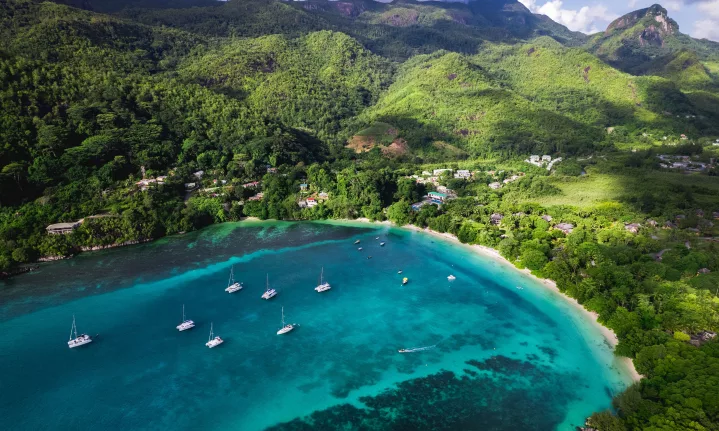
The Seychelles looks almost unreal from the shore, with turquoise water, granite boulders and beaches that seem to belong on a postcard.
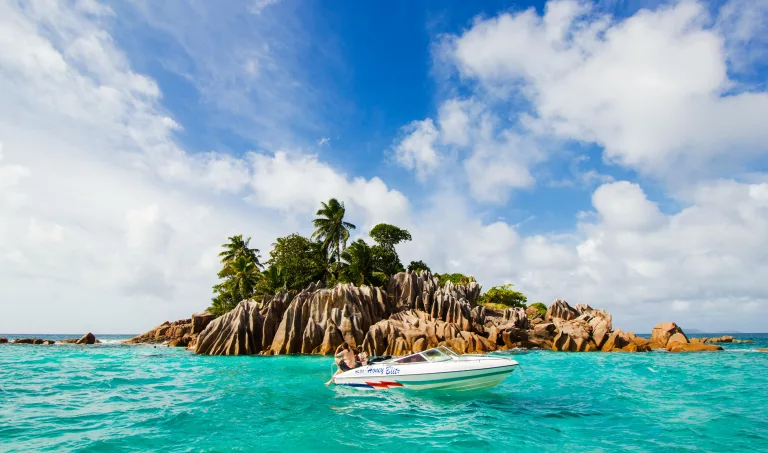
Seychelles / Alessandro Russo / Unsplash
But slip beneath the surface and another world comes into view. Across the archipelago’s 115 islands, underwater adventures range from a quick snorkel in a sheltered bay to dives in remote atolls where the ocean feels endless.
You don’t need to be an experienced diver to appreciate it. Sometimes, all it takes is a mask, a snorkel and the curiosity to look a little closer.
Mahé: A different view of the island
Most visitors arrive in Mahé, making it an easy place to begin exploring the Seychelles underwater. Beneath the waves, granite boulders create a landscape of rocky passages and sheltered spaces where tropical fish gather.
Just offshore, Sainte Anne Marine National Park protects a collection of islands and surrounding marine habitats. Established in 1973, it was the first marine national park in the Indian Ocean. Shallow reefs and seagrass beds make it a rewarding stop for snorkellers, while glass-bottom boat trips offer a glimpse of the underwater scenery without getting wet.
Praslin and La Digue: Beyond the postcard beaches
Praslin and La Digue have no shortage of beautiful beaches, but the scenery doesn’t end where the sand meets the sea.
Around Praslin, snorkelling trips offer opportunities to explore reef habitats and spot tropical fish. Nearby Curieuse Island is known for it’s giant Aldabra tortoises, giving visitors a chance to combine wildlife encounters on land with time by the water.
La Digue’s sheltered bays can also be ideal for snorkelling when conditions are right. The sea isn’t always as calm as it looks, though, and currents can make certain spots dangerous. Local guides can point you towards suitable locations and help you make the most of your time in the water.
Aldabra: Into the wild
Far from the main tourist islands, Aldabra Atoll feels a world away from the familiar Seychelles beach holiday. This UNESCO World Heritage Site is one of the world’s largest raised coral atolls, best known for it’s giant tortoises and remarkable natural environment.
Below the surface, it’s lagoon and surrounding reefs support a range of marine life. Access is restricted, and visiting requires specialist planning, so this isn’t somewhere to add casually to a beach itinerary.
Diving the Outer Islands
For divers prepared to venture further, the Outer Islands offer a more adventurous side of the Seychelles. Around the Amirantes group, coral formations and steep underwater drop-offs open onto the deep Indian Ocean.
Depending on the site and conditions, divers may encounter reef sharks, eagle rays, turtles and schools of fish moving through the blue. Many sites require a liveaboard or specialist dive trip, making them better suited to travellers with the experience and time to explore beyond the main islands.
When to go
The Seychelles is a year-round destination, but conditions change with the seasons. April, May, October and November are often favourable for diving, when calmer seas can improve visibility.
The southeast trade winds, generally strongest from May to September, can make some coastlines rougher. The northwest monsoon, usually from November to March, brings different wind and rainfall patterns.
Conditions vary between islands and dive sites, so check with local operators before booking. Marine wildlife sightings are never guaranteed, which is part of the experience of exploring a natural environment.
Protecting the world below
It’s easy to focus on the beauty of the Seychelles’ underwater world, but coral reefs face pressure from warming seas, pollution and physical damage.
Visitors can help by choosing responsible operators, keeping their distance from turtles and other wildlife, and never touching or standing on coral. Avoid feeding fish, use suitable snorkelling equipment and follow local guidance on currents and protected areas.
The idea is simple: leave the reef as you found it. These ecosystems are more than a backdrop for holiday photographs. They support marine life and help protect the islands themselves.
A different side of the Seychelles
The Seychelles’ beaches may be what first draws you in, but there’s a whole other world waiting below the surface. From Mahé’s granite formations to the remote wilderness of Aldabra, each destination offers a different way to experience the archipelago.
You don’t need to dive deep or travel far to appreciate it. Float above a reef, watch fish weave through the coral and let your eyes adjust to the movement below. For a moment, the beach, the boats and everything happening on shore fade into the background.
And suddenly, the Seychelles is no longer just a beautiful place to swim. It’s a living world worth protecting, long after you’ve dried off and returned to the sand.
Follow us on social media for more travel news, inspiration, and guides. You can also tag us to be featured.
Instagram | Facebook | Twitter | Spotify
ALSO READ: