




Imagine looking up at the night sky and spotting a green star. It sounds like something from science fiction, but astronomers studying the remnants of dead stars have identified a white dwarf that could appear green to the human eye.
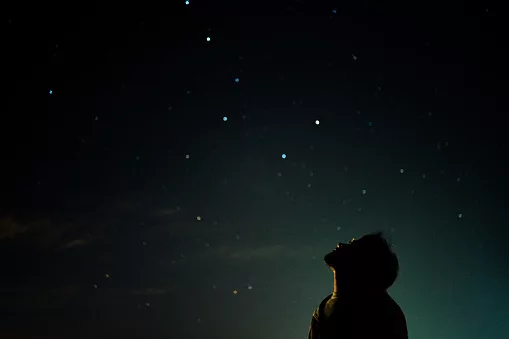
Image used for illustrative purposes/By: Mariyariya/Getty Images
White dwarfs are the incredibly dense remains of stars that have exhausted their nuclear fuel. Although most stars appear orange, white or blue, some white dwarfs have unusual atmospheric chemistry that can produce surprising colours, according to research led by astrophysicist Mark Hollands of the University of Warwick in England.
A star with an unusual colour
Hollands and his colleagues examined data from 151 known white dwarfs within about 65 light-years of Earth. By analysing the stars’ light spectra, which reveal their chemical composition, researchers were able to calculate what these distant objects might look like to human eyes.
One white dwarf stood out for its unusual green appearance. Its atmosphere contains elements including calcium, sodium and lithium, offering clues to the material that has accumulated on its surface.
These elements may have originated in rocky bodies from a former planetary system. When an asteroid or other object ventures too close to a white dwarf, the star’s intense gravity can tear it apart. The resulting debris falls onto the star, leaving behind chemical traces that astronomers can study.
This makes white dwarfs valuable windows into the past. By analysing the elements in their atmospheres, scientists can investigate the composition of planetary material that may have existed around other stars.
ALSO READ:
A glimpse into the lives of distant worlds
The greenish star was not the only unusual object in the sample. Hollands also identified a white dwarf whose calculated colour was close to salmon pink, possibly because of a high concentration of carbon molecules.
Although these colours cannot be observed directly with the naked eye from Earth, they offer a more tangible way to imagine objects that would otherwise remain little more than points of light in the vastness of space.
The research, published in RAS Techniques and Instruments, also offers a useful way to classify white dwarfs by temperature, atmospheric properties, and colour.
The findings are based on existing astronomical data rather than a discovery of a previously unknown star. Nevertheless, they offer a fresh perspective on how scientists interpret the light of these stellar remnants.
More colourful discoveries could lie ahead
Astronomers expect new spectroscopic surveys to expand the number of white dwarfs whose light has been analysed in detail. Hollands estimates that the available sample could grow tenfold, potentially revealing more stars with unusual colours.
For now, the possibility of a green star is a reminder that the universe is full of surprises. Even the remains of long-dead stars can preserve clues to the worlds that once orbited them, offering astronomers a way to reconstruct planetary histories from light-years away.
Source: CNN, reporting on research published in RAS Techniques and Instruments.
Follow us on social media for more travel news, inspiration, and guides. You can also tag us to be featured.
Instagram | Facebook | Twitter | Spotify
ALSO READ:
20 Green sea turtles return to the ocean after suspected smuggling attempt in Bali