




A mountain on the border between Germany and Austria could be heading towards a major rockslide, with scientists warning that up to 400,000 cubic metres of rock and debris could break away from the summit.
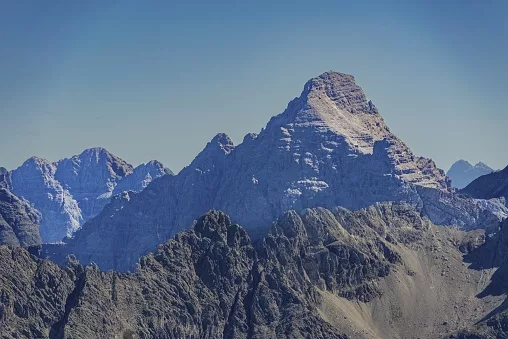
Hochvogel mountain/By: imageBROKER/Walter G. Allgöwer/Getty Images
Hochvogel, a 2,592-metre peak in the Allgäu Alps, has been under close scientific observation for years as a large fissure continues to widen. Around 2,000 cubic metres of rock broke away from the mountain in June, raising further concerns about its stability, according to Euronews.
Scientists monitor widening cracks
The main fissure on Hochvogel dates back to the 19th century and has grown considerably over time. In 2024, researchers at the Technical University of Munich (TUM) described the crack as up to six metres wide, 35 metres long and approximately 60 metres deep.
Scientists have monitored the mountain for 12 years, with permanently installed sensors and measuring equipment in place since 2018. More than 30 sensors now track movement across the summit to millimetre precision, transmitting data several times an hour.
In spring, instruments recorded movement of up to five millimetres a week, a rate researchers consider unusually rapid compared with the average movement of around 1.8 millimetres a year recorded across the Alps.
A newer crack along the southwest ridge, known as Fissure 6, has emerged as a particular concern because it is experiencing some of the highest movement rates.
A team led by geology professor Michael Krautblatter of TUM returned to the summit in early October to inspect the terrain and monitoring equipment.
ALSO READ:
Expedition heads to remote Pacific island in search for Amelia Earhart’s missing plane
Heavy rainfall and snowmelt could accelerate the movement
Researchers estimate that between 250,000 and 400,000 cubic metres of rock and debris could eventually break away from Hochvogel.
Extreme weather is believed to be one of the factors contributing to the mountain’s instability. Heavy rainfall, thunderstorms and melting snow can alter conditions within the rock, potentially accelerating movement along existing fractures.
Johannes Leinauer, a member of the TUM research team, told German broadcaster Deutschlandfunk that the scientists had observed a clear link between intense precipitation events and changes in the mountain’s movement.
He also warned that thunderstorms are becoming more frequent and intense as a result of climate change, potentially influencing how often rockfalls occur and how quickly they develop.
Early-warning systems help track the danger
Researchers use a network of sensors and laser-scanning technology to monitor changes in the mountain and identify warning signs before a potential collapse.
Similar early-warning systems are operating at only two other locations, according to Krautblatter: Partnach Gorge and Höllental Gorge in Germany.
The aim is to better understand the signals that precede rockslides, which can sometimes emerge only hours or days before an event.
Hochvogel has long been closed to climbers approaching from the Austrian side, while the ascent from Germany has remained open, according to Euronews. The monitoring work is intended to help scientists and authorities assess the evolving risk and determine when access restrictions may be necessary.
As weather patterns and conditions in the Alps continue to change, researchers hope that more advanced monitoring will help authorities identify dangerous areas and respond before a major rockslide occurs.
Follow us on social media for more travel news, inspiration, and guides. You can also tag us to be featured.
Instagram | Facebook | Twitter | Spotify
ALSO READ:
Australia creates three new national parks to protect threatened wildlife