

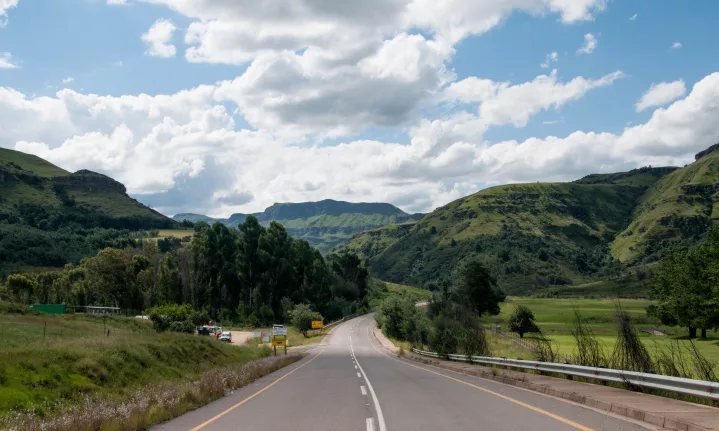
What if you planned a road trip backwards? Instead of choosing where to go and figuring out what to eat when you arrive, start with the ingredient.
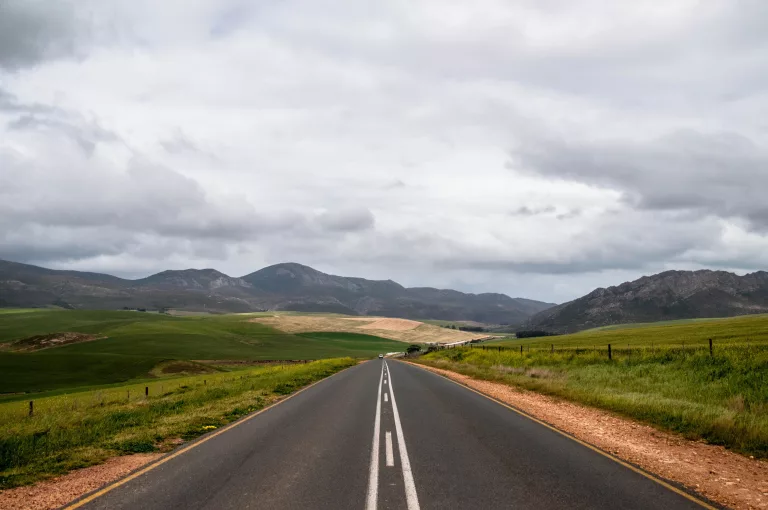
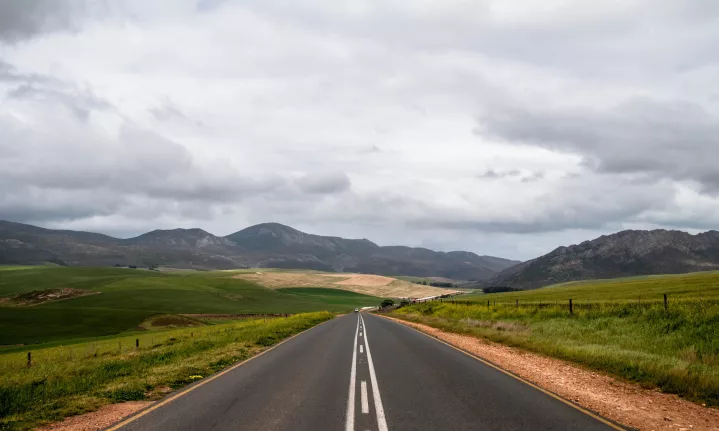
A picturesque road in South Africa surrounded by vast fields and mountains under a cloudy sky / Zak H / Pexels
Rooibos belongs to the dry mountains of the Cederberg. Oysters have become synonymous with the lagoon town of Knysna. Olive groves have transformed parts of the Swartland into a destination for oil and table olives, while Karoo lamb is so closely tied to the semi-desert landscape that it has been recognised as a geographical indication. Rather than choosing a destination and figuring out what to eat when you arrive, turn the journey around. Pick an ingredient, follow it to its source and let the road unfold from there.
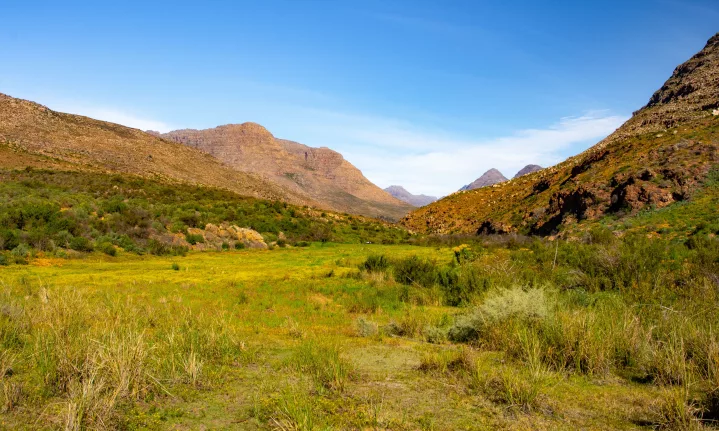
Rooibos – Cederberg
There are few ingredients more distinctly South African than rooibos, and there is nowhere better to understand it than the Cederberg.
The indigenous Aspalathus linearis grows naturally in the rugged mountains around Clanwilliam, where the region’s climate and soils provide the conditions it needs. Rooibos was traditionally harvested and used by Khoisan communities before becoming a commercial crop in the early 20th century.
Clanwilliam remains at the heart of rooibos country. The Cederberg tourism authority describes the region as the only place where the tea is cultivated commercially, while local experiences offer visitors the chance to see the plant growing and learn more about its journey from field to cup.
Make Clanwilliam your base, then take a rooibos farm tour or visit a local tea experience before heading deeper into the mountains. There is plenty to do once the cup is empty: hiking, rock climbing, mountain biking and exploring ancient San rock art are all part of the Cederberg experience.
Come for the rooibos, stay for the landscape. The dry mountains, strange sandstone formations and enormous skies make it easy to understand why this plant belongs here and almost nowhere else.
- Start: Clanwilliam
- Follow: The Rooibos Route through the Cederberg
- Best for: Tea lovers, hikers and travellers who like knowing where their food comes from
- Don’t leave without: Tasting rooibos in a form you have never tried before, whether that’s a blend, dessert or savoury dish, and taking the time to see the landscape in which it is grown.
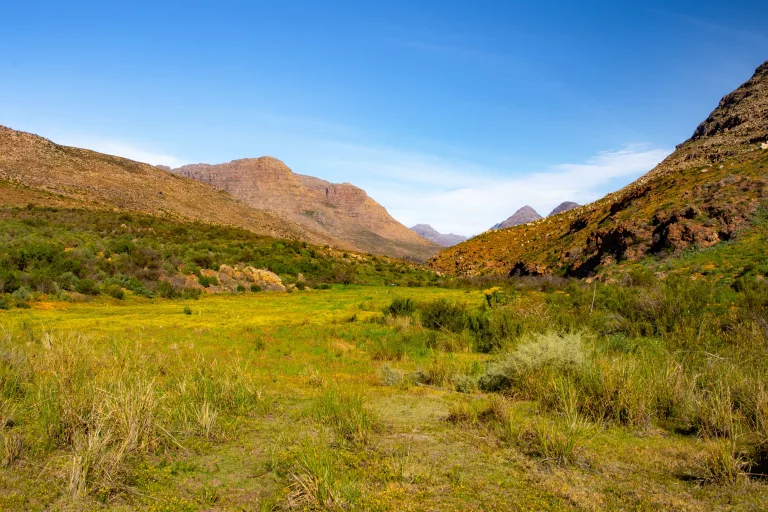
Discover the serene beauty of Clanwilliam’s highlands with lush greenery and towering brown mountains under a clear blue sky / Magda Ehlers / Pexels
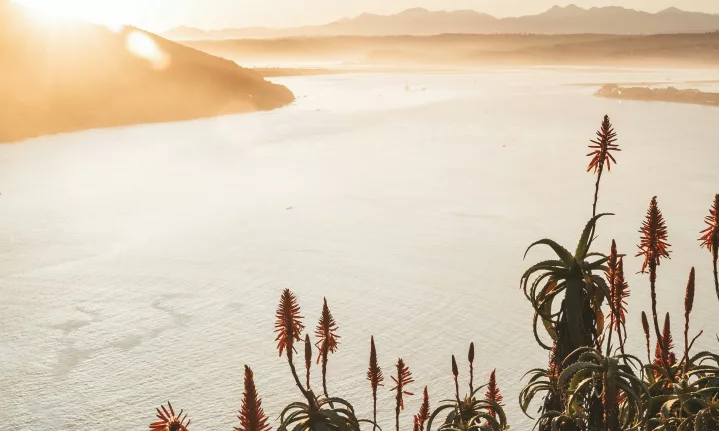
Oysters – Knysna and the Garden Route
Knysna and oysters have been linked for generations. The relationship is partly natural, partly agricultural and now firmly cultural.
Wild Knysna oysters occur naturally along South Africa’s southern coastline, while attempts to establish oyster farming in the Knysna Lagoon date back to the 1940s. Pacific oyster farming expanded during the 1970s, although it ultimately proved unsuitable for sustained production in the lagoon.
The oyster remains an essential part of the town’s food identity. You can order them at restaurants around Knysna, but for a deeper understanding, take the experience onto the lagoon. Local oyster tours combine a cruise with tastings and demonstrations on how to shuck the shellfish.
Then put the food aside for a while. Explore the Knysna Heads, walk along the lagoon or head into the surrounding forests and coastline. The Garden Route has enough scenery to make a meal feel like just one part of the journey.
If you want to make oysters the centrepiece of the trip, plan around the Knysna Oyster Festival. The event began as a winter festival in 1983 and has since grown into a major annual celebration combining food, sport and entertainment. The real appeal of an oyster road trip, though, is that you get to see the landscape behind the shell.
- Start: Knysna
- Follow: The lagoon, waterfront and surrounding Garden Route
- Best for: Seafood lovers, coastal drives and long lunches
- Don’t leave without: Eating oysters beside the lagoon, then getting out onto the water to understand the landscape behind them.
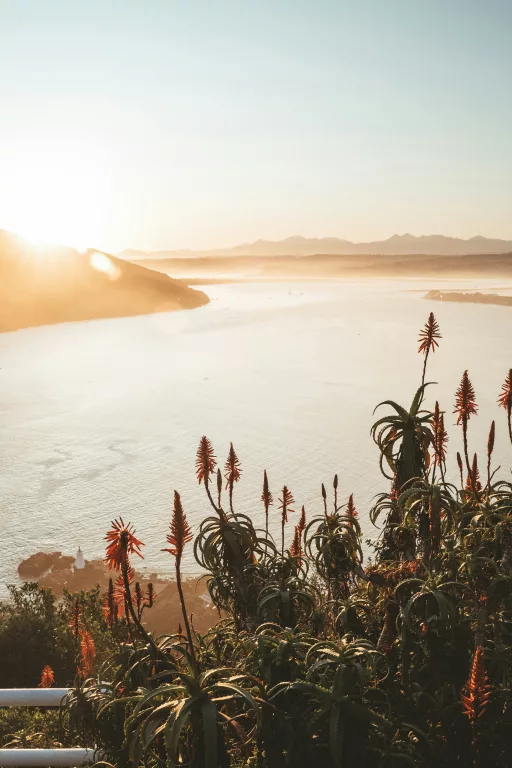
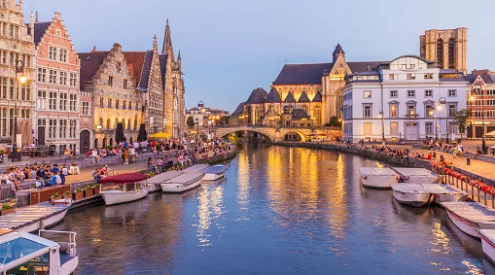
A photo of the Knysna Lagoon with a sunset and flowers in the foreground / Wesley Eland / Pexels
Olives – Riebeek Valley
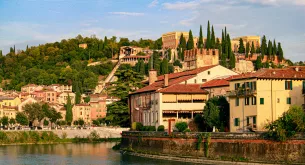
The olive has been part of the Cape landscape for centuries. Jan van Riebeeck recorded two olive trees growing successfully at Boscheuvel in 1661, although South Africa’s commercial olive industry only began developing seriously in the early 1900s. Much of its growth has happened in the past few decades.
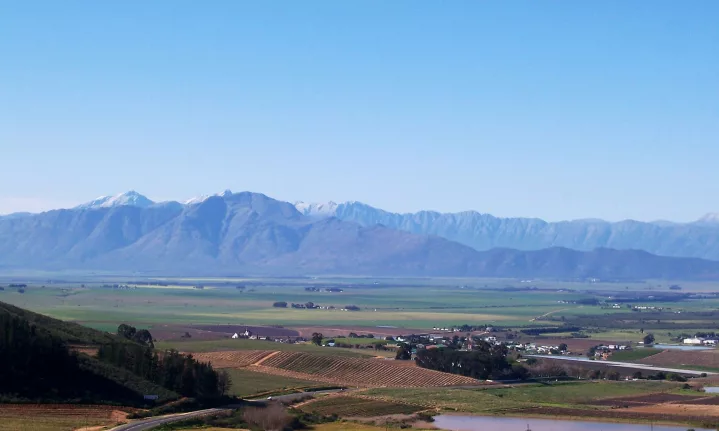
Today, the Riebeek Valley is one of the country’s best-known olive-growing regions, sitting around 70km from Cape Town beneath the Kasteelberg mountain. Vineyards and olive groves fill the valley, making this an easy road trip when you want good food without driving for hours.
Start in Riebeek-Kasteel and make the olive itself your itinerary. Visit a tasting room to compare extra virgin olive oils, table olives and tapenades, or stop at producers such as Olive Boutique. Kloovenburg Wine & Olive Estate is another worthwhile stop, combining wine and olive products with a farm setting.
Then slow down. Walk through town, explore the galleries and shops, hike or mountain-bike around Kasteelberg, or simply settle in for a long lunch with a bottle of Swartland wine.
For a full-on celebration of the ingredient, the Swartland Olive Festival takes place in Riebeek-Kasteel and Riebeek West from 25 to 27 September 2026, with olive and wine tastings, chef demonstrations and local food.
- Start: Riebeek-Kasteel
- Follow: The Riebeek Valley and surrounding Swartland
- Best for: Slow weekends, farm tastings and people who believe good olive oil deserves more attention
- Don’t leave without: Buying a bottle from a local producer and some good bread to dip into it. This is one souvenir that will disappear quickly.
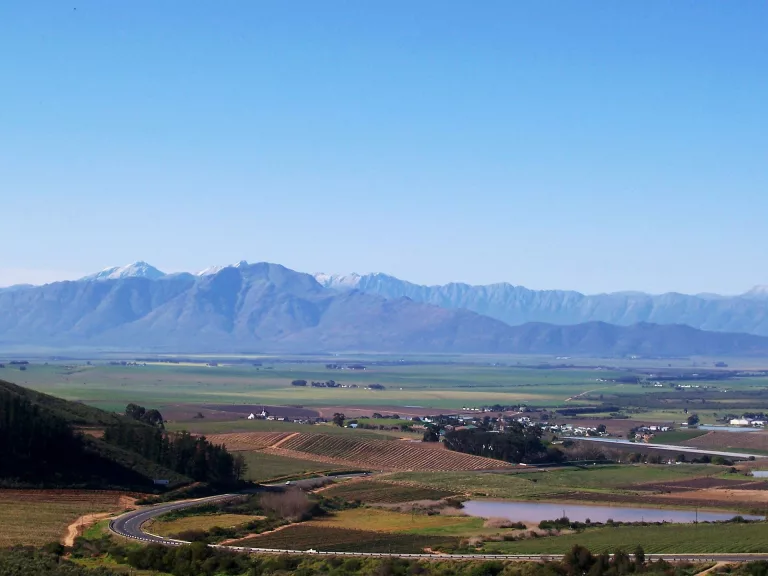
Riebeek Kasteel Valley / Andres de Wet / Wikimedia Commons
Karoo lamb – The Karoo
Some foods are regional. Karoo lamb is geographical. In 2023, Karoo Lamb was formally registered as a South African Geographical Indication, protecting the name for lamb produced under specified conditions within the defined geographical area. The regulations recognise the distinctive characteristics of the meat and its connection to the region.
Part of that story is what the sheep eat. Karoo sheep graze on indigenous plants, or bossies, which research has linked to the characteristic herbal flavours associated with lamb from the region. That makes the Karoo one of the best places to build a road trip around a meal.
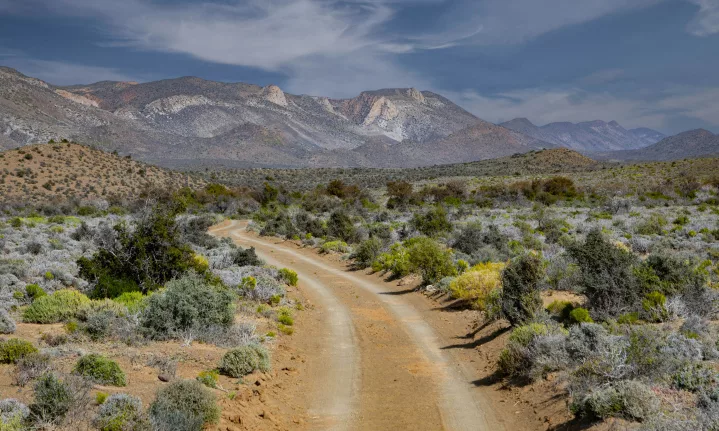
Rather than choosing a single destination, take the long way through the landscape. Towns such as Laingsburg, Matjiesfontein and Prince Albert provide natural stopping points, while the roads between them are as much a part of the experience as the food.
Order Karoo lamb when you find it on a local menu, stop at farm stalls and give yourself time to explore beyond the plate. Prince Albert is a particularly good base for combining food with Karoo history and the surrounding mountains, while the Swartberg Pass provides one of the region’s great scenic drives.
This is not a route to rush. The Karoo is at its best when you have nowhere else to be.
- Start: Laingsburg or Matjiesfontein
- Follow: The Karoo towards Prince Albert and the wider Karoo landscape
- Best for: Slow travel, open roads and travellers who plan their route around lunch
- Don’t leave without: Eating Karoo lamb somewhere in the Karoo itself. Some foods simply make more sense when you can see the landscape beyond the plate.
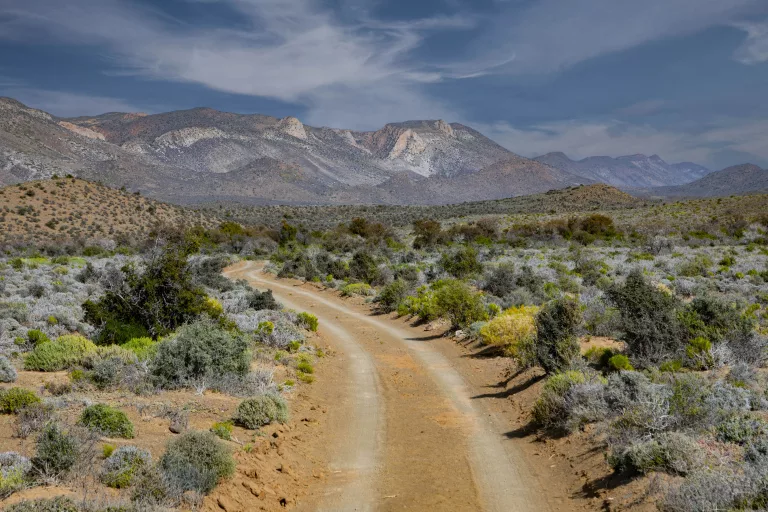
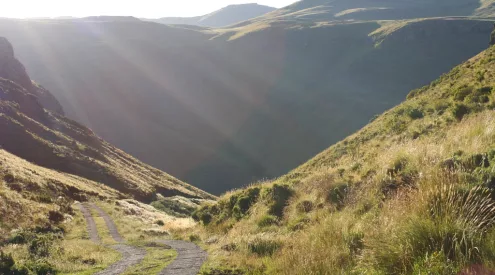
The beautiful Karoo in winter , Prince Albert, South Africa / Werner Du plessis / Unsplash
Let the ingredient choose the road
There is a different satisfaction in travelling this way. A cup of rooibos tastes different once you have stood among the dry Cederberg fields. An oyster becomes more interesting when you have seen the lagoon that shaped Knysna’s relationship with it. Olive oil has a story once you have walked between the trees, and Karoo lamb carries more meaning when the road has taken you through the country where it is produced.
That is the point of following an ingredient. You are not just chasing a meal. You are following climate, agriculture, history and the people who have learned how to make a living from a particular patch of South Africa.
So, the next time you plan a road trip, don’t start with the map. Start with what you want to eat, and see where it takes you.
Follow us on social media for more travel news, inspiration, and guides. You can also tag us to be featured.
Instagram | Facebook | Twitter | Spotify
ALSO READ: