


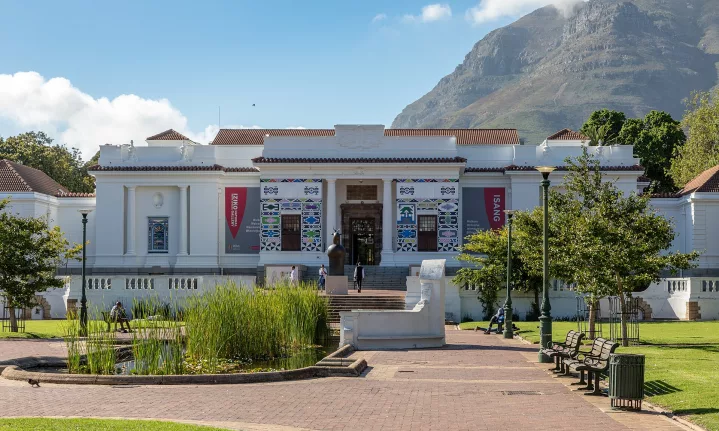
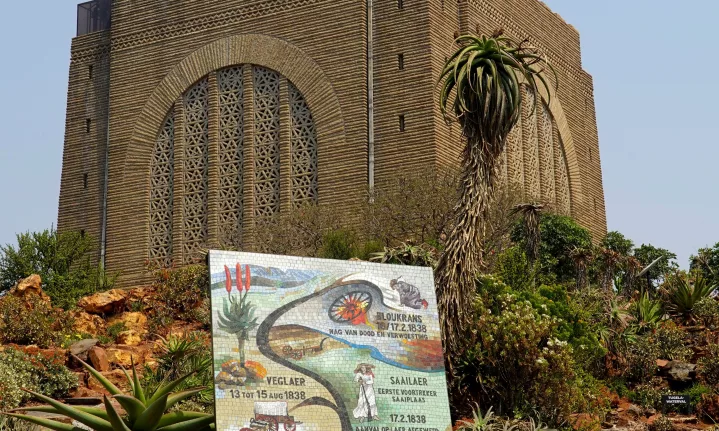
South Africa has no shortage of museums. There are the grand institutions that anchor city itineraries, the museums dedicated to the country’s political history, and the heritage sites that regularly appear on travel bucket lists.
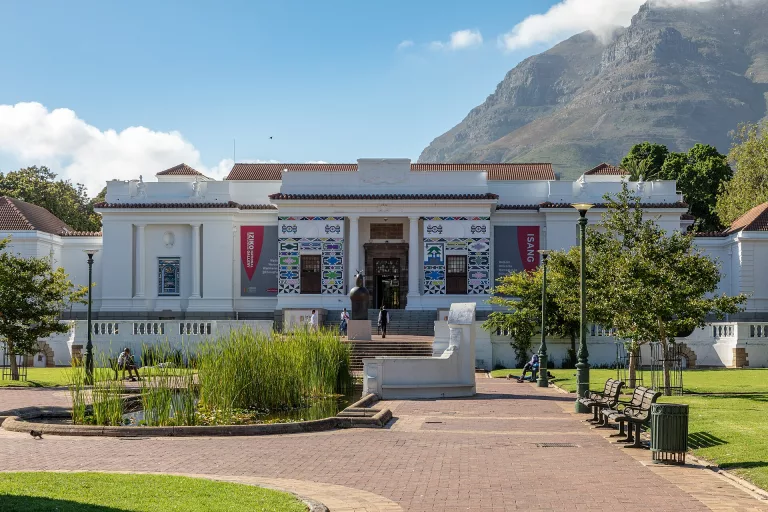
Photo by Dietmar Rabich / Wikimedia Commons
But some of the most memorable museum experiences can be found in much smaller places. Tucked into a Cape Town side street, inside a working laundry in Mossel Bay or beside the N2 near Albertinia are collections dedicated to everything from dogs and perfume to old washing machines and miniature towns. They may not take an entire afternoon to explore, but their stories are often far bigger than their footprints suggest.
Here are some of the country’s smaller and more unusual museums worth making a detour for.
Museum of Dogs, Cape Town
There is no shortage of museums dedicated to grand subjects, but Cape Town has one devoted entirely to man’s best friend.
The Museum of Dogs opened on Keerom Street in July 2024, becoming South Africa’s first museum dedicated to dogs. Housed in a historic city-centre building, the museum explores the relationship between humans and dogs through exhibitions covering their history in South Africa, their influence on culture, art and more than 40 personal stories contributed by dog owners.
It is deliberately less formal than a traditional museum. Visitors can interact with some of the displays, and well-trained dogs on leads are welcome inside, although the museum is entirely indoors and contains fragile objects.
Best time to visit: Any day between 10:00 and 17:00, particularly on a rainy Cape Town afternoon when an indoor stop is welcome. The museum is currently open seven days a week.
Tip: Give yourself about an hour and don’t rush the personal stories upstairs. They are arguably the most human part of a museum about dogs. If you are bringing your own dog, keep them on a lead.
Heart of Cape Town Museum, Observatory
Inside Groote Schuur Hospital is a museum connected to one of the most famous moments in medical history.
On 3 December 1967, Dr Christiaan Barnard and his team performed the world’s first successful human-to-human heart transplant at the hospital. The Heart of Cape Town Museum preserves and interprets the story of that operation, taking visitors through the spaces associated with the procedure and the people who made it possible.
What makes the museum particularly compelling is its setting. This is not simply an exhibition about an historic event. It is located at the hospital where the event actually happened, making the experience feel much more immediate.
Best time to visit: Weekday mornings. Guided tours currently run at 09:00, 11:00 and 13:00, with bookings essential. Weekend tours are available for groups of at least six.
Tip: Book a guided tour rather than simply turning up. The museum’s strength lies in the stories behind the operation, and the guides add context that you won’t get from simply walking through the exhibits.
First South African Perfume Museum, Franschhoek
Perfume is not necessarily the first thing that comes to mind when you think about museums, but Franschhoek has turned fragrance into an unexpectedly fascinating cultural experience.
The First South African Perfume Museum, established by the Kumanov family, houses a collection of perfume bottles ranging from antique examples to modern designer pieces. The museum explores the history and craft of perfumery, while nearby Kumanov Perfumery offers workshops where visitors can learn more about creating fragrance.
The museum forms part of the wider Huguenot heritage experience in Franschhoek, with admission also linked to nearby heritage attractions including the Huguenot Memorial Museum, its annex and the Huguenot Monument.
Best time to visit: During the week or earlier in the day, when you can combine it with Franschhoek’s other museums and heritage sites. The museum is currently listed as open daily from 09:00 to 17:00.
Tip: Don’t stop at looking at the bottles. Pair the museum visit with a perfume-making workshop at the nearby perfumery for a more hands-on experience.
SAS Assegaai Submarine Museum, Simon’s Town
From perfume to submarines, this is about as different as a museum experience can get.
The SAS Assegaai is a retired South African Navy submarine that has been transformed into a museum in Simon’s Town. The French-built Daphné-class submarine served with the South African Navy before being preserved as a visitor attraction. It reopened after restoration in 2025 and offers a rare opportunity to see what life was like inside a working submarine.
Inside, the passageways are narrow, the living quarters are compact and the machinery gives visitors a sense of just how confined submarine life could be.
Best time to visit: Tuesdays to Sundays between 09:30 and 15:30. The last guided tour starts at 15:00.
Tip: Book ahead, especially during busy periods. Tours are limited to small groups and the museum recommends allowing at least 90 minutes for the experience. It also makes an easy addition to a Simon’s Town day alongside the town’s other maritime attractions.
Cape Town Museum of Childhood, Rondebosch
Some museums preserve major historical events. Others preserve the everyday things that might otherwise disappear.
The Cape Town Museum of Childhood looks at what it has meant to grow up in South Africa through toys, games, photographs, stories and memories. The museum’s emphasis on childhood across different generations and communities makes it as much a nostalgia trip for adults as it is an outing for children.
It is currently open from Wednesdays to Saturdays, 10:00 to 16:00, with free admission.
Best time to visit: Saturday morning if you’re visiting with children, or a weekday if you want a quieter experience.
Tip: Go with a parent, grandparent or someone from another generation and compare what you recognise. The real fun here is discovering how differently childhood has looked across time and communities.
Janine Iron and Washing Museum, Mossel Bay
You probably don’t expect a museum about laundry to be one of the more memorable stops on a Garden Route road trip. That is precisely what makes the Janine Iron and Washing Museum so interesting.
The collection contains more than 640 laundry irons, including rare examples, as well as more than 50 historic washing machines and mangles dating back to the 19th century. The collection began in 1976 when Jan Ellis purchased a large group of irons to prevent them from being sold overseas. It was eventually developed into a museum in memory of his daughter, Janine Verburgt.
What starts as a collection of household objects becomes a surprisingly detailed look at domestic technology and the often-overlooked labour involved in keeping clothes clean and pressed. The museum is housed inside a laundry shop, rather than a conventional museum building, and visitors are asked to enquire with staff about seeing the collection. Donations are welcome.
Best time to visit: During the day while the laundry is operating, but contact or enquire ahead if you’re making a special trip.
Tip: Don’t judge this one by its subject matter. Look closely at the different designs and imagine what it would have taken to do an ordinary household’s washing before modern appliances.
Tuinplaas and Tiny Town, Albertinia
Just off the N2 near Albertinia is a stop that feels more like stepping into a miniature world than visiting a conventional museum.
Tuinplaas is home to Tiny Town, a collection of ceramic replicas created by the Coetzee family after more than two decades of work with cement and decorative design. The property also includes a farm museum, nursery, fairy garden, coffee shop and traditional South African restaurant.
Its location makes it particularly suited to road trippers. It is positioned directly alongside the N2 before the turn-off to Albertinia, making it an easy place to stretch your legs without turning a travel day into a major detour.
Best time to visit: During daylight hours when the gardens and miniature displays can be properly explored. It works particularly well as a daytime family stop on a Garden Route drive.
Tip: Give yourself more time than you think you need. Explore Tiny Town, wander through the gardens and grab something from the coffee shop rather than treating it as a quick roadside photo stop.
Toy and Miniature Museum, Stellenbosch
Another small museum that rewards a slower look is Stellenbosch’s Toy and Miniature Museum.
The collection includes 1:12-scale miniatures, miniature houses, room boxes, antique dolls, cars and toys. One of its standout exhibits is a detailed miniature Blue Train, which travels through a tiny South African landscape from Stellenbosch through the Winelands and mountains towards the Karoo before returning to Stellenbosch.
The museum forms part of the Stellenbosch Museum collection, which also includes the Village Museum and VOC Kruithuis, making it possible to turn a visit into a wider heritage outing.
Best time to visit: Monday to Saturday between 09:00 and 17:00. Sunday hours vary seasonally, with the museum closed on Sundays during winter according to current visitor information.
Tip: Look beyond the obvious toys. The miniatures are where the craftsmanship really shines, so take your time and examine the tiny details rather than simply walking from display to display.
DITSONG Pioneer Museum, Pretoria
Pretoria’s DITSONG Pioneer Museum is a little different again. Rather than simply displaying objects from the past, it attempts to recreate a way of life.
The museum centres on the 1848 House, built from clay and local materials with a thatched roof and earthen floors. It is furnished in a 19th-century rural style and surrounded by a traditional garden, orchard, wagon house and vineyard. Guides in period clothing help bring the setting to life.
The property offers a glimpse into the pioneer years through demonstrations and educational programmes, including traditional food preparation and farming practices. South African History Online records the farmstead as a place where visitors can see historic agricultural techniques and activities recreated.
Best time to visit: Morning, when you have time to explore the grounds without rushing. The museum is currently open daily from 07:30 to 16:00, except Christmas Day and Good Friday.
Tip: Treat it as a living-history experience rather than a conventional museum. Ask about demonstrations and spend time outdoors exploring the old farmstead.
The stories hiding in plain sight
There is something satisfying about discovering a museum that you could easily drive past without ever knowing it was there.
These places may not have the scale of South Africa’s major museums, but that is often part of their appeal. A collection of old irons can open a window onto domestic life. A submarine can turn naval history into something tangible. A room full of perfume bottles can tell stories about craft and culture, while a miniature railway can make an entire landscape feel small enough to hold in your hands.
And perhaps that is the real joy of these places. They remind us that history is not only found in monuments and grand institutions. Sometimes it is hiding in a laundry shop, a hospital, a suburban mill or a roadside garden. So, the next time you are travelling through South Africa, leave a little room in the itinerary for the unexpected. The smallest museum on the map might just end up being the stop you remember.
Follow us on social media for more travel news, inspiration, and guides. You can also tag us to be featured.
Instagram | Facebook | Twitter | Spotify
ALSO READ: