There is a reason Stellenbosch remains one of the Western Cape’s most enduring weekend escapes. South Africa’s second-oldest town has the wine, certainly, but spend a little longer than an afternoon here and another side of the Winelands begins to emerge.
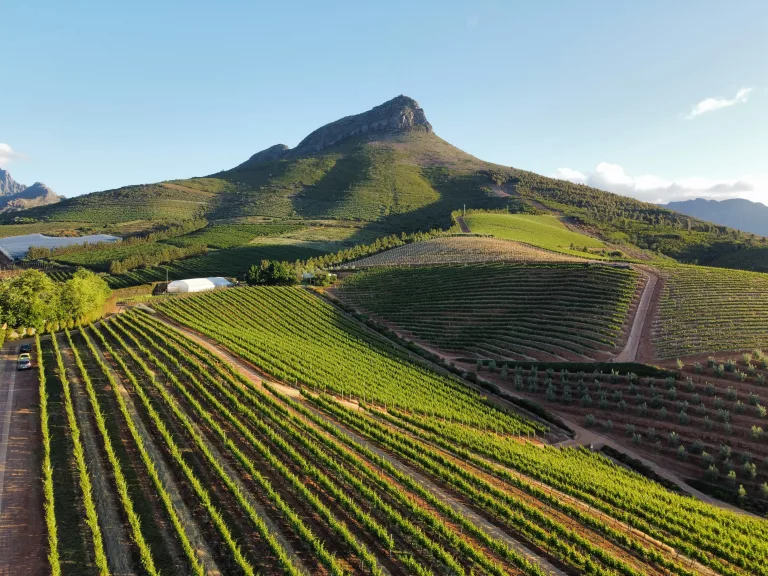
Photo by Nenad Gataric / Unsplash
Oak-lined streets lead to historic buildings, galleries and restaurants, while mountains and vineyards surround the town. With two days, you can take your time. Walk through the historic centre, settle in for a long lunch at a wine estate, explore the vineyards or nearby mountains, and still have an evening to enjoy the town itself. Here’s how to spend 48 hours in Stellenbosch.
A short history of Stellenbosch
Stellenbosch dates back to 1679, when Cape Governor Simon van der Stel named an island in the Eerste River Stellenbosch. It is recognised as South Africa’s second-oldest town, and farming in the area began that same year.
The town’s history is still visible in its streets and architecture. Cape Dutch, Georgian and Victorian buildings line parts of the historic centre, while its oak trees have earned Stellenbosch the nickname the ‘City of Oaks’. The town also developed into an important educational centre, with Stellenbosch University becoming a defining part of its identity.
Wine, meanwhile, has become inseparable from the region. Stellenbosch is home to South Africa’s oldest wine route, with more than 100 cellar-door experiences across its various sub-routes.
But the history of Stellenbosch is not only a picturesque backdrop. Its architecture and cultural landscape also reflect the inequalities and divisions of South Africa’s past, something worth remembering as you explore the town today.
Day one: Start in the heart of Stellenbosch
Morning: Walk the historic centre
Begin your weekend on foot. Stellenbosch’s town centre is compact enough to explore without a car, and a morning walk gives you a better sense of the place before heading out into the vineyards.
Start around Church Street and make your way through the older parts of town, taking time to look at the Cape Dutch, Georgian and Victorian architecture. Dorp Street is particularly worthwhile, with historic buildings stretching along one of Stellenbosch’s best-known streets.
For a deeper look at the town’s domestic history, spend some time at the Village Museum. The museum occupies four historic houses, including Schreuderhuis, which dates to 1709 and is regarded as the oldest documented townhouse in South Africa. Together, the houses offer a glimpse into how domestic life, architecture and fashions changed between the 18th and 19th centuries.
If you prefer to have the stories brought to life as you walk, guided historical tours of the town cover its 350-year history and the people who shaped it.
Afternoon: Head for the vineyards
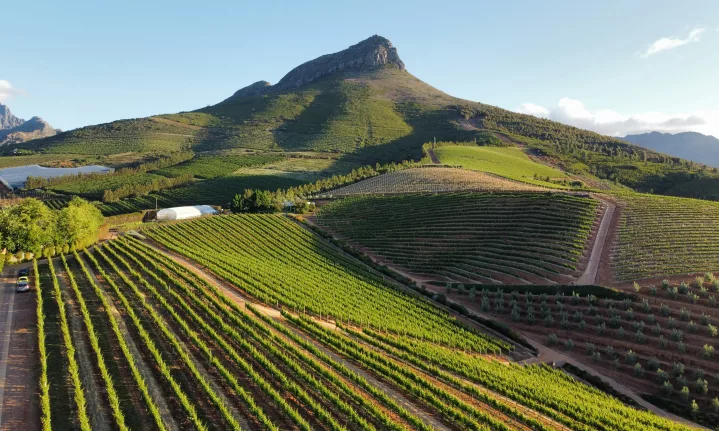
You can’t spend a weekend in Stellenbosch without giving its wine country some attention. The Stellenbosch Wine Route is the oldest in South Africa and is divided into five sub-routes: Greater Simonsberg, Stellenbosch Berg, Helderberg, Stellenbosch Valley and Bottelary Hills. Across the region, visitors can choose from more than 100 cellar doors and tasting experiences.
Rather than trying to squeeze as many estates as possible into one afternoon, choose one or two and give yourself time to enjoy them. The point of a Stellenbosch weekend is not to collect tasting rooms like stamps. It is to sit down, look at the landscape and actually taste the wine.
Lanzerac Wine Estate is one option for combining the wine experience with the region’s heritage, while estates such as Waterford Estate offer another way to experience the Winelands beyond a traditional tasting.
For those who would rather leave the driving to somebody else, the Vine Hopper operates hop-on-hop-off routes through the Stellenbosch wine region, visiting several estates while allowing passengers to decide where they want to stop. And, importantly, don’t drink and drive. If you are visiting multiple estates, use a guided service, shuttle or designated driver.
Evening: Dinner in town
Return to the centre for dinner rather than automatically eating at another wine estate. Stellenbosch has a food scene that exists beyond the vineyards, with restaurants, cafés, bars and other places to eat concentrated within the walkable town centre.
The appeal is partly the setting. After a day among the vineyards, there is something satisfying about ending the day beneath the old oaks, with the town’s evening energy around you.
Day two: Mountains, art and more wine
Morning: Choose your adventure
Start your second day outdoors. Just outside Stellenbosch, Jonkershoek Nature Reserve offers mountain scenery, fynbos and a network of hiking trails. The reserve covers about 9 800 hectares, with routes ranging from shorter walks to demanding full-day hikes.
If you want something relatively manageable, the Tweede Waterval route follows the river towards two waterfalls. More experienced hikers can tackle longer routes such as the Panorama trail. Check current permit requirements, opening times and trail conditions before setting out, as some routes have daily limits and specified start times.
If hiking is not your idea of a holiday, there are plenty of gentler alternatives. Stellenbosch has an extensive network of trails through vineyards, forests and mountain terrain, with options for walking and cycling. Visit Stellenbosch says the wider region has more than 1 000 kilometres of trails.
Afternoon: Make time for art
Stellenbosch is increasingly as interesting for its creative side as it is for its wine. The Rupert Museum houses a significant collection of 20th-century South African art, including works by artists such as Irma Stern, Walter Battiss, Cecil Skotnes and Jacob Hendrik Pierneef. The museum also displays French tapestries and European works alongside its South African collection.
Another option is the Dylan Lewis Sculpture Garden, where more than 60 sculptures are set within a seven-hectare indigenous garden. The landscape combines fynbos and other indigenous vegetation with the artist’s work, making the garden itself part of the experience. Visits are by appointment.
Closer to town, the riverside Art Mile offers a 1.6km open-air gallery along the Eerste River, with artworks installed beneath the trees and across several bridges. It is free to explore and can easily be added to a walk through the centre.
Late afternoon: One last vineyard stop
Before the weekend comes to an end, return to the Winelands for one final tasting, but keep it relaxed. A safari-style vineyard tour at Jordan Wine Estate, for example, combines a drive through the vineyards with wine tasting and views across the surrounding valleys. The estate’s vineyards sit at different elevations and orientations, giving visitors a chance to see how varied the Stellenbosch landscape can be.
Alternatively, simply find a tasting room that appeals to you and linger. Stellenbosch has enough estates that you do not need to force an itinerary around every famous name.
How to make the most of 48 hours
The biggest mistake is trying to do everything. Stellenbosch is close enough to Cape Town to make a popular day trip, but two days changes the pace completely. The town centre is walkable, while the vineyards and mountain reserves are close enough to build a weekend around a mixture of experiences.
If wine is your priority, arrange transport between estates rather than driving after tastings. If history interests you, give yourself at least a morning in the town centre. And if you want to see a different side of Stellenbosch, swap one tasting for a hike, cycling route, museum or sculpture garden.
The region also changes dramatically with the seasons. February to April brings harvest activity, while October and November offer spring landscapes and generally lighter crowds. Winter is quieter, with cooler weather and a slower pace across the valley.
Why Stellenbosch is worth the weekend
Stellenbosch is easy to reduce to wine. It is, after all, what has made the town famous far beyond the Cape. But give it 48 hours and the picture becomes more complete. There is the wine, of course, but also a 350-year history, old streets shaded by oak trees, museums and galleries, mountain trails, restaurants and a working university town that continues to evolve.
That is what makes Stellenbosch worth staying for. You do not have to rush from one attraction to the next. The best parts of the weekend might be the moments in between: a slow walk through the old centre, lunch overlooking the vineyards, a mountain rising behind the town, or a final glass of wine as the afternoon light settles over the valley.
For a Winelands escape, two days is enough to get a taste. It is also a good reason to start planning the next one.
Follow us on social media for more travel news, inspiration, and guides. You can also tag us to be featured.
Instagram | Facebook | Twitter | Spotify
ALSO READ:
48 hours in Franschhoek: A weekend of wine, mountains and village charm