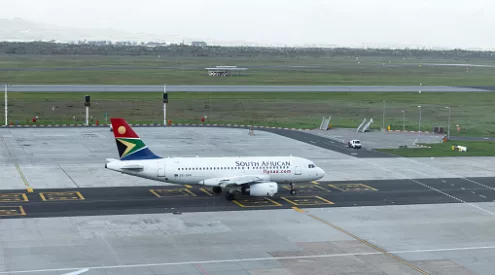








For many Africans travelling abroad, the journey often begins with a stop in the Middle East. Major hubs like Dubai, Doha, and Abu Dhabi have long served as key gateways linking Africa with Europe, Asia, and beyond.

Source: YouTube/Think Machine
According to Travel And Tour World, rising tensions involving Iran are sending ripples through that global flight network. Airspace restrictions, rerouted aircraft, and cautious travel warnings are beginning to affect travel plans around the world, including those starting right here in South Africa.
While flights are still operating, the situation is a reminder of how quickly global events can reshape travel routes overnight.
Why flights are suddenly taking longer routes
Several international airlines have already adjusted their flight paths to avoid Iranian airspace and nearby areas. Instead of following the most direct routes, many aircraft are taking longer paths across alternative corridors.
For travellers departing from South Africa, this matters more than it may seem.
Flights from South Africa to Europe or Asia frequently rely on connections through major Gulf hubs. When aircraft are forced to detour around restricted airspace, travel times can stretch longer, and connecting schedules may shift.
Airlines serving routes between Africa, Europe, and Asia are among those affected, which creates a ripple effect across global aviation networks. A delay in one region can easily cascade into missed connections or later arrival times somewhere else.
Passengers with upcoming trips are being encouraged to double-check itineraries and stay alert to airline announcements.
Why governments are urging caution
Across the world, governments have updated their travel guidance for Iran and neighbouring areas. Many authorities now advise citizens to avoid non-essential travel to regions close to the conflict and to monitor official advisories closely.
Travellers already in the region are being encouraged to stay informed about local developments, remain aware of security updates, and register with their embassies.
The warnings reflect several potential risks, including sudden airspace closures, possible civil unrest, and limited access to emergency support if conditions escalate.
For Africans travelling abroad, the safest approach right now is simple: stay informed and remain flexible with travel plans.
Tourism in the region is feeling the pressure
Before tensions escalated, tourism across the Middle East was on a strong upward path. Destinations known for luxury shopping, desert adventures, and cultural landmarks have been attracting millions of visitors each year.
Now the uncertainty is starting to slow that momentum.
Hotels, tour operators, and transport services across parts of the region are seeing bookings postponed or cancelled as travellers wait to see how the situation develops. Countries heavily dependent on tourism revenue are particularly sensitive to these shifts.
The industry is responding by offering more flexible booking options and promoting destinations that remain unaffected by the tensions.
What travel experts recommend right now
For anyone planning international travel in the coming weeks, preparation matters more than ever. Travel specialists suggest several practical steps that can make a big difference if conditions change.
Check official travel advisories regularly and keep an eye on airline notifications. Choose flights and accommodation that allow refunds or easy changes. Make sure travel insurance includes coverage for disruptions or emergency evacuation. Register with your embassy when travelling in higher-risk regions. Avoid large gatherings and follow local safety guidance where applicable.
Flexibility is the key theme. A travel plan that can adapt quickly will always be safer than one locked into rigid bookings.
Safer alternatives travellers are considering
Despite the uncertainty around Iran, much of the Middle East remains open to visitors.
Cities in the United Arab Emirates, along with destinations in Oman and Turkey, continue to attract tourists with their blend of culture, modern attractions, and hospitality. Many travellers are also choosing entirely different regions, such as South East Asia or Mediterranean Europe, to avoid any potential disruption.
Even closer to home, regional travel across Africa is becoming more appealing for travellers who want memorable experiences without navigating complex global flight networks.
The emotional impact on travellers worldwide
Global events like this do more than disrupt flights. They also shape how people feel about travelling.
Even travellers who were never planning to visit the Middle East may feel uneasy about long-haul journeys or complicated connections. That hesitation can slow bookings across the travel industry.
Yet history shows that travel demand tends to rebound quickly once stability returns. Tourism has proven time and again that it is resilient.
People still want to explore new cultures, see iconic landmarks, and experience the world beyond their own borders.
For now, the best advice for Africans planning international trips is to stay informed, keep travel plans flexible, and follow official guidance closely.
When conditions stabilise, the global travel network will adapt, and the familiar routes through Dubai, Doha, and Abu Dhabi will once again carry millions of passengers across continents.
Source: Travel And Tour World
Follow us on social media for more travel news, inspiration, and guides. You can also tag us to be featured.
TikTok | Instagram | Facebook
ALSO READ:
Air Tanzania plans eight new aircraft as Tanzania expands aviation by 2030