






Some cities are best understood on foot. Walking turns the spaces between landmarks into part of the experience, revealing local markets, cafés, street vendors, architecture and everyday life that can easily be missed from a car window.
From the winding lanes of Marrakech to the riverside streets of Ljubljana, these cities reward travellers who are willing to slow down and explore at street level.
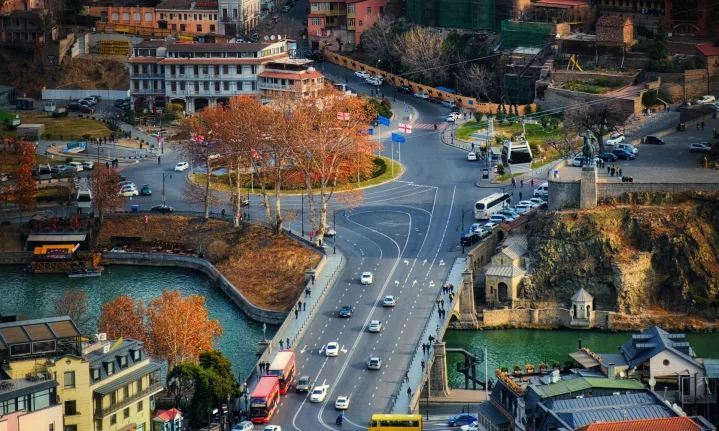
Tbilisi, Georgia
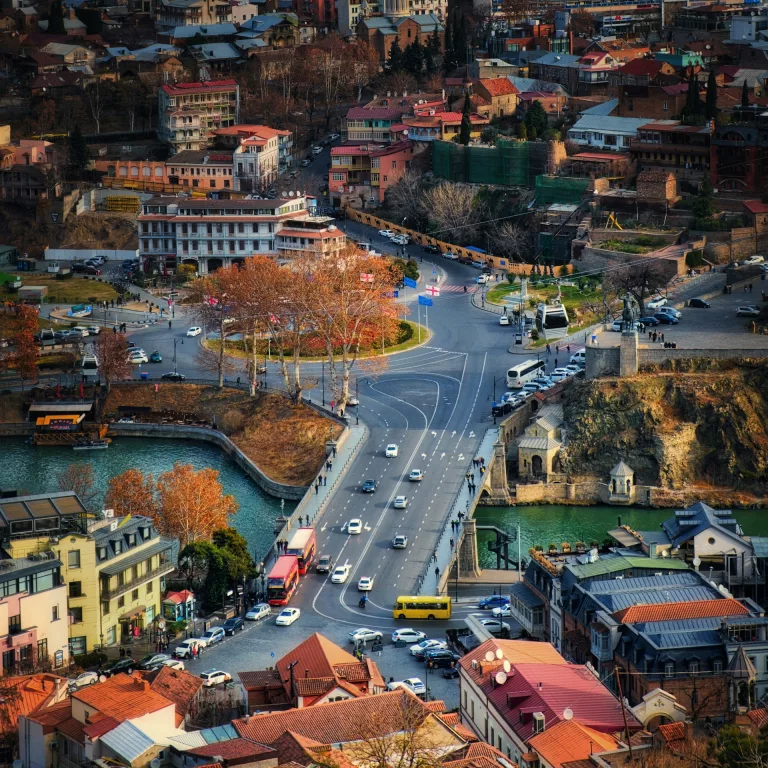
Tbilisi, Georgia/ K T/Unsplash
Walk for the layers of history
Tbilisi is the kind of city where wandering without a strict plan can be the best way to explore.
Its Old Town is a patchwork of narrow lanes, wooden balconies, colourful façades, churches and courtyards, with architectural influences reflecting the city’s position at the crossroads of Europe and Asia.
Start around Abanotubani, the historic sulphur-bath district, then wander uphill through the Old Town towards Metekhi. Stop to admire the distinctive wooden balconies before continuing towards the Dry Bridge area, where an open-air market sells everything from Soviet-era curiosities to artworks and antiques.
The reward is not simply reaching the next attraction. It is seeing how centuries of history coexist with cafés, wine bars, homes and everyday city life.
Don’t miss: the Dry Bridge Market, Abanotubani’s sulphur baths and the views from Narikala Fortress.
Kyoto, Japan

Kyoto, Japan/Andre Benz/Unsplash
Walk between temples, teahouses and neighbourhoods
Kyoto’s major temples and shrines are reason enough to visit, but walking between them reveals another side of the former imperial capital.
In Gion, traditional wooden machiya houses line atmospheric streets, while nearby Higashiyama offers lanes leading towards temples, gardens and small shops. Further into the city, Nishiki Market introduces travellers to Kyoto’s food culture, with stalls selling pickles, sweets, seafood and other local specialities.
Walking also lets you appreciate the quieter details: a paper lantern outside a restaurant, a tiny garden behind a wall or the sound of a bicycle passing through a residential lane.
Try starting early, particularly around the popular Higashiyama and Gion areas, when the streets are quieter and the city feels less hurried.
Don’t miss: Gion, Higashiyama, Nishiki Market and the Philosopher’s Path.
Lisbon, Portugal
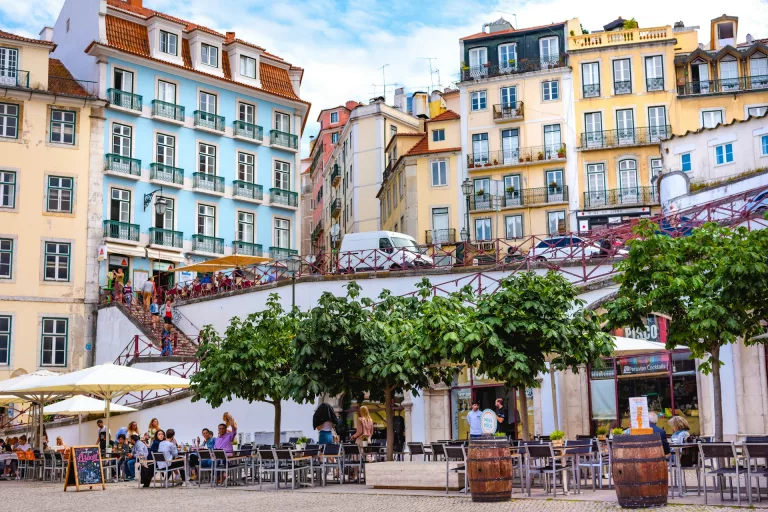
Lisbon, Portugal/Paulo Evangelista/Unsplash
Walk for the tiled streets and neighbourhood life
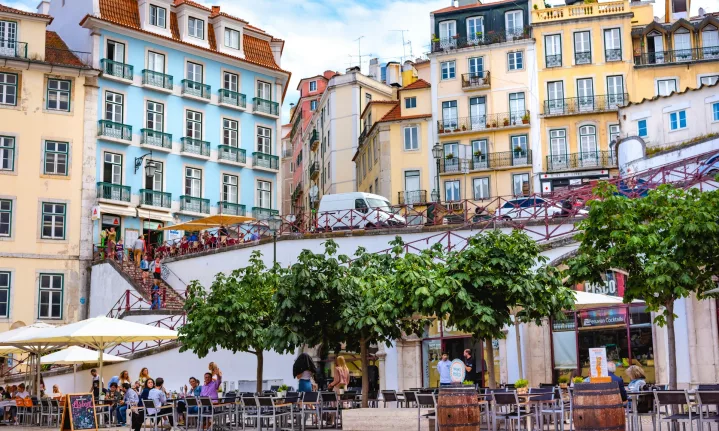
Lisbon is a city of hills, viewpoints and streets that seem designed to reward curious walkers.
In Alfama, narrow lanes wind between brightly painted buildings, tiled façades and balconies hung with washing. The neighbourhood climbs towards São Jorge Castle, with occasional viewpoints opening over the terracotta rooftops and the Tagus River.
Nearby Mouraria offers another perspective, with multicultural restaurants, small shops and streets shaped by generations of immigration.
Walking Lisbon is also about accepting the hills. Instead of treating them as an inconvenience, use them to structure your day: climb towards a viewpoint, pause for a pastel de nata or coffee, then wander downhill into another neighbourhood.
The city changes noticeably from one street to the next.
Don’t miss: Alfama, Mouraria, Miradouro da Senhora do Monte and the streets around Baixa.
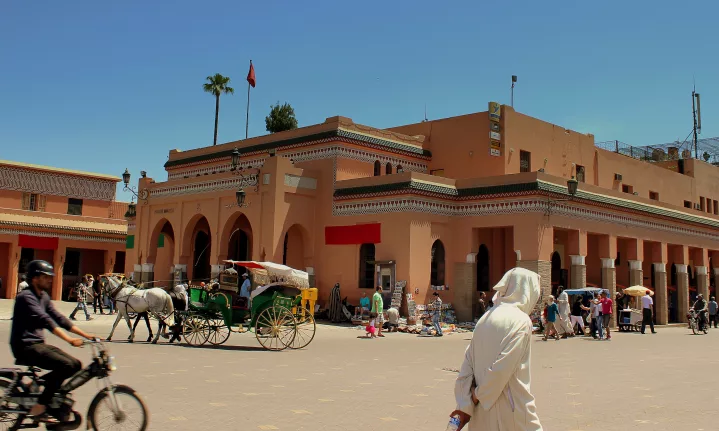
Marrakech, Morocco
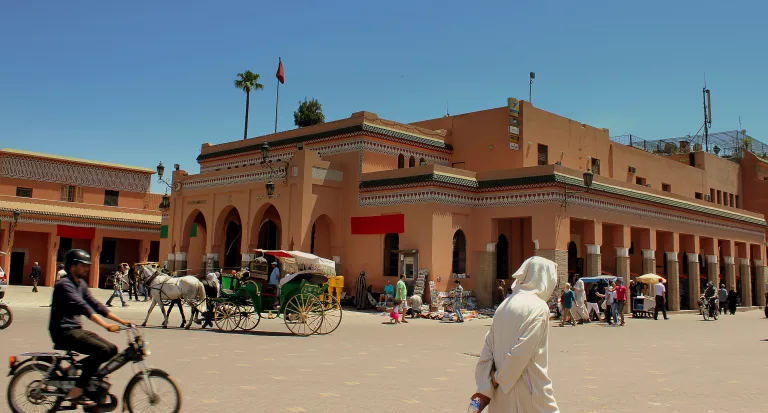
Jemaa el-Fna Square/calflier001/Wikimedia Commons
Walk for the sensory overload
Marrakech’s medina is best experienced at walking pace.
Inside the old city walls, narrow passages lead through souks filled with leather goods, spices, lamps, textiles and handmade crafts. The atmosphere changes constantly: one moment you’re passing a quiet riad entrance, the next you’re surrounded by market stalls and the calls of traders.
Start at Jemaa el-Fna and follow the lanes into the souks. Along the way, look beyond the shopping. Plain doors can hide elaborate riads, while small workshops reveal craftspeople at work.
The medina can feel chaotic, particularly at busy times, but that is part of the experience. Walking forces you to engage with the city rather than simply observing it.
Take your time, keep track of where you’re going and leave room for detours.
Don’t miss: Jemaa el-Fna, the souks, Medersa Ben Youssef and the Mellah.
ALSO READ:
48 hours in Saint-Louis, Senegal: Africa’s old Atlantic city
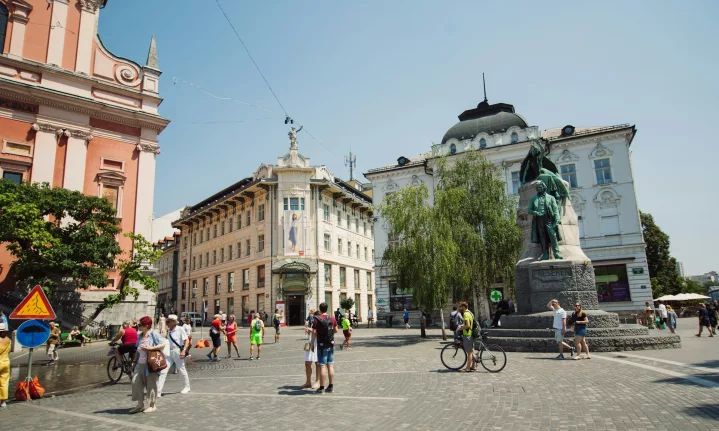
Ljubljana, Slovenia
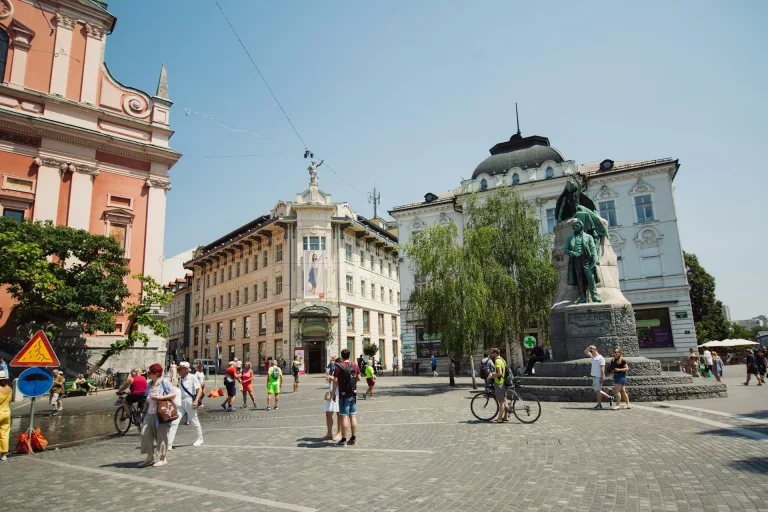
Ljubljana, Slovenia/Janesca/Unsplash
Walk for the small-city charm
Ljubljana proves that a walking city doesn’t have to be enormous to be interesting.
Slovenia’s capital has a compact historic centre centred around the Ljubljanica River. Bridges, public squares, cafés and market stalls create a cityscape that is easy to explore without relying on a car.
Begin at the Central Market before crossing the Triple Bridge into the Old Town. Follow the river, stopping at cafés or riverside restaurants, then climb towards Ljubljana Castle for views over the city’s rooftops and surrounding hills.
The best part is the pace. Ljubljana encourages lingering rather than rushing between attractions.
Its pedestrian-friendly centre also means that ordinary activities — buying fruit at the market, having coffee beside the river or watching cyclists pass — become part of the sightseeing.
Don’t miss: Central Market, Triple Bridge, the Ljubljanica riverfront and Ljubljana Castle.
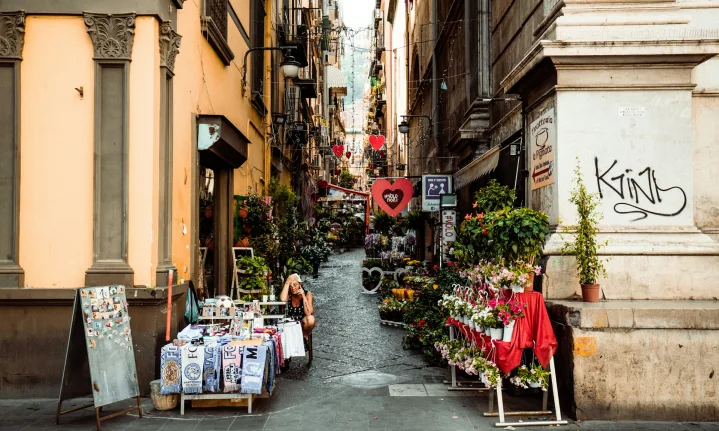
Naples, Italy
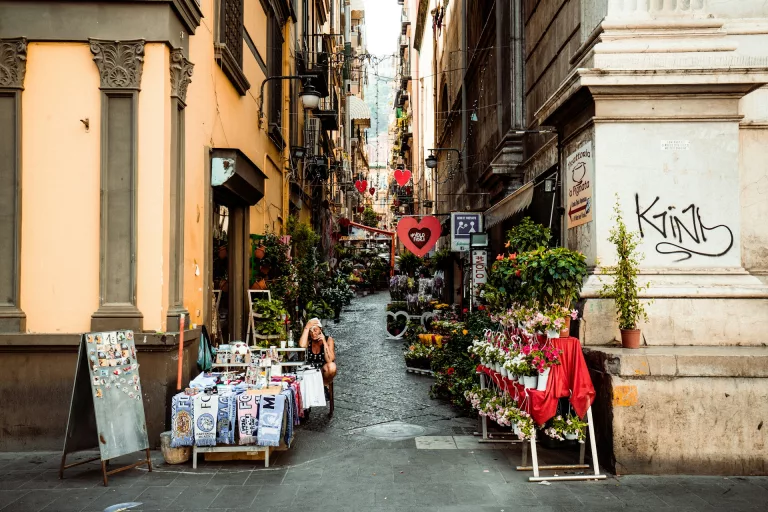
Naples, Italy/Sam van Bussel/Unsplash
Walk for the beautiful chaos
Naples is not polished in the conventional sense, and that is precisely why it belongs on this list.
Its historic centre is dense, noisy and wonderfully unpredictable. Laundry hangs above narrow streets, scooters squeeze through gaps, tiny restaurants spill onto pavements and ancient churches appear between ordinary shops.
Walking through Spaccanapoli gives you a concentrated introduction to the city’s character. The long, narrow route cuts through the historic centre, passing churches, cafés, pizzerias and shops along the way.
Naples is also a city where food becomes part of the walk. Stop for a slice of pizza, a sfogliatella or an espresso, then continue exploring.
The experience isn’t about making every street look beautiful. It is about seeing the city as it actually functions.
Don’t miss: Spaccanapoli, Via dei Tribunali, the historic centre and the Quartieri Spagnoli.
Istanbul, Türkiye
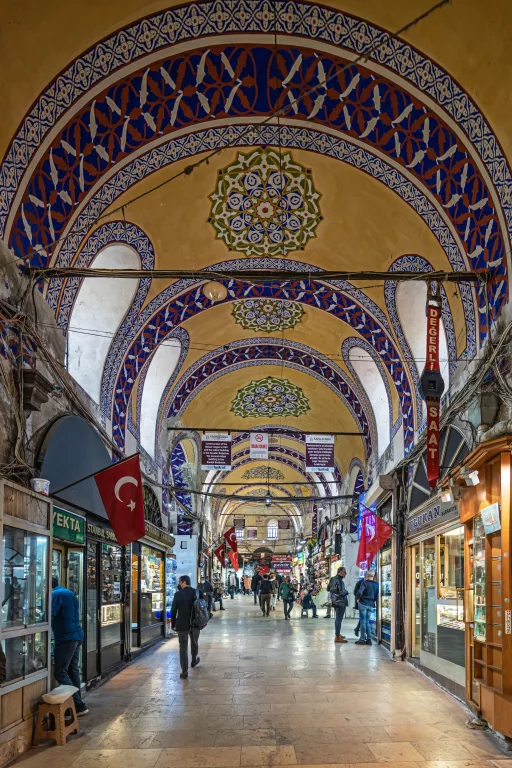
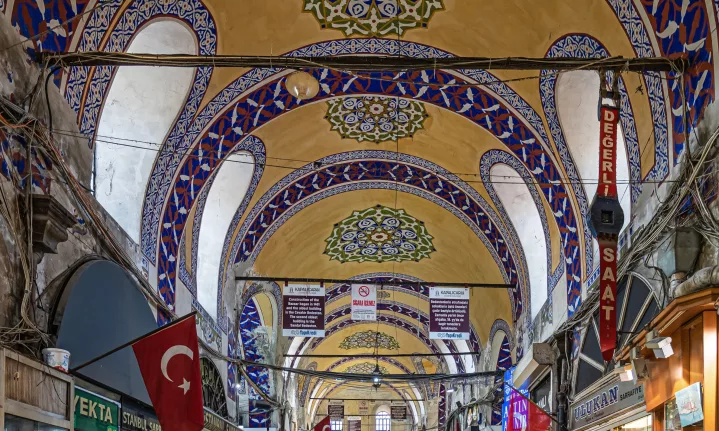
Inside the Grand Bazaar in Istanbul/A.Savin, FAL, via Wikimedia Commons
Walk between markets, mosques and the Bosphorus
Few cities make walking feel quite as geographical as Istanbul.
Here, a day on foot can take you from Byzantine monuments and Ottoman mosques through busy markets and neighbourhood cafés before ending beside the Bosphorus.
Begin around Sultanahmet, where Hagia Sophia and the Blue Mosque anchor one of the city’s most historic areas. From there, continue towards the Grand Bazaar and Eminönü, where ferries, food stalls and commuters create a constantly moving streetscape.
Continue towards Galata and Karaköy for a different side of the city, with independent shops, cafés and restaurants occupying historic buildings.
Walking Istanbul also makes its relationship with water impossible to ignore. The Bosphorus isn’t simply a scenic backdrop; it is part of how the city moves, eats and connects.
Don’t miss: The Grand Bazaar, Eminönü, Galata, Karaköy and the Bosphorus waterfront.
George Town, Malaysia
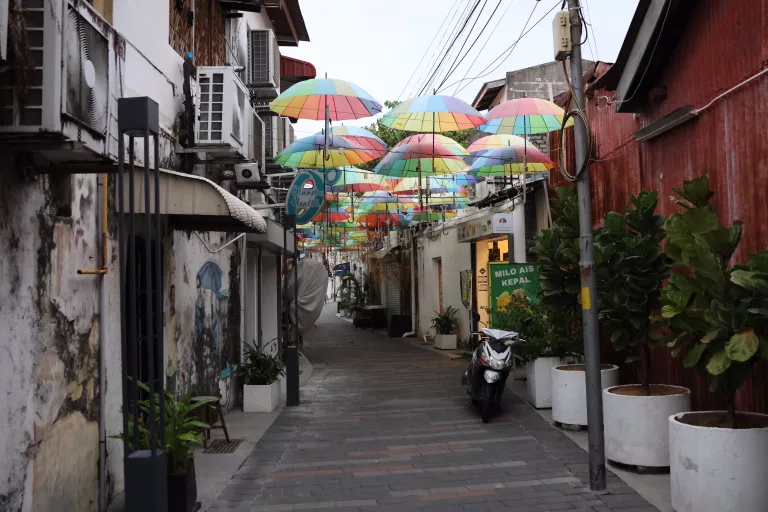
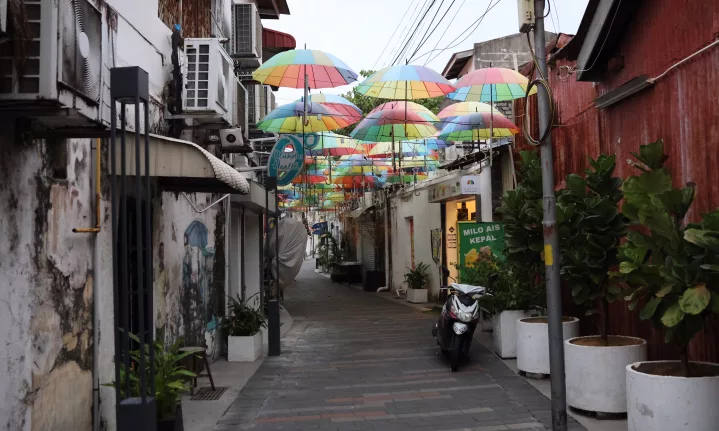
George Town, Malaysia/Pangalau/Wikimedia Commons
Walk for the cultures and flavours
George Town on Penang Island is a city best understood one street at a time.
Its historic centre brings together Chinese shophouses, Indian temples, mosques, colonial buildings, clan houses, cafés and colourful street art. The result is a streetscape that reflects the different communities that have shaped the city over generations.
Walking also makes George Town’s food culture impossible to avoid.
Hawker centres and food stalls appear throughout the city, offering Malaysian specialities alongside Chinese, Indian and Peranakan influences. A walking route can easily turn into a food trail, with stops for noodles, curries, sweets or coffee.
Look up as you walk. Elaborately decorated shophouses and old signs are just as much a part of the experience as the attractions at street level.
Don’t miss: Armenian Street, Little India, Clan Jetties, the street-art trail and George Town’s hawker centres.
Why walking changes the way we travel
The appeal of these cities isn’t simply that they are easy to navigate without a car.
Walking changes what you notice.
A journey by vehicle tends to divide a city into points on a map: hotel, museum, restaurant, viewpoint. Walking connects those points. The journey becomes part of the destination.
You notice the woman arranging flowers outside a shop, the smell of bread from a neighbourhood bakery, children playing in a square or an old building that isn’t mentioned in any guidebook. You discover how locals use public spaces and where residents actually eat, shop and meet.
There is also a useful kind of unpredictability to walking. You can turn down the wrong street, discover a market you hadn’t planned to visit or find a small café simply because you were tired and needed somewhere to sit.
That is often where the most memorable travel moments happen.
How to make the most of a walking city
Choose one neighbourhood at a time
Trying to cross an entire city on foot can turn an enjoyable day into an endurance test. Pick one or two neighbourhoods and explore them properly instead.
Start early
Popular historic districts are often most atmospheric before the crowds arrive. An early start can also make walking more comfortable in warmer destinations such as Marrakech.
Leave room for detours
Don’t fill every hour with attractions. Build in time to wander, stop for coffee, browse a market or follow an interesting-looking street.
Wear the right shoes
This sounds obvious, but cobblestones, hills and uneven historic streets can quickly expose uncomfortable footwear. A good pair of walking shoes is one of the most useful things you can pack.
Use public transport strategically
The best walking cities don’t necessarily require you to walk everywhere. Use trains, trams, buses or ferries to reach a neighbourhood, then explore it on foot.
Follow us on social media for more travel news, inspiration, and guides. You can also tag us to be featured.
Instagram | Facebook | Twitter | Spotify
ALSO READ:
Africa beyond safari: 8 places where the ocean shapes everything





.jpg)

