



Wildlife conservation operates across borders, with similar challenges emerging in very different environments.

Kenyan Mountain Bongo/Rennett Stowe/Wikimedia Commons
Recent updates from Africa, Asia and beyond show how shared pressures such as habitat loss and human encroachment are being addressed through locally adapted strategies. Together, these stories reflect a broader pattern of cautious but important progress.
Reintroduction efforts strengthen mountain bongo recovery
In Kenya, four critically endangered mountain bongos have been transferred from European conservation programmes back into their native habitat. The mountain bongo, a forest antelope found only in Kenya, has experienced severe population decline due to habitat loss and poaching. With fewer than 100 individuals remaining in the wild, each reintroduction plays a significant role in restoring genetic diversity and stabilising the population.
These translocations form part of a broader recovery strategy that combines captive breeding, habitat protection and long term monitoring. The success of such programmes depends not only on the survival of released individuals but also on their ability to integrate, reproduce and contribute to a self sustaining population.
(Source: People)
Habitat connectivity shows results for orangutans
In Indonesia, a Sumatran orangutan has been recorded using a purpose built canopy bridge to cross a road. This marks the first confirmed use of such infrastructure by the species in this area. Roads and plantations have fragmented large sections of rainforest, isolating wildlife populations and limiting access to food and mates.
Canopy bridges are designed to reconnect these habitats by allowing arboreal species to move safely above ground level. This observation provides practical evidence that engineered solutions can reduce the risks associated with habitat fragmentation. It also supports further investment in similar interventions across Southeast Asia.
(Source: The Guardian)
Community conservation reduces conflict in Zimbabwe
Efforts to reduce human wildlife conflict in Zimbabwe are delivering measurable results. Community led programmes that focus on protecting livestock have significantly reduced predation by large carnivores such as lions. In some areas, livestock losses have dropped by as much as 98 percent.
These initiatives typically include improved kraal design, herder training and the use of non lethal deterrents. By reducing economic losses for local communities, conservation efforts gain stronger local support. This approach reflects a broader shift in conservation thinking, where long term success depends on aligning ecological goals with human livelihoods.
(Source: The Guardian)
Leopard rescue and release programmes scale up in India
In India, wildlife authorities have reported the rescue and rehabilitation of more than 220 leopards over a three year period, with a high percentage successfully released back into the wild. Leopards are highly adaptable and often live close to human settlements, which increases the likelihood of conflict.
Rapid response teams play a critical role in safely capturing and relocating animals that enter urban or agricultural areas. The scale of this programme demonstrates that coordinated intervention can both protect human communities and support the persistence of large predators in shared landscapes.
(Source: The Times of India)
New conservation financing model tested with gorillas
An experimental project is exploring how digital systems can support wildlife conservation by assigning economic value to individual animals. In this case, gorillas are linked to a system where conservation actions such as removing snares trigger financial contributions.
While still in early stages, this model aims to create transparent and traceable funding streams for conservation work. If successful, it could diversify funding sources and provide more consistent financial support for protected areas and conservation teams.
(Source: The Washington Post)
Genetic science revisits the extinct bluebuck
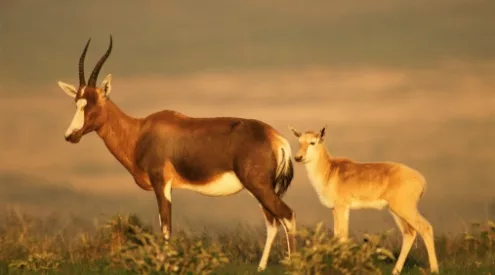
Advances in genetic technology are being applied to the extinct bluebuck, a species once native to South Africa. Scientists are investigating whether it may be possible to recreate or approximate the species using preserved DNA and closely related animals.
Although de extinction remains controversial, the research has broader implications. Techniques developed through these projects can be applied to strengthen genetic diversity in endangered species and improve breeding programmes. The work therefore contributes to both scientific knowledge and practical conservation tools.
(Source: Reuters)
A broader perspective on conservation progress
Reintroduction and rehabilitation efforts continue to rebuild populations. Infrastructure solutions are helping wildlife navigate altered landscapes. Community driven approaches are reducing conflict and strengthening local support. At the same time, technological innovation is opening new pathways for funding and species management. While challenges remain significant, these examples show that targeted, evidence based interventions can deliver measurable results.
Follow us on social media for more travel news, inspiration, and guides. You can also tag us to be featured.
TikTok | Instagram | Facebook | Twitter
ALSO READ: